
Quick guide
- A blank tile is not a character in Elder or Younger Futhark.
- It can be a spare or a disclosed modern addition.
- Choose its role before drawing, and reject frightening claims or pressure to buy another reading.
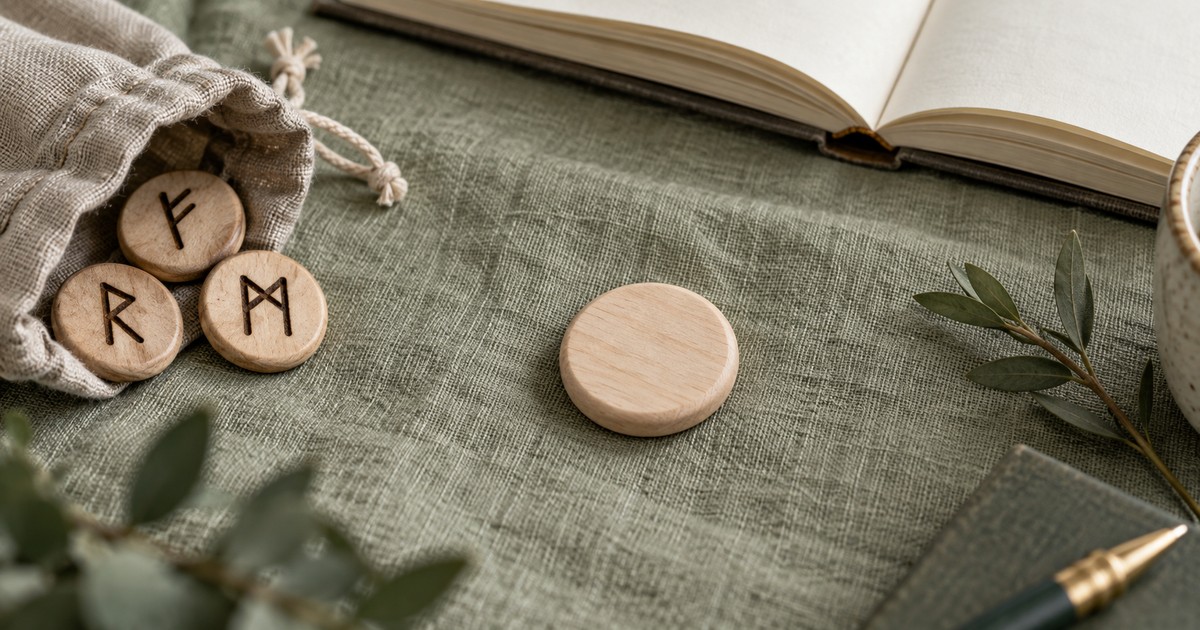
If you open a new set of runes and find one piece that doesn’t have a mark on it, it may be a spare tile or an intentional addition to a modern reading method. You might wonder if this is a sign of the unknown. The answer depends on the method you’re using, because a blank piece has no universally agreed-upon interpretation.
The blank rune meaning debate turns on the difference between a historical alphabet and a modern practice. A blank isn’t a letter in the historical Elder or Younger Futhark alphabets. Some modern divination systems include an unmarked piece and give it a symbolic role. Whether a piece is historically attested and whether someone finds it useful today are separate questions.
You can decide to use a blank piece, leave it out, or keep it as a spare. This is a choice you should be able to explain honestly without saying that your preference answers every question about ancient practices and spiritual meanings.
Why Some Runes Have Blank Pieces
A modern rune package might have an extra unmarked piece because its guide uses the blank rune for divination. Another set might include a spare for replacement or customization. Manufacturing and packaging choices are also different. Look at the description instead of giving meaning before you know what the set intended.
In a 25-piece package built around Elder Futhark, the usual difference is 24 marked characters and an extra blank piece. The blank doesn’t have to become the 25th historical letter just because it was in the bag.
If the set doesn’t have a clear guide, ask the person who sold it which alphabet and method it represents. The response should describe what the symbols, interpretations, and purpose of the extra piece are, not mysterious power.
You don’t have to worry that leaving the blank out means the rest of the pieces aren’t complete. Completeness depends on the system you use, and a historical alphabet and a modern oracle can talk about their contents differently.
Historical Alphabets
The National Museum of Denmark describes the earlier twenty-four-character rune row and the later sixteen-character row. Neither includes a blank as an alphabetic character. That is the central historical point behind objections to calling the extra piece an ancient rune.
It’s better to say that the blank isn’t part of the regular rune rows than to claim that no person in the world has ever used an unmarked object in a ritual. The second answer is a broader claim, and you don’t have enough evidence to know this just by having the runes.
An unmarked stone alone would not establish an ancient blank-rune practice. Archaeological interpretation depends on the context, and an object can be spare, unfinished, or used for another purpose without proving a modern explanation.
Using careful language helps to make the debate less heated. You can be confident about the contents of the alphabet and still be cautious about universal statements that concern every possible historical activity.
For the alphabet comparison, see Elder vs Younger Futhark. For materials and completeness checks, use our rune-set buying guide.
Blank Stones in Literature
The blank is associated with modern works such as Ralph Blum’s “The Book of Runes.” The Google Books record and preview for Blum’s book include the Blank Rune among its indexed terms and document the modern publication tradition.
This connection explains why someone might see a blank in an available set, even if it’s not an alphabetic character. It does not establish that one author invented every use of an unmarked piece, or that a modern guide preserves an unchanged ancient practice.
Some interpretations associate the blank with uncertainty, the unknown, or matters beyond conscious control. Different people might use different names and explanations. A label that talks about a deity doesn’t demonstrate that the piece was historically used in deity worship.
If you decide to follow a certain author, read their rules. Don’t combine a phrase from one book or a social media interpretation and act like it represents a single traditional system.
Why Some People Leave Out the Blank Rune
Some people prefer to use only the traditional runes that are part of the historical rune alphabet they’re working with. If they’re using the Elder Futhark, for example, they might want their set to contain only the 24 runes connected with that system. Since the blank rune was added much later, they might decide that it simply doesn’t belong in the way they practice.
Other people don’t feel like they need a blank rune to represent uncertainty or the unknown. A rune reading can already leave you with questions or give you something that isn’t immediately clear. Sometimes you might not know what a rune means for your situation until later, and sometimes you simply won’t get a clear answer. For these readers, uncertainty is already part of working with runes.
It can also be easier to learn when your rune set matches the guide or book you’re using. If your guide explains 24 Elder Futhark runes but your set contains an extra blank piece, you might be left wondering what you’re supposed to do with it. Leaving it out keeps things simple and keeps the reading consistent with the method you’re learning.
That doesn’t mean there’s anything wrong with someone else finding meaning in the blank rune. You can decide that it doesn’t belong in your own practice while respecting that another person might use it as part of theirs.
Why Some People Use the Blank Rune
Some people like using the blank rune because they see it as a symbol of the unknown or a reminder that not every question has an answer right away. If it appears in a reading, they might take it as a reason to pause instead of continuing to draw runes until they get the answer they were hoping for. The blank rune can have personal meaning in that kind of practice even though it isn’t part of the original Elder Futhark.
Someone who enjoys adding their own spiritual meaning to rune readings might also use the blank rune to represent things like uncertainty, silence, or something that hasn’t been revealed yet. There’s nothing wrong with including it as long as you understand that it’s a modern addition instead of presenting it as one of the historical runes.
It’s also worth thinking about how the blank rune makes you feel when it appears. Does it remind you that some things are still unknown and give you permission to leave the question alone for now? Or does it make you anxious and feel like something bad is being hidden from you? The meaning you give it can make a big difference in how it affects the reading.
Using the blank rune shouldn’t make you feel like you have to keep spending money or drawing more runes until you get an answer that makes you feel better. If someone tells you that pulling the blank means you need another paid reading or an expensive spiritual service, you can stop and decide if that really feels right to you. The blank rune can be part of your spiritual practice without becoming something that keeps you searching for another answer.
Historical Evidence vs. Modern Casting Methods
Historical references to runes and magic do not establish every modern reading method. The National Museum of Denmark’s discussion of runic magic treats the relationship between literary accounts, later traditions, and Viking Age evidence with caution.
A poem mentioning runes does not, by itself, document a particular casting layout or a blank piece. Each historical claim needs its own support. Combining separate references into a complete ritual involves modern interpretation or reconstruction.
This doesn’t mean that the ritual isn’t meaningful. Personal practices are new arrangements of older symbols, and if you’re honest with the description, you can make your own contemporary choices.
The differences can make learning more exciting. Instead of just defending claims of perfect antiquity, you can ask questions about where a symbol comes from, how the author adapted it, and why you find it useful.
Creating Rune Rules
If you decide to use the blank, then define the rule before you ever draw. You might pick a simple instruction, such as: “If this piece shows up, then I’ll identify what I don’t know and avoid trying to force an answer.” This is a personal rule and isn’t an ancient formula.
Decide before the draw
- Historical alphabet study: keep the blank outside the character set.
- Modern reflection: write its meaning and your stopping rule in advance.
- No defined purpose: store it as a spare rather than inventing an urgent message.
You also need to decide whether you’ll draw again in the rune exercise or continue with the positions. Any of these need to be consistent if they’re stated. The problem is if you change the rule after every result to get the answer you want.
If you leave a blank out, remove it before you mix the pieces. Don’t keep it in the bag, keep rejecting it when you draw it, and treat every other marked rune as meaningful. This causes unclear procedures that might encourage repeated checking.
Write the rule down in one clear sentence before drawing. A small amount of clarity at the beginning helps reduce a lot of interpretation afterward. It also makes it easier to pay attention when a reading has become repetitive instead of helpful.
Think About How the Blank Rune Changes the Draw
Adding a blank rune to your set does slightly change your chances of pulling each rune. With 24 pieces and a genuinely uniform random draw, each piece has a one-in-24 chance of selection. If you add a blank rune, you now have 25 pieces to pick from. It’s a small difference, but the blank does become another possible result whenever you do a reading.
That doesn’t tell you anything about the spiritual meaning of the blank rune. It simply means that adding another piece changes how your rune set works. It’s also worth making sure the blank rune feels similar to the others. If it’s a different size, shape, weight, or texture, you might be able to recognize it by touch without realizing it.
If you like randomly picking your runes, using pieces that feel similar to you can help keep you from knowing which one you’re picking. Some people prefer to look at the runes and intentionally pick the one they feel drawn to instead. Either approach can be part of your practice. What matters is understanding which method you’re using and finding what feels right for you.
You can also use either method when you’re pulling a rune for reflection, journaling, or spiritual guidance. The rune can give you something to think about, but you can still make important decisions based on your own judgment and the information you have.
Use the Unknown to Ask a Better Question
If you use a blank rune to represent the unknown, you can turn it into a simple exercise. Think of one thing you know for sure, one thing you’re assuming, and one thing you could find out. This can help you separate what you actually know from the things you’re still wondering about.
For a hypothetical example, consider someone thinking about a weekend course. They know how much the course costs, but they assume the schedule will work with their job, and they don’t know what happens if they need to cancel. Instead of continuing to pull runes hoping to get a definite yes or no, they could contact the course and ask about the schedule and cancellation policy.
If this happened, then the blank rune hasn’t magically given them information they didn’t already have. Instead, they’ve used its meaning as the unknown to help them notice what they still need to find out. You could obviously do the same exercise without a rune, but using one might make the process feel more meaningful as part of your spiritual practice.
The blank rune can still have personal or spiritual meaning without having to provide a definite answer every time it appears. Sometimes its purpose might simply be to remind you that you don’t know everything yet, and that’s okay.
A Blank Rune Is Not Evidence of Danger
There’s no reason to say that an unmarked rune is proof of death, disaster, a curse, or loss. These kinds of interpretations can cause fear without giving reliable evidence. You can reject a rule that makes spiritual work scary.
If a draw upsets you, pause and notice your immediate surroundings. Put the pieces away, have a drink of water, or talk to someone you trust. You don’t have to have a corrective ritual or another purchase to feel safe.
Don’t make legal, health, or financial decisions based on the results. If your normal question concerns one of these areas, get qualified professional help. A blank might remind you that you don’t know enough information, but it shouldn’t mean that you have all the answers.
If readings repeatedly leave you anxious or disrupt your sleep, take a break. Seek qualified support if the distress persists or affects daily life. Spiritual exploration should not require you to ignore your well-being.
Understanding Choice
If you use runes in a shared reflection reading, explain why the blank one is there before you ever draw. Someone else might have learned a different method and might find the empty piece worrisome. Give a short explanation so they can ask questions or change sets without the extra rune.
You might tell them that the blank is a modern addition you use as a reminder to take time to pause when information isn’t there. Don’t introduce a scary interpretation after it appears, or imply that the other person has caused an unfavorable result through their doubt.
You should always be transparent when you leave out a rune. You can explain that your reading follows the marked characters from a particular guide. There’s no reason to dismiss other traditions and try to make your own the most important. This kind of shared practice works best when people understand the rules and can stop when they want to.
Allowing for Different Purposes
The blank rune debate becomes clearer when its two central questions are separated. Is the blank a historical letter in the Elder or Younger Futhark? No. Can a modern practitioner pick an unmarked piece as part of their own personal study? Yes. This can happen if the choices and the limits are clear.
You can keep one set for studying the historical alphabet and a separately labeled creative set for reflection. Or keep the blank as a spare and leave it out of draws. These practical choices do not have to become judgments about anyone’s spirituality.
What matters is that the practice stays understandable, voluntary, and proportionate. Respect its history, identify modern additions, and let the unknown stay unknown when that’s the best and most reliable answer.