

Channeling is a term some people use for words, images or impressions they interpret as guidance from a source beyond their ordinary thinking. That source may be understood as spirit guides, a loved one, a higher self or a deeper part of the mind. People use the word in different ways.
If you are curious, begin with meaning and choice rather than trying to force an unusual state. You can explore a spiritual belief, record an impression and still ask how it arose, whether it is checkable and what you actually want to do with it.
What people mean by channeling
Some accounts describe remaining fully aware while speaking or writing; others describe trance or a feeling that the body is being guided. These are reports of experience, not a way to independently identify its source. An image, dream or strong feeling cannot on its own establish that a particular spirit communicated.
Inspiration, inner speech, imagination and spiritual interpretation can overlap in how they feel. You do not need to decide that every creative thought is channeling, or believe everyone has a hidden ability they must awaken. Different experiences and different levels of interest are both acceptable.
What research can and cannot tell us
A small 2019 study of 13 adult trance channels compared channeling and nonchanneling periods. It found differences in some voice measures, while several other physiological measures did not show substantive differences. Studying a reported state is different from verifying the identity of a spirit or the truth of a message.
Keep that distinction when a teacher cites a brainwave, a bodily sensation or the intensity of an experience as proof. You can take the person’s account seriously without treating a physiological change as an answer to every spiritual question.
A gentle approach to reflective exploration
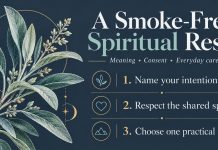
- Choose a modest question. Ask about your own values or a low-stakes choice, such as what you want to pay attention to this week.
- Stay comfortably aware. Sit or stand as you prefer, breathe normally and notice the room. Eyes can remain open. You do not need trance, sleep loss or an out-of-body experience.
- Record what arises as an impression. A few words, a sketch or a private digital note is enough. You can stop whenever you want.
- Consider alternatives. What recent conversation, hope, memory or worry might relate to it? What would you need to check independently?
- Return to ordinary activity. Choose a small, reversible action only if it makes practical sense. No action is required simply because a thought felt powerful.
If prayer is part of your spiritual life, you may frame the pause with your own words. An intention can express your values; it cannot guarantee the origin, truth or safety of a later impression. There is no special diet or measured vibration you must achieve first.
Dreams and automatic writing
Dream reflection
You can note a dream’s images and emotions and ask what they mean to you. Preserve ordinary sleep and leave room for memory and imagination. Dreaming of someone does not prove a message from them.
Free writing
Write or type a short response to a prompt if you wish, then review it as material you produced. Do not assume unedited words are external instructions or hidden facts. Stop if the activity becomes frightening or hard to control.
Our guide to interpreting a “soul message” offers questions about values, alternatives and decisions. Our intuition guide adds ways to compare a hunch with information you can actually check.
Free impression review worksheet
- Exact impression: What words or image did I notice before interpreting it?
- Context: What was I thinking about, and what information was already available?
- Possible meaning: What personal or spiritual association do I see?
- Alternatives: What other explanation fits, and what remains unknown?
- Boundary: Does acting on it respect evidence, consent and my actual circumstances?
- Next step: A small practical action, further checking or choosing not to act?
Example: an image of an open door might remind you to ask about a course you are interested in. It does not establish that a place is available, that you must enrol or that the image came from a guide. Check the course details and decide freely.
Keep your authority over decisions
No claimed message should require you to harm yourself or others, ignore consent, spend under threat or abandon prescribed care. Do not use channeling to decide medical treatment, accuse someone of wrongdoing or claim access to private thoughts. Ask relevant professionals and use ordinary evidence for consequential decisions.
If you consult a practitioner, ask what they mean by channeling, what the session includes, the price and how you can end it. You can decline touch, recording, intimate questions or a suggested ritual. Claims that only one person can protect you, urgent fear-based payments or demands for secrecy deserve caution.
When an experience feels outside your control
A spiritual interpretation and appropriate care can coexist. Seek medical help for hearing voices or other perceptions that seem real but are not shared by others, particularly if new, distressing or disruptive. The NHS explains possible causes and when to seek help. For voices directing harm, immediate danger or sudden serious symptoms, use urgent local help or emergency services.
You do not need to intensify a practice to prove that you are spiritually open. Curiosity can remain a thoughtful conversation with your beliefs, imagination and values while leaving room for uncertainty, rest and support.
Frequently asked questions
1. What is channeling?
People use the term for experiences interpreted as guidance from a spirit, higher self or another source. The label describes an interpretation rather than independently verifying where information came from.
2. Is every intuitive thought channeling?
No. Inspiration, memory, imagination and inner speech can feel meaningful without establishing an external source.
3. Does everyone have to develop this ability?
No. There is no obligation to pursue channeling or treat a lack of unusual experiences as a spiritual deficiency.
4. Must I enter trance?
No. You can explore spiritual questions through ordinary, fully aware reflection. You do not need to force a special state.
5. Do brainwave or voice changes prove spirit contact?
No. Measures of a reported state do not identify a spirit or verify the truth of a message.
6. Can I use a private digital note?
Yes. A few words or a sketch can help record an impression. Keep sensitive information private and do not assume an unedited note is an external instruction.
7. Can a dream be meaningful without being a verified message?
Yes. You can explore its emotion and symbolism while leaving the source uncertain and preserving ordinary sleep.
8. What is a suitable beginner question?
Choose a low-stakes question about your own values or attention, rather than demanding a prediction or information about someone else’s private life.
9. Do I need a special diet or high vibration?
No special diet or measured spiritual frequency is required for a reflective pause. Attend to ordinary nourishment and individual health needs.
10. Should I trust an impression immediately?
Record it, consider available information and alternatives, and check facts before acting. Strong conviction alone is not verification.
11. Can a message override another person’s no?
No. Consent and privacy still apply, regardless of the spiritual meaning you attach to an impression.
12. Can I stop a session or practice?
Yes. You can stop, change activities, decline touch or questions and seek support. You do not need to prove commitment by continuing.
13. Can channeling guide medical treatment?
Do not use an impression to diagnose or change treatment. Discuss medical decisions with an appropriate qualified professional.
14. What if I hear a voice that feels outside my control?
Seek medical help, particularly when it is new, distressing or disruptive. Use urgent local help for instructions to harm, immediate danger or sudden serious symptoms.
15. What is a useful outcome of reflection?
A clearer question, a meaningful personal association or a small practical step may be useful. An unusual experience or a prediction is not required.