
Creative rune casting means designing a modern reflection layout around a specific question instead of borrowing a spread and pretending it is an ancient universal rule. The runic characters come from historical writing systems; the position labels, prompts, colors, diagrams, and journaling method you create are contemporary choices.
A creative layout can help organize attention, but it does not make random tokens reveal objective truth, divine commands, or future events. If you want fixed one- and three-rune worksheets before designing your own, begin with Divination Using Rune Stones.
Design positions before drawing
Start with the purpose of the exercise. Are you comparing options, reviewing a project, preparing for a conversation, or noticing what information is missing? Create a small number of positions that address different parts of that purpose. Three or four positions are usually easier to interpret honestly than a large dramatic pattern.
Write the position labels before selecting any token. Labels such as “hidden destiny” or “what they secretly think” invite unsupported claims. Prefer positions that can be checked or acted on.
| Goal | Useful position set | Position set to avoid |
|---|---|---|
| Prepare for a conversation | Known facts · my concern · question to ask | Their secret · their lie · destined outcome |
| Compare choices | Option A tradeoff · Option B tradeoff · missing evidence | Guaranteed success · guaranteed failure · fate |
| Review a project | What works · current obstacle · next small test | Cosmic approval · hidden enemy · final prophecy |
| Check a worry | Observable evidence · alternative explanation · support available | Curse source · spiritual attack · required cleansing |
| Reflect on values | Value involved · competing need · responsible action | Higher-self command · moral purity · punishment |
Use a simple creative-layout template
- Name the layout. Use a plain descriptive name such as “conversation preparation” or “project review.”
- State the question. Keep it low stakes, within your influence, and open to more than one answer.
- Define each position. Write one sentence explaining what the position does and does not represent.
- Choose the character reference. Identify the alphabet and source; separate historical associations from modern keywords.
- Set orientation rules. Decide whether you will ignore reversals, turn every token upright, or use a disclosed modern contrast prompt.
- Set a stopping rule. Choose the number of tokens and whether clarifiers are prohibited before drawing.
- Plan the evidence check. Add one field for facts that support or contradict each interpretation.
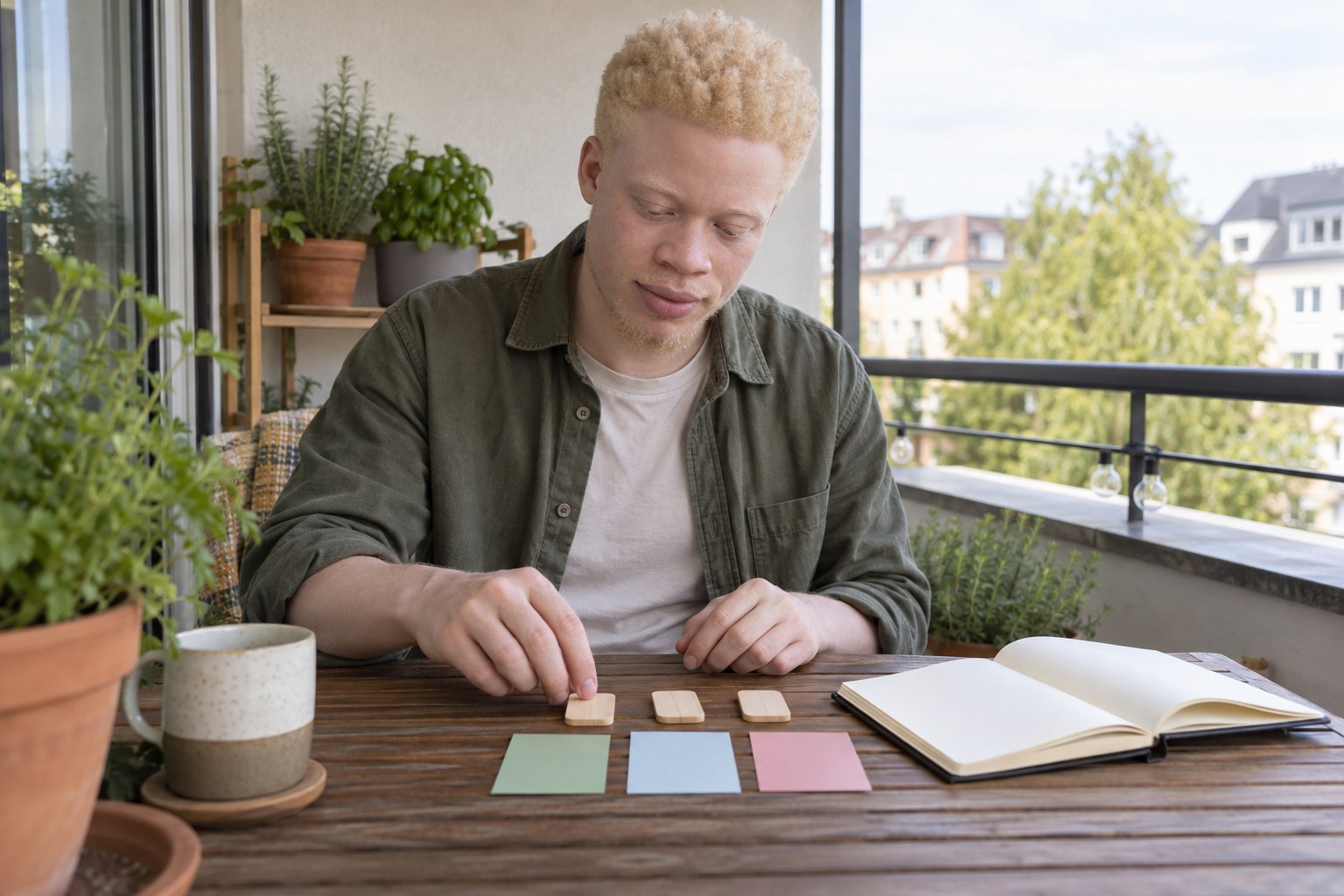
Colors, shapes, index cards, or a hand-drawn diagram can make the positions easier to remember. They are visual organizers, not energy channels. Avoid copying sacred designs, community-specific ceremonial objects, or cultural symbols merely for atmosphere.
Cast or draw safely
Drawing from a bag is quiet and predictable. Casting can show spatial relationships, but those relationships are meaningful only under rules you defined beforehand. Use a stable surface with enough room, and do not throw hard pieces near people, pets, windows, electronics, food, or fragile objects.
A cloth can reduce noise or protect a table. Candles, smoke, crystals, a prescribed direction, and special music are optional modern ritual elements, not requirements for accuracy. If using flame or smoke, consider ventilation, asthma, pets, household consent, local fire rules, and safer no-flame alternatives.
Interpret with more than one possibility
For each position, write the exact character, the source wording, and at least two interpretations. Include one ordinary explanation and one interpretation that challenges your preferred story. “No useful fit” is a valid result.
A rune associated in a modern book with “gift” does not mean money is arriving. In a project-review layout, it could prompt questions about reciprocity, unpaid help, resources, or whether the association is irrelevant. The position and question narrow the reflection; they do not verify a prediction.
Do not redraw because a token feels wrong, warm, sticky, heavy, magnetic, or emotionally uncomfortable. Temperature, moisture, wear, size, expectation, and hand position can make one piece feel different. If blind selection matters, inspect whether the pieces can be identified by touch.
Test whether the layout is useful
After the exercise, rate the layout rather than the mystical power of the draw. Were the positions distinct? Did they produce new questions rather than repeat one theme? Could you identify outside facts to check? Did the process preserve choice and lead to a proportionate next step?
Keep the original wording and all awkward results. Do not rewrite a position after an event, add unlimited clarifiers, or count a vague association as a specific hit. If testing prediction, define the target, scoring rule, and time window before drawing and compare results with chance.
Creative does not mean historically ancient
Modern readers may combine runes with tarot-style spreads, zodiac signs, chakras, colors, or other systems. Label the combination as contemporary rather than “Viking,” “Celtic,” “shamanic,” “Indigenous,” or an ancient secret. Those words refer to different histories and living communities and are not interchangeable decorative themes.
Runic writing has historical and contemporary cultural contexts, and some rune forms have also been appropriated by Nazi and neo-Nazi movements. A character in a linguistic chart is not automatically extremist, while racist slogans and movement-specific designs matter. Avoid extremist adaptations and learn a symbol’s context before displaying it publicly.
Respect consent and decision limits
Do not design layouts to diagnose illness, pregnancy, mental-health conditions, curses, crimes, abuse, addiction, fertility, or cause of death. Do not claim a layout reveals an absent person’s private thoughts, fidelity, safety, location, or intentions.
When reading for another person, explain that the layout is your modern design and may be wrong. Agree on price, time, privacy, notes, and off-limit topics. Never use a frightening position to sell cleansing, protection, activation, or repeat sessions.
Stop if the activity increases panic, compulsive checking, sleeplessness, or difficulty distinguishing thoughts from outside messages. Important medical, legal, financial, relationship, and safety decisions require direct evidence and qualified help.
Keep a layout card
Save a short record containing the layout name, purpose, position definitions, alphabet, reference, orientation rule, stopping rule, date created, and one example. This makes the method repeatable and prevents rules from shifting around a desired answer.
Once you have tested several designs, compare them with the wider range of modern layouts in Reading Runes. Complexity is optional; a small layout with clear positions is usually easier to audit and explain.
Frequently asked questions
Can I invent my own rune-casting layout?
Yes. Label it as a modern personal method, define every position before drawing, document the reference and rules, and avoid claiming that the layout is an ancient ceremony or predicts facts.
How many runes should a creative layout use?
Use the fewest needed to answer distinct reflective prompts. Three or four positions are often easier to record and less likely to encourage vague storytelling than a large spread.
Do colors or shapes add spiritual power to a layout?
There is no reliable evidence that colors, shapes, or diagrams make a layout more accurate. They can serve as visual organizers if their meanings are stated in advance.
What makes a creative rune layout responsible?
Clear consent, predefined positions, disclosed modern rules, multiple interpretations, outside evidence checks, complete records, a stopping rule, and firm limits on high-stakes claims.

‘Guidance into a new world of growth’ suggests a transformative experience but leaves much open to interpretation.
‘Know thyself’ is a profound motto, yet it seems rather simplistic when confronted with complex human emotions.
It is intriguing how ancient symbols were utilized for communication, however, the connection to modern oracle practices seems somewhat tenuous.
Indeed, it does require a leap of faith to believe in the intuitive aspect of rune consultation.
The process described for selecting runes seems very subjective; how do we validate such experiences?
The notion of runes as medium for self-exploration is quite fascinating, though it raise question about their actual efficacy.
The idea that we all possess oracles within us is compelling yet also raises questions about the nature of intuition and its reliability.
Yes, and one must consider whether these ‘oracles’ are truly innate or cultivated through experience.
‘Sacred play’ as described could be interpreted in various ways; context appears crucial in understanding its significance.
‘Context’ indeed shifts perspectives on such spiritual practices; perhaps personal interpretation plays a role.