

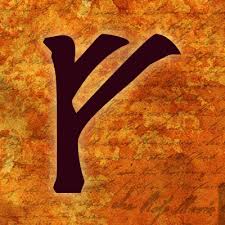
Quick answer
Fehu (ᚠ) is the first character of the Elder Futhark and gives the alphabet its opening letter, F. Its reconstructed name means cattle, and by extension movable wealth, reflecting a historical association between livestock and property, rather than a promise of income. The medieval rune poems attach a warning to it: wealth comforts, and wealth causes strife between kin. Modern readers use Fehu as a prompt about resources, what you have, what it costs to keep, and whether you are sharing it well. It does not predict money arriving. For the full 24-rune reference see Understanding runes and the meanings.
Fehu at a glance
| Character | ᚠ |
|---|---|
| Sound | f |
| Reconstructed Proto-Germanic name | *fehu, “cattle, wealth” (compare Old English feoh, Old Norse fé, and the English word “fee”) |
| Position | First of 24; first of the first ætt (group of eight) |
| Attested | Found in Elder Futhark; related forms continue in Younger Futhark (ᚠ fé) and the Anglo-Saxon futhorc (feoh) |
What the rune poems say
Three medieval poems give each rune a short verse. They were written centuries after the alphabet began, in different countries, and they do not agree, which is worth knowing before anyone tells you a rune has one meaning.
- Old English Rune Poem (c. 8th–10th century): wealth is a comfort to everyone, but a person must give it away freely if they want honour before God. The theme is generosity.
- Norwegian Rune Poem (c. 13th century): wealth causes strife among kinsmen; the wolf grows up in the forest. A modern reader might connect these images with conflict and risk, but that is an interpretation.
- Icelandic Rune Poem (15th century): wealth is strife among kin, fire of the sea, and the serpent’s path. These are poetic wealth images, not directions for a prosperity ritual.
The stanzas offer different images of wealth, comfort, giving and conflict. A modern reflection on sharing or resource management can draw on them, but it should not be presented as their single hidden message. For textual detail, see the Icelandic poem edition and the Norwegian poem study.
Modern reflection prompts
| If drawn | Prompt |
|---|---|
| Upright | What resources do I actually have (money, time, skill, goodwill), and which one am I not using? |
| Reversed (a modern convention, not historical) | What am I hoarding, wasting, or fighting over? What is the cost of keeping it? |
| With Gebo (ᚷ, gift) | Is there something to give away that would do more good moving than staying? |
| With Nauthiz (ᚾ, need) | Is the shortage real? Have I added it up? |
What Fehu is not
- A sign that money, a job or an inheritance is on its way. A rune draw is not an established reliable forecast.
- A charm for attracting wealth. A meaningful reminder is not a demonstrated mechanism for attracting income.
- A “rune of nourishment” for grief. A modern grief-related interpretation should not be treated as a conclusion established by these wealth stanzas.
If money is the worry, an optional reflection may help you frame the question, but decisions need actual figures, obligations and appropriate qualified advice. See Using runes for divination for the method and its limits.
Frequently asked questions
1. What does Fehu mean?
Its reconstructed name is associated with cattle and wealth. The related poem stanzas discuss comfort, giving and conflict, rather than a single prediction about your finances.
2. Does drawing Fehu mean money is coming?
No reliable financial forecast follows from the draw. You can use it as a prompt to check resources, but income and spending decisions need real information.
3. What does Fehu reversed mean?
Reversed readings are optional modern conventions. Some readers use loss, waste or conflict as prompts; drawing the symbol does not establish that a loss will happen.
4. Is Fehu a good luck charm for wealth?
No established evidence shows that carrying this symbol attracts money. It may serve as a personal reminder, but it should not replace a budget or support a purchase, investment or gambling decision.
5. Why is Fehu first in the alphabet?
The reason for the historical order is not certain. Its F sound begins the sequence whose first six sound values give Futhark its name.
Note: Poem summaries are paraphrases. Modern prompts are interpretations, not financial forecasts or financial advice.


The notion of ‘luck’ being an energy field adds layers to our understanding of chance and agency in life.
‘Beginner’s mind’ captures an essential aspect of growth, suggesting that openness to new experiences can foster wealth creation.
‘Circulation of power’ is a fascinating concept; it mirrors economic principles while invoking spiritual dimensions as well.
‘Wealth as food, water, shelter,’ aligns with Maslow’s hierarchy; it elevates the definition of wealth beyond monetary values.
‘Procrastination,’ as mentioned here, is indeed a common barrier to achieving these goals we set for ourselves.
‘New beginnings’ also implies an ongoing journey rather than a fixed destination which I find quite profound.
‘Energy mobility’ connects deeply with contemporary economic discussions about fluidity in resources and opportunities.
Indeed, Fehu could be interpreted as not only a rune of luck but also an embodiment of personal power and agency in one’s life.
‘Courageous deeds’ certainly stands out; it resonates with the idea that proactive engagement can lead to favorable results.
I agree with that perspective. It seems to suggest a deeper connection between individual actions and the outcomes we achieve.
The concept of Fehu holds significant relevance in understanding wealth, however, its implications extends beyond mere financial gain.