

Quick answer
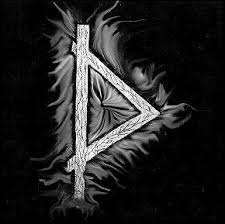
Thurisaz (ᚦ) is the third character of the Elder Futhark and stands for the TH sound. Its reconstructed name means giant (Old Norse þurs), while the Anglo-Saxons called the same letter þorn, thorn. The letter itself outlived the alphabet: þ was used in Old English and is still part of the Icelandic alphabet today. The rune poems give it a hard edge, sharpness, harm, the trouble giants cause, and modern readers use it as a prompt about defence, conflict and force. No established evidence shows that drawing or carrying it automatically changes consciousness or prevents harm. For the full reference see Understanding runes and the meanings.
Thurisaz at a glance
| Character | ᚦ |
|---|---|
| Sound | th (as in “thorn” or “the”) |
| Reconstructed Proto-Germanic name | *þurisaz, “giant” |
| Other names | Old English þorn (thorn); Old Norse þurs (giant) |
| Afterlife as a letter | Þ/þ used in Old and Middle English (the “Ye” in “Ye Olde” is a misread þe, “the”); still a letter of Icelandic |
What the rune poems say
- Old English Rune Poem: the thorn is painfully sharp for any warrior who grabs it, and harsh to anyone who lies down among thorns. That physical image can supply a modern caution metaphor.
- Norwegian Rune Poem: the giant causes sickness in women; few are cheerful at bad luck. This is literary imagery, not a medical explanation or a diagnosis.
- Icelandic Rune Poem: the giant is women’s torment, a dweller in the rocks, husband of a giantess. These mythological descriptions are not statements about women’s health or evidence of an actual supernatural threat.
The stanzas contain sharpness or harmful giant imagery, but their cultural contexts differ. They do not establish that a draw warns of a danger in your life. The older rose-protection interpretation is a modern metaphor, not a conclusion supported by these stanzas. Compare the Old English poem edition and R. I. Page’s Icelandic edition.
Modern reflection prompts
| If drawn | Prompt |
|---|---|
| Upright | What is the sharp edge in this situation, mine or someone else’s? Am I about to grab a thorn? |
| Reversed (modern convention) | Where am I being defensive when nothing is attacking? Or refusing to defend when something is? |
| With Algiz (ᛉ, modern protection association) | What peaceful, proportionate boundary could I set, based on actual behaviour rather than a feared omen? |
| With Ansuz (ᚨ, speech) | What needs to be said clearly, and what am I only assuming about another person? |
What Thurisaz is not
- A protective charm. Do not rely on a carved symbol for safety. Practical precautions and trusted support matter, but no measure guarantees protection.
- “Thor’s rune”. A Thor or hammer association is a modern interpretive choice; it should not be equated with the reconstructed giant name.
- A rune that “raises consciousness”. The poem imagery does not demonstrate an automatic consciousness-changing effect.
Use a prompt, not an accusation
If you use the thorn metaphor, ask what you have actually observed and choose a proportionate next step. The separate thorn-and-awareness discussion applies that metaphor without claiming protection or access to private intentions. A draw is not evidence that someone is your enemy.
Frequently asked questions
1. What does Thurisaz mean?
Its reconstructed name is associated with giant, while the Old English rune is called thorn. The related poem stanzas use different sharpness and mythological images; they are not a single prediction rule.
2. Is Thurisaz the letter thorn?
The related runic character developed into the letter thorn, written Þ or þ. Thorn was used in English and remains part of Icelandic writing; that linguistic history is separate from divination.
3. Is Thurisaz a bad rune to draw?
The draw does not establish that harm will occur. In modern reflection, you can use it to examine a concern, but check that concern against observable evidence rather than treating the symbol as an omen.
4. Does Thurisaz protect against enemies?
No established evidence shows that carrying or carving it prevents harm. Do not replace practical safety measures or trusted support with a charm, or label another person an enemy because of a draw.
5. What does Thurisaz reversed mean?
Reversals are optional modern conventions. Some readers consider defensiveness or resistance; these are questions to explore, not a diagnosis of character or proof of a threat.
Note: Poem descriptions are paraphrases. Modern prompts are interpretations, not ancient instructions, diagnoses or safety guarantees.


The idea that Thurisaz embodies both destruction and fertility seems paradoxical at first but underscores the cyclical nature of existence itself.
‘Breaking resistance’ resonates well with personal growth narratives prevalent today, emphasizing the need for conscious effort in overcoming barriers.
‘Constructive conflict’ poses a thought-provoking notion; can it indeed lead to positive outcomes if handled with awareness? It raises significant questions.
‘Destructive storms’ as metaphors for inner turmoil seem an apt reflection of contemporary challenges, demonstrating how ancient wisdom remains relevant.
‘Awakening of the will to action’ as mentioned here is quite relevant in today’s context where individuals grapple with inertia in a fast-paced world.
‘Understanding of division and separation’ invokes thoughts on interpersonal relationships and conflicts that are ever-present in modern society. Quite insightful indeed.
The discussion regarding Thurisaz offers an intriguing perspective on how ancient symbols relate to contemporary psychological concepts. It is fascinating yet complex, the interpretation of such runes.
While many might see Thurisaz merely as a rune, its implications on societal constructs should not be understated. The duality of its meaning reflects much about human nature.
I agree with you; the linguistic roots of Thurisaz and its historical contexts provide deep insights into our collective unconscious.