

Quick answer
“Opening the third eye” is spiritual and symbolic language, not a medical event with a standard set of symptoms. People may use the phrase for insight, conscience, imagination, meditation or a change in perspective. It does not verify clairvoyance, spirit contact or the ability to read another person’s thoughts.
A grounded approach respects the phrase’s religious and modern spiritual contexts while keeping health, safety and outside facts separate from personal meaning.
Metaphor, belief and anatomy are different layers
Third-eye language appears in more than one philosophical, religious and modern spiritual setting, so it should not be reduced to one universal definition. A personal practice may connect the phrase with inner observation or wisdom. That is a belief or interpretive framework, not proof of a new physical organ or paranormal perception.
The pineal gland is a real endocrine structure in the brain, but calling it the “third eye” does not show that it produces supernatural sight. Pressure at the brow, tingling, visual effects, headaches or changes in sleep can have ordinary causes. Persistent, severe or sudden symptoms deserve appropriate medical evaluation rather than a spiritual diagnosis.
What a short reflective practice can reasonably do
A brief pause can help someone notice breathing, body tension, thoughts and emotions. Research on meditation and mindfulness addresses varied practices and outcomes; it does not test or establish a literal third eye. The National Center for Complementary and Integrative Health also warns that research is often preliminary or difficult to interpret and that negative experiences can occur.
For an evidence-aware comparison of group practice, see Community Meditation and Collective Stress: What We Know. Keep any third-eye interpretation separate from measured meditation outcomes.
A five-minute grounding option
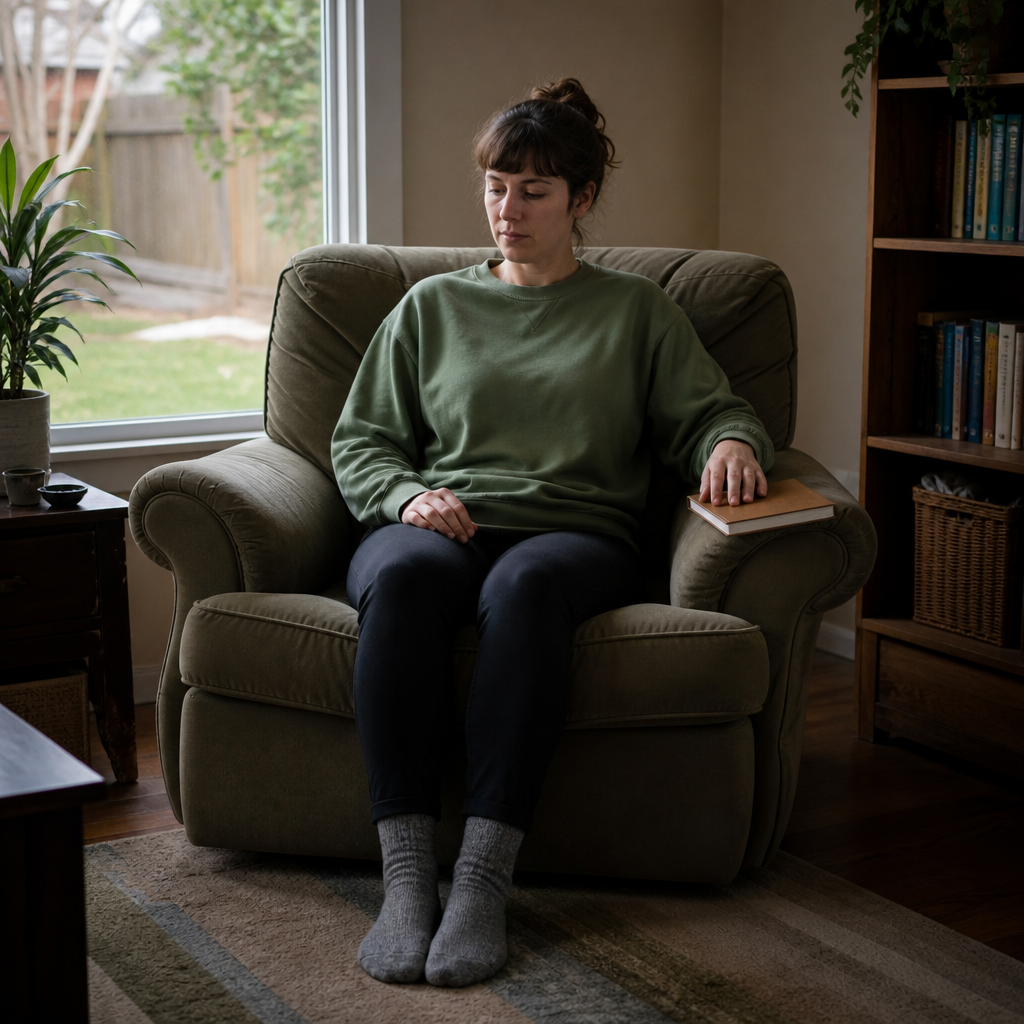
This exercise does not attempt to activate a power. It is simply a short attention check.
- Orient. Sit in a stable position and name the room, date and time.
- Keep the eyes comfortable. Use a soft gaze or close the eyes only if that feels safe. Never stare at the sun or another bright light.
- Notice contact. Feel the chair, floor or another ordinary point of support.
- Label three experiences. Name one body sensation, one emotion and one thought without calling any of them a message.
- Check the outside world. Ask what facts are known, what remains uncertain and what can be verified.
- Choose an ending. Stretch, drink water, look around the room and stop at five minutes.
Skip breath holding, forced breathing, sleep deprivation, fasting, substances, prolonged isolation and pain. More intensity is not evidence of more insight.
Use a three-column reflection record
Swipe horizontally if any columns are off-screen.
| Experience | Personal interpretation | External check |
|---|---|---|
| “I felt pressure near my brow.” | “I associate this area with concentration.” | Relax the face; note headache, vision or sinus symptoms; seek care if concerning |
| “An image appeared in my mind.” | “It reminds me of a current worry.” | Do not treat the image as evidence about another person or event |
| “I felt calm after sitting.” | “The pause was useful today.” | Avoid claiming the same effect for everyone or replacing care |
| “I sensed someone was upset.” | “I may be reacting to tone or my own concern.” | Ask respectfully rather than claiming to know their mind |
Do not convert strong feelings into facts
A vivid image, dream, coincidence or bodily sensation can feel important. Record it as an experience. Do not use it to accuse a partner, diagnose illness, locate a missing person, predict death, choose an investment or make an irreversible legal or medical decision.
Likewise, feeling “energy” may be a personal description of mood, attention or atmosphere. It does not establish what a plant, animal or another person thinks. Consent and direct communication still matter.
Stop conditions are part of the practice
Stop the exercise if it increases panic, dissociation, confusion, sleeplessness, agitation or a sense that ordinary events contain commands meant only for you. Ground with familiar surroundings and contact a qualified health professional. If there is immediate danger or risk of self-harm, use emergency or crisis support in your location.
The National Institute of Mental Health describes hallucinations, delusions and disorganized thought or behavior as possible features of psychosis and emphasizes that early treatment matters. Spiritual language should never be used to dismiss distressing voices, visions, paranoia or major changes in functioning.
Meditation is not a substitute for conventional care. NCCIH advises people not to postpone seeing a health provider because of a complementary practice. A skilled instructor should welcome questions, opt-outs and referral to appropriate care.
Eye safety: do not gaze at the sun
Some third-eye imagery places bright light near the forehead. Treat that as visual symbolism only. The National Eye Institute warns that looking directly at the sun can damage the retina and may cause permanent vision loss; dark sunglasses do not make direct viewing safe.
Use indirect indoor light and a comfortable gaze. If bright-light exposure is followed by blurred vision, light sensitivity, dark spots or color changes, seek prompt evaluation from an eye-care professional.
Respect the source context
Avoid presenting one modern internet exercise as the universal teaching of Hinduism, Buddhism or Tantra. Traditions have their own texts, teachers, languages and debates. Do not borrow sacred symbols as decorative proof of psychic ability.
When comparing practices across cultures, identify the specific source and distinguish historical records, living practice and personal belief. Our source-aware traditions guide explains why broad labels and supernatural certainty can flatten very different communities.
Choosing a teacher or guided session
Ask what the exercise involves, how long it lasts, what training the facilitator has and what happens if someone becomes distressed. Leave if a teacher promises guaranteed awakening, pressures sleep deprivation or substances, discourages medical care, demands secrecy or says only they can remove a blockage for additional payment.
A responsible facilitator allows ordinary language, shorter sessions, eyes-open options and stopping without penalty. They do not diagnose a “closed third eye” or turn fear into a sales tool.
Frequently asked questions
1. Is the third eye a physical organ?
No separate anatomical eye opens in the forehead. “Third eye” is spiritual and symbolic language. The pineal gland is real anatomy, but that does not establish supernatural sight.
2. Does brow pressure mean my third eye is opening?
Brow pressure is not proof of a spiritual event. Relax the face and consider ordinary causes. Seek medical or eye care for severe, sudden, persistent or concerning symptoms.
3. Can meditation cause difficult experiences?
Yes. Meditation is often described as low risk, but negative experiences including anxiety and depression have been reported. Stop if distress increases and seek qualified support when needed.
4. Should I look at the sun during third-eye practice?
No. Direct sun gazing can damage the retina and may permanently impair vision. Use comfortable indirect light and never treat bright-light exposure as a spiritual requirement.


‘Surrendering’ seems to be a key term here. But in practical terms, how does one achieve this state? Clear guidelines would be helpful.
While I appreciate the spiritual insights, the language used could benefit from more clarity and precision in articulating these experiences.
The idea that emotions are more than physical reactions is compelling, however, one must ask how this reconciles with psychological theories.
‘Higher consciousness level’ is a phrase often used in spiritual discourse; its implications should be further elucidated for better understanding.
The concept of third eye opening seems intriguing, yet I finds it difficult to fully comprehend how one can surrender their thoughts for this process.
‘Finding peace inside oneself is a noble pursuit; however, what practical steps can lead individuals towards achieving this state?
I wonder if there are scientific basis behind these claims of heightened awareness. It would be interesting to explore.
‘Understanding energies’ sounds poetic; yet it lacks empirical support. How can we measure such experiences?
‘RationalThinker’, true, but without some form of evidence, one might question the validity of such claims altogether.
‘MysticTraveler’, perhaps subjective experiences do not always lend themselves to empirical validation?