Quick answer
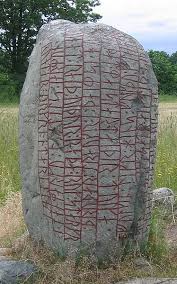
The story that Odin won the runes by hanging nine nights on the world tree comes from the Hávamál, an Old Norse poem preserved in a 13th-century Icelandic manuscript. It is a myth about the price of wisdom, not a record of how a writing system began; early runic inscriptions belong to the first centuries CE, while the precise alphabetic model and route of adoption remain debated. The “Nordic rune stones” people picture, the great memorial stones of Sweden and Denmark, are often Viking-Age monuments using the 16-character Younger Futhark. Stones with runic writing also exist outside that period. Our full guide to the history and the limits of ancient-casting claims is here: Origins and ideas behind rune casting. This page separates the myth, the stones and the modern tiles.
Three things called “rune stones”
Swipe horizontally if any columns are off-screen.
| What people mean | What it is | Alphabet |
|---|---|---|
| The Odin myth | Stanzas 138–145 of the Hávamál: Odin hangs wounded on the windswept tree, “myself to myself”, takes up the runes and falls back screaming. A poem about sacrifice for knowledge. | None; a story |
| Viking-Age runestones | Many surviving examples, especially in Sweden, commemorate people and journeys, with ornament and sometimes crosses. They are public monuments; a monument’s text is not a bag-drawing oracle. | Younger Futhark (16 characters) |
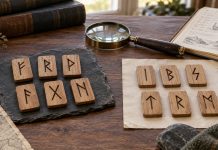
| Modern rune tiles | Contemporary practice sets often contain 24 tiles marked with the older alphabet. Their small portable form and reading rules should not be conflated with memorial monuments. | Elder Futhark (24 characters) |
Keep myth, inscription and modern practice separate. Odin is a deity in the poem’s mythic setting. Viking-Age writing is not evidence of one unchanged divination method, and alphabet changes were regional transitions rather than a universal overnight abandonment.
What a real runestone says
The Gripsholm stone in Södermanland, designated Sö 179, records Tola’s memorial for her son Harald, described as Ingvar’s brother, and a journey ending in death in Serkland. This is one particular poetic memorial, not a template for every stone or a complete itinerary. The Sörmlands Museum’s inscription exercise presents this and related evidence. The Swedish National Heritage Board’s Runor database lets you compare registered inscriptions and records.
Using the myth well
- Read the Hávamál as literature and myth, not a demand to earn insight through suffering. Do not imitate injury, hanging, deprivation or other harmful acts; safe study requires none of them.
- Do not cite the myth as evidence that runes were made for divination. It is not, and saying so misleads readers.
- Study a museum record or visit an accessible site if practical. Follow local conservation rules: do not rub, chalk, scratch, paint or remove material from a monument.
From monument to modern token
For the practical distinction, our rune character reference separates alphabet names from modern reflection prompts. Historical or spiritual interest does not establish forecasts, healing or control over another person.
Frequently asked questions
1. Are memorial runestones the same as reading tiles?
No. A runestone is an inscribed monument or object with a particular historical context. A modern reading set consists of portable tokens with declared contemporary rules.
2. Does Odin’s story explain the script’s historical invention?
It is a mythic account preserved in literature, not an archaeological record of invention. Early inscriptions and alphabet development require separate historical study.
3. Did every Nordic runestone use the same alphabet?
No. Alphabet families and forms vary with date and region. Younger Futhark is characteristic of Viking-Age Scandinavia, but runic stones are not confined to that period.
4. Must I suffer or perform a ritual to study runes?
No. Do not imitate the myth’s injury or deprivation. Safe reading, museum study and ordinary craft do not require harm, compulsory belief or a paid spiritual remedy.

It’s fascinating that the Elder Futhark alphabet has its roots in the Germanic tribes, and I would be interested in knowing how it evolved over time.
The concept of runes being tied to animism is intrigueing, it shows a deep connection to the natural world that is often forgotten in modern times.
Odin’s fast on Yggdrasil seems like a metaphore for the pursuit of knowledge, yet I wonder how much of this tale is historical fact versus myth?
‘Casting’ the runes as a method of divination mirrors practices seen in various cultures, yet what might differentiate Norse methods from others?
‘Magic of the Gods’ ties beautifully into the narrative of runes. One can wonder if all religions share similar archetypes regarding divine knowledge acquisition.
‘Summoning’ through writing is a compelling notion; it suggests a power within language itself that many cultures perhaps recognize differently.
I find it interesting that each rune not only represents a sound but also holds meaning. This duality could reflect complexities of human language itself.
The association of runes with divination raises questions about their actual use in ancient societies. Were they considered purely mystical or also practical?