

“Psychic abilities” is an umbrella term used in many spiritual communities for experiences such as vivid mental images, inner speech, body sensations, sudden impressions, unusual smells or tastes, and a feeling of knowing. These experiences can feel important, but they do not by themselves prove telepathy, spirit contact, prediction, or access to hidden facts.
You can still explore them responsibly. A grounded practice develops attention, description, uncertainty, fair testing, and good judgment. It does not require you to declare a supernatural gift, ignore ordinary explanations, or use an impression for a high-stakes decision.
Know what you are trying to cultivate
Spiritual writers often group experiences under “clair” labels. The labels may be meaningful as personal vocabulary, but they are not medical diagnoses or scientifically established channels of information. The spelling commonly used for psychic smell is clairalience; “clairalliance” is a frequent variation or error.
| Spiritual label | Experience being described | Ordinary sources worth checking |
|---|---|---|
| Clairvoyance | Mental pictures, colors, scenes, or symbols | Visual imagery, memory, dreams, expectation, migraine, or eyesight changes |
| Clairaudience | Words, music, tones, or an “inner voice” | Inner speech, memory, auditory imagery, tinnitus, nearby sound, or hearing changes |
| Clairsentience | Body sensations or a felt emotional atmosphere | Emotion, empathy, posture, pain, temperature, stress, hunger, or learned social cues |
| Claircognizance | A sudden conclusion or sense of knowing | Fast pattern recognition, prior knowledge, inference, bias, or coincidence |
| Clairalience | A smell without an obvious source | Real environmental odors, memory, sinus issues, migraine, medication, or neurological causes |
| Clairgustance | A taste without eating or drinking | Food residue, reflux, dry mouth, dental issues, medication, infection, or altered taste |
Start with a plain observation: “I pictured a red bicycle,” “I noticed pressure in my chest,” or “the phrase ‘call home’ appeared in inner speech.” Then record your interpretation separately. “A spirit warned me” is a much larger claim than the experience itself, and it requires evidence the experience alone cannot provide.
Use the CLEAR practice
A short structure makes practice more useful and less suggestible:
- Choose a boundary. Practice for five to ten minutes in a safe place. Do not practice while driving, supervising children, using machinery, or making an urgent decision.
- Log first. Write the time, prompt, exact image, word, sensation, smell, taste, or conclusion before looking for a match.
- Explore alternatives. List at least three ordinary sources, including recent experiences, cues, mood, sleep, health, and chance.
- Assess once. Compare the record with a predetermined target or later outcome. Do not keep redrawing or rewriting until something fits.
- Review every result. Count clear matches, partial matches, misses, blank trials, cue leakage, and changed wording. Keep the conclusion modest.
This process cultivates careful attention rather than certainty. It can reveal that you are good at noticing tone, remembering visual detail, sensing your own stress, or making rapid inferences. Those are useful findings even when the record does not support a paranormal explanation.
Try a fair low-stakes exercise
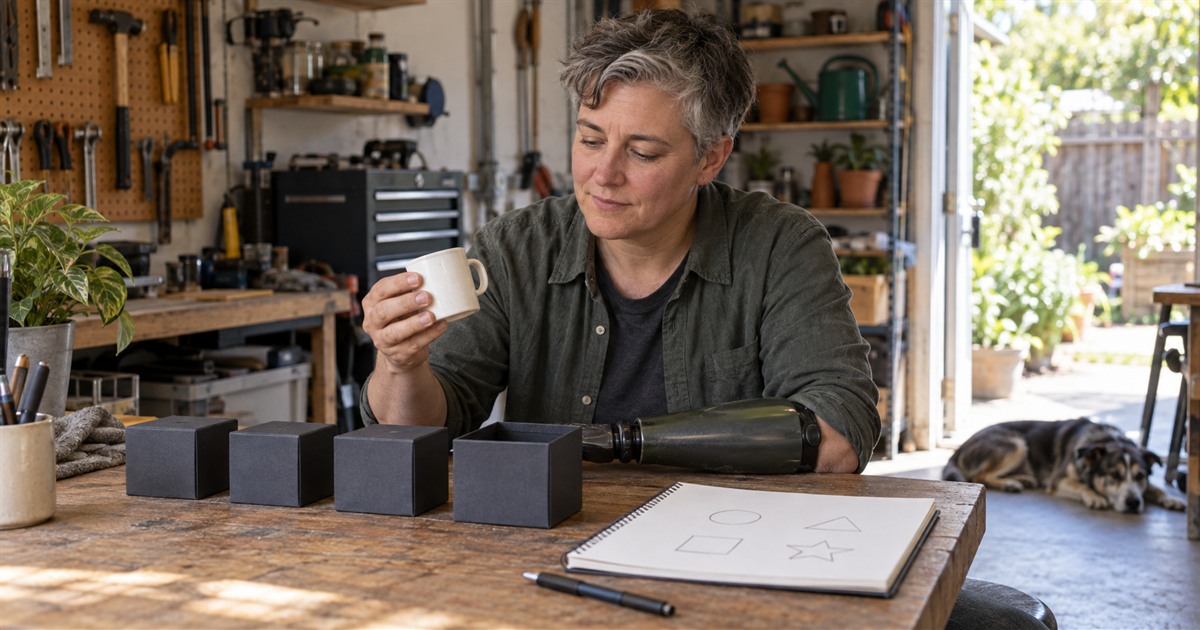
Ask another person to place one of four very different ordinary objects—such as a mug, key, pinecone, or toy car—inside identical opaque boxes. They should randomize the selection while you are out of the room and avoid giving verbal or visual cues.
- Before opening the chosen box, record specific features: shape, material, color, weight, temperature, texture, movement, sound, or function.
- Choose in advance what counts as a match. “Metallic and used to open something” is more testable than “strong energy.”
- Open the box once and score the complete record. Do not add details after seeing the object.
- Repeat with fresh randomization and keep every trial. A memorable hit is less informative when misses disappear from the story.
- Do not use the exercise to identify a person, diagnose illness, locate someone, investigate fidelity, predict danger, or reveal private information.
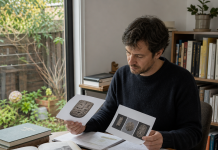
Chance, broad wording, unnoticed cues, and selective memory can create impressive-looking results. A run of matches is a reason to improve controls and repeat the exercise, not proof of a psychic source. Our guide to testing visual impressions and clairvoyant language gives a more detailed method for image-based trials.
Practice each sense without forcing a message
Images: Study an ordinary object for thirty seconds, hide it, sketch its details, then compare the sketch with the object. This exercises observation and memory. A vivid mental picture does not establish where it came from.
Sounds and words: Sit in a quiet but safe place and list actual external sounds, then voluntary inner speech, then spontaneous thoughts. Keep those categories separate. Inner speech may feel surprising without coming from an outside being.
Body sensations: Note location, intensity, duration, posture, temperature, food, caffeine, medication, sleep, and emotion. Ask what changed after movement, rest, hydration, or a shift in attention. Do not assign another person’s feelings or a diagnosis from your body response.
Sudden knowing: Write the conclusion, confidence, available clues, and two alternative explanations. Then identify what observable evidence would support or contradict it. The broader article on intuition, expertise conditions, bias, and fair testing explains why a fast impression may be useful in familiar settings but unreliable where feedback is poor.
Smell and taste: First check the room, food, smoke, gas, cleaning products, dental health, reflux, illness, medication, and environmental exposure. Do not deliberately inhale smoke, essential oils, powders, or unknown substances, and never taste something to test a psychic impression.
Meditation is optional and has limits
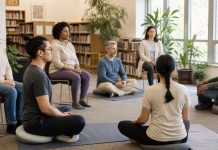
Quiet attention may make thoughts, imagery, and body sensations easier to notice because fewer external events compete for attention. That does not prove a hidden channel has opened. Meditation is not required; eyes-open observation, walking, drawing, or brief journaling may be more comfortable.
The National Center for Complementary and Integrative Health notes that meditation covers varied practices, research may be interpreted too optimistically, and negative experiences have been reported. Keep sessions short, maintain sleep and daily routines, and stop if practice increases panic, intrusive thoughts, dissociation, agitation, depression, or loss of sleep. A qualified clinician can help if symptoms persist or impair daily life.
Know when an experience needs health care
New sensory changes deserve ordinary assessment before a spiritual label. Seek medical or dental advice for a persistent unexplained smell or taste, hearing change, ringing, pain, weakness, confusion, severe headache, fainting, medication reaction, or a symptom that disrupts eating, sleep, work, or safety.
The National Eye Institute advises urgent eye care for many new floaters, flashes of light, or a curtain-like shadow because these can be signs of a retinal tear or detachment. Do not reinterpret urgent visual symptoms as clairvoyance or third-eye activation.
Hearing commands, seeing figures as if they are externally present, believing ordinary media contains personal instructions, losing the ability to check what is real, or becoming unable to sleep or function deserves prompt professional support. The National Institute of Mental Health explains that hallucinations and fixed false beliefs can occur with psychosis. This does not mean every unusual experience is psychosis; distress, functioning, safety, and reality testing matter. Use local emergency or crisis services for immediate danger or commands to harm yourself or someone else.
Protect consent, privacy, and high-stakes decisions
An impression does not grant access to another person’s thoughts, health, pregnancy, trauma, sexuality, fidelity, location, or future. Ask rather than announce, and accept a refusal. Do not contact, confront, investigate, track, accuse, publish, or make a report about someone because of a private sensation.
Do not use a psychic exercise to choose medical treatment, identify a suspect, decide whether a relationship is safe, gamble, invest, send money, leave a job, move, or replace legal or financial advice. Use verifiable information and the appropriate qualified professional.
Be cautious with practitioners who guarantee activation, say skepticism blocks a gift, diagnose a curse, demand secrecy, encourage stopping treatment, or sell repeated clearings after creating fear. Get the total price and scope before paying. The Federal Trade Commission warns that demands for cryptocurrency, wire transfers, or gift cards are scam indicators. No urgent supernatural claim makes those payment methods safe.
A four-week grounded plan
- Week 1 — describe: Keep five-minute records of images, inner words, sensations, and conclusions. Separate observation from interpretation.
- Week 2 — check context: Add sleep, mood, recent media, physical state, environmental cues, and alternative explanations.
- Week 3 — test: Complete at least ten randomized, low-stakes object trials with predefined scoring and every miss retained.
- Week 4 — review: Look for specificity, cue leakage, vague matches, changed wording, discarded trials, distress, sleep effects, and whether any practical skill improved.
Continue only if the practice remains optional, affordable, low-stakes, and compatible with daily functioning. The most useful outcome may be better observation, emotional awareness, imagination, or tolerance for uncertainty—not proof of a supernatural ability.
Frequently asked questions
Can everyone develop psychic abilities?
There is no established evidence that everyone has a latent paranormal ability. People can develop observation, imagery, memory, emotional awareness, and decision habits, but improvement in those skills should not be presented as proof of telepathy, prediction, or spirit contact.
Which psychic ability is strongest for me?
A vivid image, inner phrase, body sensation, smell, taste, or fast conclusion may show which kinds of experiences you notice most. It does not establish a dominant supernatural channel. Record context, ordinary sources, misses, and health factors before choosing a label.
How can I practice psychic abilities safely?
Use short, low-stakes sessions; write impressions before checking; prevent cues; define scoring; retain every result; and stop if practice increases distress, sleep loss, compulsive checking, or difficulty testing reality. Never use it for emergencies, diagnosis, surveillance, or major decisions.
When should I stop and seek professional help?
Seek appropriate care for new or persistent sensory changes, severe headache, confusion, reduced vision, many new floaters or flashes, hearing commands, externally perceived figures, loss of sleep, impaired functioning, difficulty checking reality, or any risk of harm.


While the idea of clairsenses is intriguing, I wonder if this is more a matter of personal perception rather than actual psychic abilities.
‘Let go of expectations’ implies an acceptance of ambiguity which is essential in personal growth; however, how does this align with goal-setting?
‘Breathe slowly and deeply’ is valuable advice for any self-exploration exercise; however, does it truly lead to psychic awareness?
Indeed, exploring such connections could yield interesting insights into human consciousness and its capabilities.
The connection between breath and heightened perception warrants further exploration within psychophysiological frameworks.
‘Clairaudience’ and other terms need clearer definitions if one wants to discuss them academically; without clarity, discourse becomes muddled.
Engaging with one’s intuitive faculties is indeed enlightening, however, it also poses a dilemma concerning the potential over-reliance on subjective experiences.
‘Engaging with one’s intuitive faculties’ sounds profound yet could just be a rephrasing of being observant.
Indeed, subjective experiences can often lead to misinterpretation. One must tread carefully in this domain.
I find it quite fascinating how one can integrate such intutive sensibilities into daily life, yet the exercises seem overly simplistic for complex phenomena.
The concept of psychic gifts being utilizable in everyday situations raises questions about their empirical validation. Can we measure these effects scientifically?
‘Each of the clairsenses are a gift,’ suggests an inherent value placed upon these abilities that may not be universally shared or accepted.