

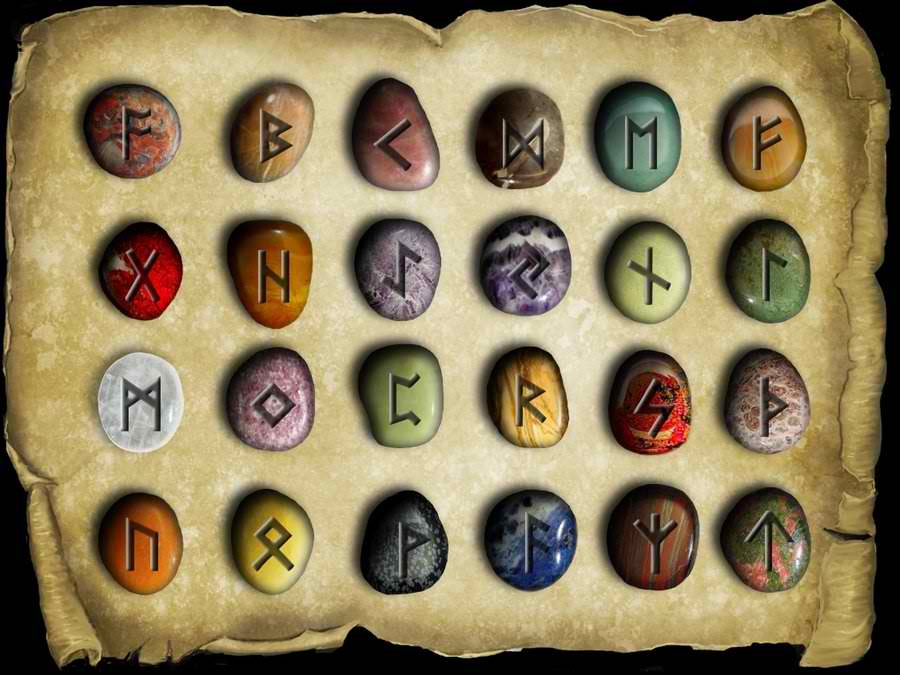
There is more than one way to use runes. Historically, runic characters were letters in several Germanic writing systems. Today, people study inscriptions, practice transliteration, make art, build memory exercises, journal with symbols or use modern rune tokens as reflection prompts. The important step is to name which activity you are doing and not present a modern exercise as ancient fact.
This guide offers seven practical activities. None requires a belief that symbols predict events, transmit energy or make decisions for you. Choose one alphabet, keep a source beside you and treat any spiritual interpretation as an optional personal framework rather than evidence about health, money, safety or another person.
Start with an alphabet and a source
“Runes” does not identify one timeless set. Elder Futhark, Younger Futhark and Anglo-Saxon futhorc have different numbers of characters and different historical settings. Before copying or interpreting a form, write the alphabet name, source and purpose at the top of your page. A museum record, academic transliteration and modern guidebook do not carry the same kind of evidence.
For the larger distinction between historical writing, language study, modern practice and popular culture, begin with what runes are and how they are used.
Seven grounded ways to use runes
| Activity | What you need | What it can do | Keep clear |
|---|---|---|---|
| Copy a documented inscription | Museum image and catalog record | Build observation skills | Copying is not yet translation |
| Practice transliteration | One alphabet chart and answer key | Connect characters with letter values | Transliteration is not the same as translation |
| Make a memory game | Paper cards or blank tiles | Support recall and comparison | Use verified characters, not invented hybrids |
| Try calligraphy or carving practice | Paper, pencil or safe craft material | Explore line, spacing and material | Check the inscription before display |
| Analyze a fictional rune system | Book, film or game reference | Compare invention with history | Label fiction as fiction |
| Use a symbol-journal prompt | Notebook and stated interpretation source | Generate questions and alternatives | A prompt is not a fact or prediction |
| Create contemporary art | Chosen medium and design notes | Explore personal or visual meaning | Do not claim modern work is an ancient artifact |
1. Copy and inspect a documented inscription
Choose one object from a museum or archaeological collection. Record its catalog number, date range, material, find location and the institution’s reading. Copy only what is visible, marking damaged or uncertain characters instead of filling them in from imagination. Then compare your copy with the catalog transliteration.
This exercise teaches a valuable habit: meaning comes from context as well as shape. A mark on a memorial stone, a comb and a modern pendant may require very different interpretations.
2. Practice transliteration without pretending to translate
Transliteration converts characters into another script; translation interprets language. Start with a short, documented example and one alphabet chart. Match each visible character, note alternatives, and then check an expert reading. Do not assume that spelling a modern English phrase rune by rune creates historically correct Old Norse or another historic language.
3. Build a simple memory game
Make two paper cards for each character: one with the rune and one with its usual transliteration. Shuffle and match them. Add reconstructed rune names only after checking a reliable reference, since names and pronunciations may be reconstructed or vary by period. This is a low-cost alternative to buying a polished token set.
4. Explore lettering, carving and material
Practice straight strokes on paper before using wood, clay or another material. Wear eye protection for appropriate tools, keep blades pointed away from the body and follow product ventilation guidance. Children need age-appropriate materials and supervision. A craft does not become more historically authentic because the surface looks old.
Before using a rune on jewelry, clothing, a logo or tattoo, check the exact character and the full design. Some rune forms and rune-like symbols have present-day extremist associations. Research the specific symbol in its local context instead of assuming an ancient origin makes every modern use neutral.
5. Compare history with fiction
Choose a rune system from a novel, film or game and make two columns: documented historical feature and fictional invention. Look at character shapes, sounds, magical rules and cultural setting. This turns entertainment into media literacy without criticizing creators for building an imaginary system.
6. Use one symbol as a journal prompt
If you use modern divinatory meanings, label the source and draw one token only after writing an open question such as, “What trade-off should I examine?” List the first interpretation, two alternatives and one piece of real-world evidence relevant to the decision. End with a small action that is safe even if the interpretation is wrong.
Do not use a token to diagnose symptoms, locate a missing person, determine another person’s private thoughts, ignore danger or make a legal or financial decision. For a fully documented reflection method, use the one-rune reflection exercise and its stopping rules.
7. Make contemporary art with honest labels
You can combine shapes, colors and materials into a personal design. Keep a short maker’s note explaining which parts come from a documented alphabet and which are your invention. A bindrune or sigil may have personal meaning, but that does not prove it has ancient authority, protective power or universal significance.
A reusable activity card
- Alphabet: Which documented system, if any, are you using?
- Source: Where did the characters or interpretations come from?
- Activity: Study, craft, fiction analysis, journaling or art?
- Claim level: Historical evidence, modern convention or personal association?
- Safety limit: What decision will you not hand to the symbol?
- Record: What did you observe, learn or make?
That card keeps the activity transparent and repeatable. It also makes it easier to correct an error later without treating uncertainty as failure.
Frequently asked questions
Do I need to cast runes to use them?
No. You can study inscriptions, learn transliteration, practice lettering, make memory cards, analyze fiction or create clearly labeled contemporary art. Casting is only one modern use.
Must runes face the sun or an east–west direction?
No reliable evidence makes a solar direction necessary for accuracy. A practitioner may choose a direction as a personal ritual, but it should not be presented as a requirement or a source of supernatural certainty.
Do reversed runes have fixed meanings?
No universal historical rule establishes a reversed meaning for every character. If a modern practice uses reversals, define the rule before drawing and label it as a contemporary convention. Many practitioners read only the character itself.
Can runes make a decision for me?
No. A symbol can prompt questions, but it cannot verify facts or take responsibility for an outcome. Use evidence, qualified advice, consent and safety planning for consequential decisions.

It is interesting how ancient alphabets like runes are still in use today, but one must wonder if they hold any true significance in modern society.
The utilization of runes seems quite intristing, however, the historical context is somthing that merits deeper investigation.
While I find the practice of casting runes to be fascinating, the method of interpretation raises questions about subjectivity and accuracy.
The concept of using runes for divination feels both archaic yet modernly relevant; it would be beneficial to explore its psychological impacts.
‘The cloth placement direction adds an intriguing layer of ritualistic practice; however, clarity on the process could enhance understanding.
‘Indeed, more explicit guidelines could aid those unfamiliar with such esoteric practices in fully grasping their potential meanings.’
‘The uniqueness of each rune stone is notable; it makes one ponder about individual significance versus collective meaning in symbolism.’
Lastly, while the tradition surrounding runes is rich, it’s essential to critically assess its relevance in contemporary spiritual practices.
‘Viking runes’ as a decision-making tool appear to blend cultural heritage with personal insight, yet further empirical evidence is needed for validation.