
Home Blog Page 9

The Truth About Runes

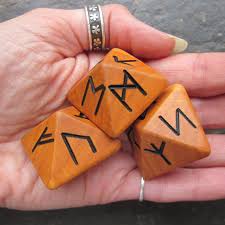
A hand holding orange dice marked with rune-like characters

Quick answer

The truth about runes is less mysterious and more interesting than most websites suggest: they are a family of historical writing systems with names, memorials, messages and some magical uses. Contemporary bag-drawing practices should not be assumed to reproduce an ancient method. Our full introduction is here: What are runes and what’s their use?. This page sets ten common claims against what the evidence shows.

Ten claims, checked

Swipe horizontally if any columns are off-screen.

Claim Verdict What the evidence shows
“Rune” means mystery or secret Partly true The word is related to Germanic terms for secret, whisper or counsel. That tells you how the word was used, not what the letters were for.
Runes are an ancient divination system Too broad Runes are historical letters. Magical uses and later literary accounts do not establish that every modern rune-reading method is an ancient practice.
Tacitus described rune casting in 98 CE Unproven Tacitus describes Germanic lot-casting with marked wooden strips. He does not identify the marks as runic letters. His account alone cannot establish an unbroken method connecting that rite to a modern bag draw.
Odin discovered the runes by hanging on the World Tree True as myth The Hávamál, a poem preserved in a 13th-century Icelandic manuscript, tells this story. It is a myth about the origin of wisdom, not a historical account.
Runes were used for magic Partly true Inscriptions include ordinary writing and expressions interpreted as protective or magical. Sagas are a further, later literary source; neither kind of source demonstrates that the claimed magic worked.
The blank rune is the 25th rune of the Futhark False An unmarked tile is not a character in the 24-letter Elder Futhark. It may be a modern reading choice or spare token, not evidence of a historical 25th letter.
Reversed runes have opposite meanings Modern convention Optional modern reading conventions are not universal historical rules. An inscriptional orientation does not by itself establish an opposite divinatory meaning.
Each rune has a fixed meaning False The alphabet family, language and source matter. Later poems offer varied images, not a single keyword list covering every rune tradition.
The Vikings wrote in Elder Futhark False The 16-character Younger Futhark is characteristic of Viking-Age Scandinavia. The change was a historical transition, not a universal overnight replacement of every older form.
Runes can predict the future Not established The historical sources do not demonstrate reliable prediction. Personal matches are not controlled evidence; modern prompts may be meaningful without being forecasts.

Why the truth is still worth your time

None of this makes rune practice pointless. A set of symbols with historical associations may be an optional tool for stating a question and looking at it from another angle, as long as you know what you are holding: letters with stories attached, and a modern method for using them. The honest version is described in Using runes for divination.

Where to check a claim

For lot-casting, compare Tacitus, Germania chapter 10 with the claim being made: marked pieces are not explicitly identified as runes. For writing and magic, the National Museum of Denmark’s account separates inscriptional evidence from later literary stories. Ask which source, alphabet and period are involved before accepting a universal rule.

Frequently asked questions

1. Were runes letters or magical symbols?

They were letters in related historical writing systems. Some inscriptions and later stories have magical contexts, but that does not make all runic writing magical or prove supernatural effects.

2. Did Tacitus describe the same rune casting used today?

His account describes marked pieces used for lots, without identifying the marks as runic letters. It does not establish that a modern bag-drawing method is the same practice.

3. Is a blank tile an ancient 25th Elder Futhark rune?

No. It is not a letter in the 24-character Elder Futhark. A modern set may include an unmarked tile as a reading choice or spare, which should be labelled accordingly.

4. Can runes still be meaningful without prediction?

Yes, personally. You may use historical study, craft or clearly labelled reflection without claiming a reliable forecast. Keep important decisions grounded in ordinary evidence and appropriate advice.
The History of Runes

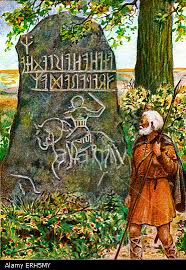
Illustration of a person beside a rune-marked stone in a wooded setting

Quick answer

Runic writing is attested on early objects associated with Germanic languages and survived in some regions long after the Viking Age. Early dates depend on the find and its archaeological context; there is no securely known day or single place of invention. They were letters first; the idea that each rune was a pictogram of a “cosmological power” is a modern claim without support in the inscriptions. Our full account of the historical evidence and the limits of ancient-casting claims is here: Origins and ideas behind rune casting. This page gives an approximate timeline. Periods overlap, and the dates are not universal changeover points.

A timeline of runes

  1. Early centuries CE — early inscriptions. Short texts survive on portable objects and stones. The 2025 study of inscribed fragments from Hole, Norway, reports associated burial contexts dated to 50 BCE–275 CE; that range is not an exact carving date. The script’s alphabetic model and route of adoption remain debated. See the archaeological study for the dating limits.
  2. c. 200–700 — Elder Futhark period. Inscriptions on bracteates (gold pendants), stones and weapons across Scandinavia and the Continent. Some carry names, some the word alu, some apparent charms. The surviving texts vary in purpose, and some are difficult to interpret.
  3. c. 400–1000 — Anglo-Saxon futhorc. In England and Frisia the row grows to accommodate Old English sounds. Christian objects such as the Franks Casket and the Ruthwell Cross carry runic text; the Old English Rune Poem, known through a 1705 printed edition after the manuscript was lost, gives each rune a verse. Its composition date is uncertain.
  4. c. 800–1100 — Younger Futhark and the Viking Age. The alphabet shrinks to 16 characters. Thousands of runestones are raised, mostly in Sweden, as memorials: A typical memorial records who commissioned the stone and whom it commemorates; individual inscriptions differ.
  5. c. 1100–1500 — medieval runes. Dotted variants match Latin letters; runes appear on church walls, wooden tallies and everyday messages, as at Bryggen in Bergen, where hundreds of runic sticks record trade, prayers and jokes.
  6. 16th–19th century — survival and scholarship. Runes linger in Dalarna, Sweden, into the 1800s. Antiquarian recording and interpretation also help shape later understandings of runes.
  7. 20th century — new occult systems. Modern esoteric authors create or reinterpret rune rows and practices. These should be studied as later systems, not treated as unchanged ancient alphabets or evidence of healing powers.
  8. 1980s onward — commercial oracle sets. Ralph Blum’s The Book of Runes becomes one influential modern commercial example, sold with 25 stones and a pouch. The publisher’s listing describes the package. That popularity does not establish that all current methods descend from it, or that a blank token is an ancient letter.

Two misconceptions to avoid

  • “Each rune was an ideographic symbol of some cosmological principle.” Runes were phonetic letters. The rune poems attach a name and a verse to each, centuries after the script began, and those names (cattle, aurochs, thorn, hail) can aid learning; their imagery does not establish a single ancient cosmological system.
  • “Writing with runes was a magical act.” Some inscriptions and sagas do refer to rune magic, and the sources are worth reading. Names, ownership statements, memorials and everyday messages also survive. A magical context does not demonstrate that the claimed effect occurred.

For the wider picture and the primary sources, the Swedish National Heritage Board’s Runor database lets you browse thousands of real inscriptions.

Follow the letters as well as the stories

Compare the historical families in our rune alphabet reference. Do not mix a 24-character Elder Futhark chart with a 16-character Viking-Age inscription and assume they represent the same system.

Frequently asked questions

1. How old are runes?

Early inscriptions survive from the first centuries CE. Dates depend on archaeological context and the object; a wide contextual date range is not the precise date when someone carved a letter.

2. Did Vikings use the 24-letter Elder Futhark?

The 16-character Younger Futhark is characteristic of Viking-Age Scandinavia. Elder Futhark belongs mainly to an earlier period, although transitions and regional forms complicate rigid date boundaries.

3. Were runes used only for magic?

No. Memorials, names, ownership and everyday messages survive alongside inscriptions interpreted as magical. The purpose of an individual inscription must be examined rather than assumed.

4. Does modern rune drawing reproduce one ancient method?

The surviving evidence does not establish one unchanged method behind every modern practice. Treat contemporary draws and blank tiles as declared modern choices, not historical facts or reliable forecasts.

The Meaning of the Rune Uruz (ᚢ): The Aurochs, Strength, and What the Rune Poems Actually Say

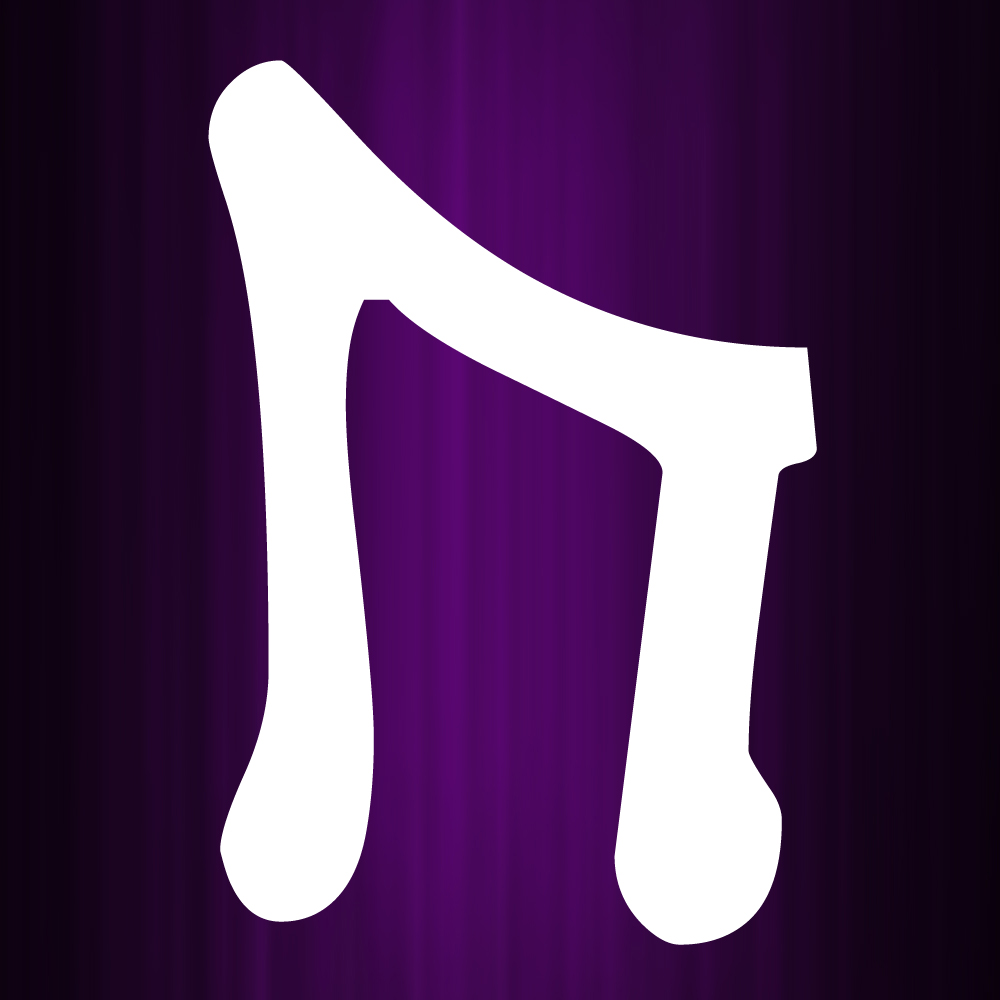
White Uruz rune graphic on a purple and black background

Quick answer

Uruz (ᚢ) is the second character of the Elder Futhark, the U sound. Its reconstructed name means aurochs, the extinct wild ox ancestral to domestic cattle. The last known individual died in Poland in 1627. The Old English poem describes the beast: fierce, great-horned, brave. The later Scandinavian poems associate related letter names with “drizzle” or “slag” instead, which is a useful reminder that rune meanings shifted with language. Modern readers use Uruz as a prompt about strength, health and untamed energy. It does not confer any of them. For the full reference see Understanding runes and the meanings.

Uruz at a glance

Character ᚢ
Sound u
Reconstructed Proto-Germanic name *ūruz, “aurochs” (Old English ūr)
Position Second of 24; first ætt
Later forms Younger Futhark ᚢ úr (“drizzle” or “slag”); Anglo-Saxon futhorc ūr (aurochs)

What the rune poems say

  • Old English Rune Poem: the aurochs is proud and great-horned, a savage beast that fights with its horns, a famous roamer of the moors, a creature of courage. This imagery offers one basis for modern strength metaphors; it does not establish every reader’s source or a supernatural effect.
  • Norwegian Rune Poem: úr is slag from bad iron; the reindeer often runs over hard-frozen snow. This is a different association from the Old English stanza; the difference alone does not establish a simple word-change history or the poet’s intention.
  • Icelandic Rune Poem: úr is the weeping of clouds, the ruin of the hay harvest, the shepherd’s misery. Drizzle, in other words.

So the “same” rune means a wild ox in England and bad weather in Iceland. A single fixed keyword cannot represent all these sources; related letter names do not guarantee identical imagery.

Modern reflection prompts

If drawn Prompt
Upright Where do I need stamina rather than cleverness right now? Am I resting, eating and moving enough to have it?
Reversed (modern convention) Where is force being used when patience would do? Am I pushing through something that needs a doctor, a break or help?
With Fehu (ᚠ) Wild strength beside tame wealth: what has been domesticated in my life, and was that the right call?
With Isa (ᛁ, ice) Power that cannot move. What is frozen, and is it protecting me or trapping me?

What Uruz is not

  • A healing rune. Older versions of this page and many books say Uruz “promotes good health” or “heals bones”. A rune draw does not diagnose or treat illness. Seek appropriate clinical care for symptoms rather than interpreting a token as medical evidence.
  • A rune of “male sexual potency”. A strength metaphor is not evidence of sexual function, fertility or another person’s desire.
  • A prediction of a “major life change”. A draw is not reliable evidence that a major change will occur.

Compare the cattle imagery

The Old English aurochs image differs from the wealth and cattle language discussed in Fehu’s poem reference. The prompts here are modern comparisons, not a traditional rule that combining two letters changes events.

Check the source and species

Read the scholarly Old English edition and the Icelandic text and translation for their distinct imagery. The Natural History Museum’s aurochs account supplies the zoological context, not a divination meaning.

Frequently asked questions

1. What does Uruz mean?

The reconstructed Elder Futhark name and Old English poem associate it with the aurochs. Later Scandinavian poems use related letter names with drizzle or slag imagery; these are distinct sources, not one universal keyword.

2. Is Uruz a healing rune?

A rune draw does not diagnose or treat illness. Modern strength or health metaphors may prompt ordinary self-care, but symptoms and treatment belong with appropriate clinical care.

3. What was an aurochs?

An extinct wild ox ancestral to domestic cattle. The last known individual died in Poland in 1627; the animal’s history is separate from modern symbolic interpretations.

4. What does Uruz reversed mean?

Some modern readers use reversals as optional prompts about misdirected effort or rest. A reversed token does not reveal illness, weakness or a forecast; do not use it as a health assessment.

5. Why do the rune poems disagree?

They preserve different language and literary contexts. The aurochs, slag and drizzle associations do not prove a single fixed meaning or a simple chronological change in one word.

Note: Rune poem summaries are paraphrased from the medieval texts; modern prompts are reflective conventions. Nothing here is medical advice.

Your Guide to Rune Divination

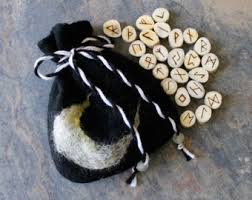
Modern rune practice tokens beside a black drawstring pouch

Quick answer

One common contemporary rune practice uses tiles marked with the 24 Elder Futhark characters as prompts for thinking about a question. Interpretations combine historical names with modern conventions. The layouts below are declared modern options, not a verified reconstruction of one ancient rite or a reliable way to learn what will happen. Our full guide to layouts, from one tile to a full cast, is here: Reading runes. This page summarises three example layouts for beginners, the three-, five- and nine-rune casts, and what each is for.

Three layouts, compared

Swipe horizontally if any columns are off-screen.

Layout Positions Good for Watch out for
Three runes in a row Situation · challenge · possible action (or past · present · direction) A bounded, low-stakes question Reading the third tile as “what will happen”; it is a suggestion, not a forecast
Five-rune cross Centre: the matter · left: past · right: what could help · top: what to accept · bottom: an assumption to check A decision with several moving parts Five tiles produce five stories; write the positions down before you draw
Nine-rune cast Nine tiles scattered on a cloth; you may predefine centre tiles as the main topic and touching tiles as linked prompts; omit face-down tiles or assign a role in advance, without treating them as hidden outside forces Open-ended reflection on a long situation Almost any pattern can be made to fit; only use it with written rules and a photograph

A larger layout gives you more prompts, not more accuracy. If a three-rune reading has already covered the question, stop there.

What a set includes, briefly

  • 24 tiles in wood, stone, glass, clay or bone. Choose for handling, durability, cost and clear markings, not promised supernatural power.
  • A bag or box so tiles are not lost.
  • A cloth, optional, mainly to define a boundary for casting and to protect the tiles.
  • A booklet of meanings, which may mix source material with a modern author’s keywords. Use our source-aware meanings table alongside it.
  • Sometimes a blank tile, which is not a letter in the 24-character Elder Futhark. Declare it an optional modern choice or use it as a spare.

Two interpretation limits

  • “Runes show you what is likely to happen.” A cast is not reliable evidence of a future event. You may find it helpful for stating a question or considering alternatives, but personal matches do not establish predictive accuracy.
  • “The cast is not random; your subconscious chooses.” Shuffling and handling may introduce chance and bias. Neither proves that a subconscious or spiritual agent selected the tiles. Your interpretation supplies associations, which may or may not be useful.

Before and after a draw

Write the question, position roles and stopping rule first. Afterward, record at least one alternative interpretation and one fact that could contradict your preferred story. Choose an ordinary, reversible next step; do not redraw until the answer feels reassuring. Keep medical, legal, financial and safety decisions outside the cast, and do not infer another person’s private intentions.

The National Museum of Denmark’s discussion distinguishes inscriptional uses from later magical stories. Neither supplies historical authority for the exact three-, five- or nine-position rules above.

Frequently asked questions

1. Which layout should a beginner try?

A small three-position layout can keep a low-stakes question bounded. Define the roles before drawing; the third position is a possible action or question, not a forecast.

2. Is a nine-rune cast more accurate?

More tiles offer more possible stories, not established predictive accuracy. Use fixed rules and a record, and stop if the exercise becomes confusing or compulsive.

3. Do these layouts come from one ancient method?

The examples are contemporary reflective options. Historical writing and later magical accounts do not establish these exact positions as one unchanged ancient practice.

4. What if a draw frightens me?

A frightening interpretation is not evidence of danger, illness or a curse. Stop the exercise, check ordinary facts and seek appropriate support for ongoing distress; do not pay for fear-based remedies.

The Mystery of Nordic Rune Stones

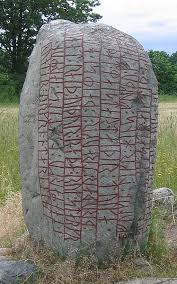
A standing stone with runic lettering and red-highlighted carved lines outdoors

Quick answer

The story that Odin won the runes by hanging nine nights on the world tree comes from the Hávamál, an Old Norse poem preserved in a 13th-century Icelandic manuscript. It is a myth about the price of wisdom, not a record of how a writing system began; early runic inscriptions belong to the first centuries CE, while the precise alphabetic model and route of adoption remain debated. The “Nordic rune stones” people picture, the great memorial stones of Sweden and Denmark, are often Viking-Age monuments using the 16-character Younger Futhark. Stones with runic writing also exist outside that period. Our full guide to the history and the limits of ancient-casting claims is here: Origins and ideas behind rune casting. This page separates the myth, the stones and the modern tiles.

Three things called “rune stones”

Swipe horizontally if any columns are off-screen.

What people mean What it is Alphabet
The Odin myth Stanzas 138–145 of the Hávamál: Odin hangs wounded on the windswept tree, “myself to myself”, takes up the runes and falls back screaming. A poem about sacrifice for knowledge. None; a story
Viking-Age runestones Many surviving examples, especially in Sweden, commemorate people and journeys, with ornament and sometimes crosses. They are public monuments; a monument’s text is not a bag-drawing oracle. Younger Futhark (16 characters)
Modern rune tiles Contemporary practice sets often contain 24 tiles marked with the older alphabet. Their small portable form and reading rules should not be conflated with memorial monuments. Elder Futhark (24 characters)

Keep myth, inscription and modern practice separate. Odin is a deity in the poem’s mythic setting. Viking-Age writing is not evidence of one unchanged divination method, and alphabet changes were regional transitions rather than a universal overnight abandonment.

What a real runestone says

The Gripsholm stone in Södermanland, designated Sö 179, records Tola’s memorial for her son Harald, described as Ingvar’s brother, and a journey ending in death in Serkland. This is one particular poetic memorial, not a template for every stone or a complete itinerary. The Sörmlands Museum’s inscription exercise presents this and related evidence. The Swedish National Heritage Board’s Runor database lets you compare registered inscriptions and records.

Using the myth well

  • Read the Hávamál as literature and myth, not a demand to earn insight through suffering. Do not imitate injury, hanging, deprivation or other harmful acts; safe study requires none of them.
  • Do not cite the myth as evidence that runes were made for divination. It is not, and saying so misleads readers.
  • Study a museum record or visit an accessible site if practical. Follow local conservation rules: do not rub, chalk, scratch, paint or remove material from a monument.

From monument to modern token

For the practical distinction, our rune character reference separates alphabet names from modern reflection prompts. Historical or spiritual interest does not establish forecasts, healing or control over another person.

Frequently asked questions

1. Are memorial runestones the same as reading tiles?

No. A runestone is an inscribed monument or object with a particular historical context. A modern reading set consists of portable tokens with declared contemporary rules.

2. Does Odin’s story explain the script’s historical invention?

It is a mythic account preserved in literature, not an archaeological record of invention. Early inscriptions and alphabet development require separate historical study.

3. Did every Nordic runestone use the same alphabet?

No. Alphabet families and forms vary with date and region. Younger Futhark is characteristic of Viking-Age Scandinavia, but runic stones are not confined to that period.

4. Must I suffer or perform a ritual to study runes?

No. Do not imitate the myth’s injury or deprivation. Safe reading, museum study and ordinary craft do not require harm, compulsory belief or a paid spiritual remedy.

4 Simple Methods to Read Runes

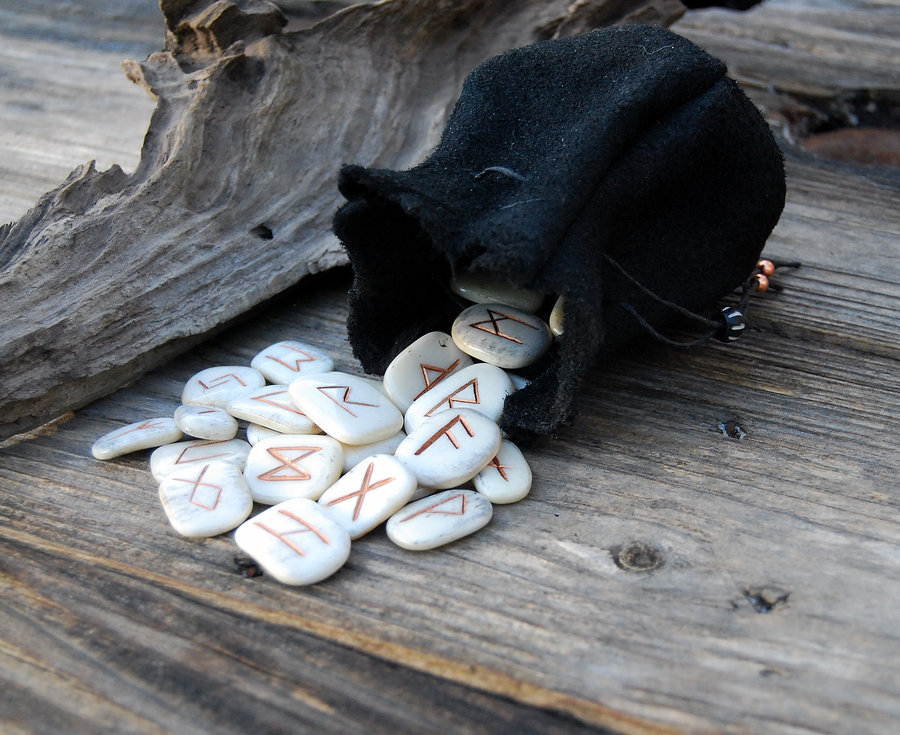
Modern pale rune-marked tokens beside a black pouch on weathered wood

Quick answer

There are four simple ways to read runes as a reflection practice: a single daily draw, a three-tile row, a small cast onto a cloth, and a written question-and-answer using the meanings table. The examples use the 24 Elder Futhark characters as modern prompts, not reliable forecasts. Our full step-by-step procedures, with recording and evidence checks, are here: 4 easy procedures of how to read runes. This page is the short version, with a short historical clarification.

The four methods in one table

Swipe horizontally if any columns are off-screen.

Method Suggested time How Best for
1. Single draw 5 minutes One open question, one tile from the bag, one line written before you look up a meaning, one small action Daily practice; building a journal
2. Three-tile row 10 minutes Positions fixed in advance (situation · obstacle · direction); draw left to right; write two interpretations for each A bounded, low-stakes question
3. Small cast 15 minutes Draw five to seven tiles, drop them onto a cloth with a marked boundary, read only face-up tiles inside it, photograph before touching Open-ended reflection on a long situation
4. Table reading 10 minutes No draw. Read down the meanings table and note which three runes describe your situation best; write why When you want the vocabulary without the randomness

Rules that apply to all four

  • Write the question before you draw and the tile before you interpret.
  • Set a stopping rule before starting. Repeated draws can encourage answer-shopping; another tile is not stronger evidence.
  • Write at least one interpretation that disagrees with your first instinct.
  • End with a small, dated, reversible action. Then stop.
  • Keep health, money, legal and safety questions for professionals. A rune reading is a prompt, not advice.

A historical clarification

Early runic inscriptions belong to the first centuries CE, but the exact invention place and route of adoption are debated. Do not assign the entire script to one people from an unsupported origin story. Christian runic objects and inscriptions also survive: the National Museum of Denmark discusses medieval Christian as well as magical contexts. Their survival does not prove there was never local hostility, nor one simple reason Latin writing became dominant. For an approximate chronology see The history of runes.

Use the record, not just the story

Keep the question, selected characters and interpretations together. Add a relevant ordinary fact, an alternative explanation and something that would change your mind. Table reading deliberately selects symbols rather than testing an oracle; note that distinction. You may skip the exercise if it adds no value. Do not use it to diagnose illness, make consequential decisions or infer someone else’s private intentions.

Frequently asked questions

1. Do I need to draw tiles to use these methods?

No. The table-reading option deliberately selects symbols for vocabulary and reflection. Record that it is a chosen comparison, not a random draw or a test of prediction.

2. Which method is the simplest?

A single draw has the fewest moving parts. Use one low-stakes open question, record the tile and an alternative interpretation, then choose an ordinary reversible action or no action.

3. Are the suggested times and casting rules ancient requirements?

No. They are modern example rules and suggested limits. Declare the method before starting; a different duration or arrangement does not reveal greater spiritual power.

4. Should I repeat a draw until it makes sense?

Set a stopping rule first and avoid repeated reassurance-seeking. Confusion or fear is a reason to stop and check facts, not evidence of a curse or a need for paid remedies.