

Home Blog

Channeling for Beginners: Meaning, Reflection and Clear Boundaries

Man reading a tablet beside a quartz point and small rune stones.

Channeling is a term some people use for words, images or impressions they interpret as guidance from a source beyond their ordinary thinking. That source may be understood as spirit guides, a loved one, a higher self or a deeper part of the mind. People use the word in different ways.

If you are curious, begin with meaning and choice rather than trying to force an unusual state. You can explore a spiritual belief, record an impression and still ask how it arose, whether it is checkable and what you actually want to do with it.

What people mean by channeling

Some accounts describe remaining fully aware while speaking or writing; others describe trance or a feeling that the body is being guided. These are reports of experience, not a way to independently identify its source. An image, dream or strong feeling cannot on its own establish that a particular spirit communicated.

Inspiration, inner speech, imagination and spiritual interpretation can overlap in how they feel. You do not need to decide that every creative thought is channeling, or believe everyone has a hidden ability they must awaken. Different experiences and different levels of interest are both acceptable.

What research can and cannot tell us

A small 2019 study of 13 adult trance channels compared channeling and nonchanneling periods. It found differences in some voice measures, while several other physiological measures did not show substantive differences. Studying a reported state is different from verifying the identity of a spirit or the truth of a message.

Keep that distinction when a teacher cites a brainwave, a bodily sensation or the intensity of an experience as proof. You can take the person’s account seriously without treating a physiological change as an answer to every spiritual question.

A gentle approach to reflective exploration

  1. Choose a modest question. Ask about your own values or a low-stakes choice, such as what you want to pay attention to this week.
  2. Stay comfortably aware. Sit or stand as you prefer, breathe normally and notice the room. Eyes can remain open. You do not need trance, sleep loss or an out-of-body experience.
  3. Record what arises as an impression. A few words, a sketch or a private digital note is enough. You can stop whenever you want.
  4. Consider alternatives. What recent conversation, hope, memory or worry might relate to it? What would you need to check independently?
  5. Return to ordinary activity. Choose a small, reversible action only if it makes practical sense. No action is required simply because a thought felt powerful.

If prayer is part of your spiritual life, you may frame the pause with your own words. An intention can express your values; it cannot guarantee the origin, truth or safety of a later impression. There is no special diet or measured vibration you must achieve first.

Dreams and automatic writing

Dream reflection

You can note a dream’s images and emotions and ask what they mean to you. Preserve ordinary sleep and leave room for memory and imagination. Dreaming of someone does not prove a message from them.

Free writing

Write or type a short response to a prompt if you wish, then review it as material you produced. Do not assume unedited words are external instructions or hidden facts. Stop if the activity becomes frightening or hard to control.

Our guide to interpreting a “soul message” offers questions about values, alternatives and decisions. Our intuition guide adds ways to compare a hunch with information you can actually check.

Free impression review worksheet

  1. Exact impression: What words or image did I notice before interpreting it?
  2. Context: What was I thinking about, and what information was already available?
  3. Possible meaning: What personal or spiritual association do I see?
  4. Alternatives: What other explanation fits, and what remains unknown?
  5. Boundary: Does acting on it respect evidence, consent and my actual circumstances?
  6. Next step: A small practical action, further checking or choosing not to act?

Example: an image of an open door might remind you to ask about a course you are interested in. It does not establish that a place is available, that you must enrol or that the image came from a guide. Check the course details and decide freely.

Keep your authority over decisions

No claimed message should require you to harm yourself or others, ignore consent, spend under threat or abandon prescribed care. Do not use channeling to decide medical treatment, accuse someone of wrongdoing or claim access to private thoughts. Ask relevant professionals and use ordinary evidence for consequential decisions.

If you consult a practitioner, ask what they mean by channeling, what the session includes, the price and how you can end it. You can decline touch, recording, intimate questions or a suggested ritual. Claims that only one person can protect you, urgent fear-based payments or demands for secrecy deserve caution.

When an experience feels outside your control

A spiritual interpretation and appropriate care can coexist. Seek medical help for hearing voices or other perceptions that seem real but are not shared by others, particularly if new, distressing or disruptive. The NHS explains possible causes and when to seek help. For voices directing harm, immediate danger or sudden serious symptoms, use urgent local help or emergency services.

You do not need to intensify a practice to prove that you are spiritually open. Curiosity can remain a thoughtful conversation with your beliefs, imagination and values while leaving room for uncertainty, rest and support.

Frequently asked questions

1. What is channeling?

People use the term for experiences interpreted as guidance from a spirit, higher self or another source. The label describes an interpretation rather than independently verifying where information came from.

2. Is every intuitive thought channeling?

No. Inspiration, memory, imagination and inner speech can feel meaningful without establishing an external source.

3. Does everyone have to develop this ability?

No. There is no obligation to pursue channeling or treat a lack of unusual experiences as a spiritual deficiency.

4. Must I enter trance?

No. You can explore spiritual questions through ordinary, fully aware reflection. You do not need to force a special state.

5. Do brainwave or voice changes prove spirit contact?

No. Measures of a reported state do not identify a spirit or verify the truth of a message.

6. Can I use a private digital note?

Yes. A few words or a sketch can help record an impression. Keep sensitive information private and do not assume an unedited note is an external instruction.

7. Can a dream be meaningful without being a verified message?

Yes. You can explore its emotion and symbolism while leaving the source uncertain and preserving ordinary sleep.

8. What is a suitable beginner question?

Choose a low-stakes question about your own values or attention, rather than demanding a prediction or information about someone else’s private life.

9. Do I need a special diet or high vibration?

No special diet or measured spiritual frequency is required for a reflective pause. Attend to ordinary nourishment and individual health needs.

10. Should I trust an impression immediately?

Record it, consider available information and alternatives, and check facts before acting. Strong conviction alone is not verification.

11. Can a message override another person’s no?

No. Consent and privacy still apply, regardless of the spiritual meaning you attach to an impression.

12. Can I stop a session or practice?

Yes. You can stop, change activities, decline touch or questions and seek support. You do not need to prove commitment by continuing.

13. Can channeling guide medical treatment?

Do not use an impression to diagnose or change treatment. Discuss medical decisions with an appropriate qualified professional.

14. What if I hear a voice that feels outside my control?

Seek medical help, particularly when it is new, distressing or disruptive. Use urgent local help for instructions to harm, immediate danger or sudden serious symptoms.

15. What is a useful outcome of reflection?

A clearer question, a meaningful personal association or a small practical step may be useful. An unusual experience or a prediction is not required.
Burning Sage: Spiritual Meaning, Cultural Respect and Smoke-Free Options

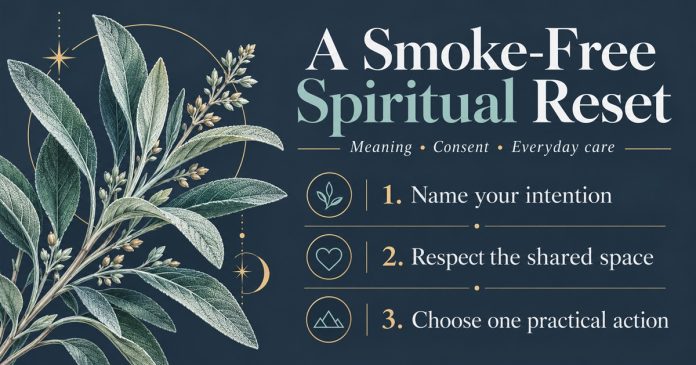
Name your intention, respect the shared space and choose one practical action.

Burning sage can carry spiritual meaning for people who use scent, prayer or ceremony to mark a fresh start. You may be hoping to settle after a difficult day, prepare a reflective space or acknowledge a change in your life. Begin with what the practice means to you and who shares the space.

You do not need smoke to create a meaningful pause. A spoken intention, a small practical reset or a quiet moment can serve that purpose while respecting other people’s preferences and the conditions in your home.

Sage burning and smudging are not interchangeable labels

Smudging has particular Indigenous cultural and ceremonial contexts. The University of Manitoba’s Indigenous culture and protocols guide describes the use of sacred plant medicines, including sage, sweetgrass and cedar, and the responsibilities involved in hosting ceremony.

Do not assume a generic online herb-burning routine represents every community’s teachings. Learn from the relevant community or an invited knowledgeable teacher when participating in its ceremony. You can describe your own personal practice as a quiet reset or intention ritual without claiming an inherited ceremony or inventing a universal prayer.

Set an intention you can act on

Ask what you hope to leave behind and what you want to make room for. Keep it connected to something you can do: “I want a calmer place to rest, so I will clear the chair and set tomorrow’s tasks aside.” If you pray, you might use your own words to acknowledge a worry and ask for steadiness.

A clockwise or counterclockwise gesture can have meaning within a particular practice, but there is no universal direction that establishes an energy change. Neither the amount of smoke nor a complicated route through a house measures whether a ritual has worked.

Consider the shared air before any burning

The EPA identifies burning sources such as candles and incense as contributors to indoor particles. Smoke should not be described as a way to purify indoor air. Opening a window does not turn an optional ritual into a guarantee of harmless exposure.

Check building rules, fire restrictions and the needs of everyone who may be exposed. Choose a smoke-free approach when smoke or fragrance is unwelcome or unsuitable. Do not wave smoke around another person or a pet, including around their bed or sleeping area. A restless or unwell animal needs appropriate care rather than a cleansing ritual.

If you choose a permitted burning practice, follow the product’s fire-safety directions, use an appropriate stable heat-resistant setup away from combustible materials and never leave it unattended. Do not carry a smouldering bundle around bedding or clothing, or disable an alarm for a ritual. Completely extinguish it and confirm that nothing remains hot before disposal. Avoid burning when you may fall asleep.

If a candle is part of your intention setting, a battery-operated version avoids an open flame. The U.S. Fire Administration’s candle guidance recommends flameless alternatives and keeping burning candles away from sleeping areas and anything that can catch fire.

A simple smoke-free reset

1. Name your intention

Choose a phrase in your own words: “I am making room for rest,” or “I want to respond more patiently.” You do not need to call the room contaminated or assume a frightening cause.

2. Respect the shared space

Ask before changing someone else’s room or belongings. Keep a clear exit and choose a quiet, unscented option if sound, scent or a ritual would be unwelcome.

3. Make one practical change

Put away one item, adjust comfortable lighting or prepare a useful place to sit. Address an actual hazard, repair or conflict directly rather than covering it with a ritual.

4. Close the moment

Pause, pray or listen to a familiar piece of music if you wish. Notice how the space feels without demanding an immediate emotional transformation.

Free personal reset planner

  1. My purpose: What would I like this pause to mark?
  2. Other people and animals: Whose comfort, permission or access do I need to consider?
  3. My option: Words, silence, light, music or one practical change?
  4. My action: One thing I can do that supports the intention.
  5. My review: What helped, and what still needs an ordinary solution or support?

Example: “After an argument I want a steadier evening. I will leave the shared room unscented, put away dinner things and arrange a calmer time to talk.” A ritual does not replace the conversation or require anyone to forgive before they are ready.

Objects, frequency and product choices

You do not need to pass jewellery, clothing, rune stones or every household object through smoke. Ordinary care should follow the material’s instructions; some objects do not tolerate heat, moisture or oils. Do not assume that a herb sold for burning is suitable to drink, apply to skin or use with animals.

There is no required daily or monthly cleansing schedule. Choose the frequency of your own reflective practice according to usefulness and circumstances, without feeling compelled to repeat it until uncertainty disappears. Ask sellers about plant identification and sourcing rather than assuming every product with the word sage is identical.

Our spiritual-reset guide connects symbolism with practical action. If you are preparing a reading, the one-rune reflection guide provides a separate way to frame a thoughtful question. Your intention can remain meaningful without smoke, a purchase or a promise that invisible harm has been removed.

Frequently asked questions

1. What does burning sage mean spiritually?

People may use it in an intention ritual or within a particular ceremony. Meaning depends on the tradition and person; smoke itself does not demonstrate that an invisible problem has been removed.

2. Is every sage-burning routine smudging?

Do not assume so. Smudging has particular Indigenous ceremonial contexts. Learn relevant protocols rather than presenting a generic personal routine as everyone’s tradition.

3. Do I need smoke for a spiritual reset?

No. You can use your own words, prayer, silence, comfortable light or a practical change to mark a moment.

4. Does more smoke make a ritual stronger?

There is no basis for using smoke volume as a measure of spiritual effectiveness. More smoke also means more exposure and is not a goal.

5. Does sage smoke purify indoor air?

Do not treat it as an air-cleaning method. Burning materials can add particles to indoor air, so use practical air-quality measures for actual air concerns.

6. Is opening a window enough to make burning harmless?

No. Ventilation does not guarantee that smoke exposure is suitable for everyone. Consider shared air, restrictions and smoke-free alternatives.

7. Should I wave smoke around my pet?

No. Choose a smoke-free approach around animals and do not use a ritual as care for an animal that seems unwell or unusually anxious.

8. Can I cleanse someone else’s room or belongings?

Ask permission before changing their space or involving their property in a ritual. A spiritual intention does not override someone’s boundaries.

9. Must I move clockwise?

A direction may have meaning in a particular practice, but there is no universal direction that proves energy has changed.

10. Is burning near a bed a good bedtime practice?

Avoid burning near bedding or where someone may fall asleep. A smoke-free pause or battery candle is a more suitable way to mark bedtime.

11. Should I turn off an alarm for a ritual?

No. Do not disable safety equipment. Choose an activity compatible with the space and its rules.

12. How often must I cleanse a room?

There is no required schedule for a personal reflection ritual. It need not become a repeated obligation or a way to chase certainty.

13. Can I use burning herbs as tea or skin oil?

Do not assume a product intended for one use is suitable for another. Check its identity, instructions and suitability rather than improvising ingestion or skin use.

14. Do all my crystals and jewellery need smoke?

No. Optional symbolism does not replace ordinary material care, and objects may be damaged by heat, moisture or oils.

15. What if the room still feels uncomfortable afterward?

Consider concrete needs such as lighting, noise, clutter, a repair, a difficult interaction or support. A ritual does not have to solve every feeling to be personally meaningful.

The Blank Rune Debate: History, Evidence and Modern Use

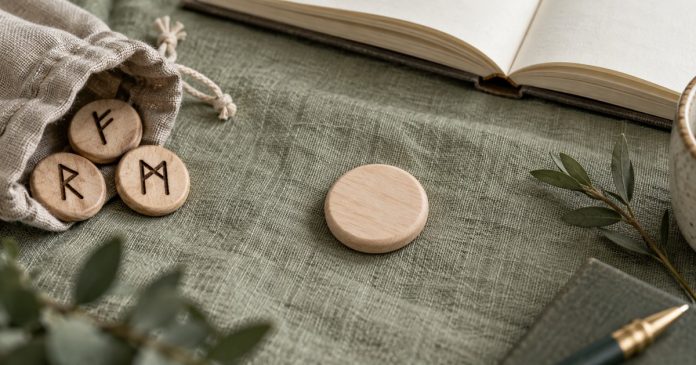
Unmarked wooden token beside a pouch of marked practice runes on sage fabric.

Quick guide

  • A blank tile is not a character in Elder or Younger Futhark.
  • It can be a spare or a disclosed modern addition.
  • Choose its role before drawing, and reject frightening claims or pressure to buy another reading.

If you open a new set of runes and find one piece that doesn’t have a mark on it, it may be a spare tile or an intentional addition to a modern reading method. You might wonder if this is a sign of the unknown. The answer depends on the method you’re using, because a blank piece has no universally agreed-upon interpretation.

The blank rune meaning debate turns on the difference between a historical alphabet and a modern practice. A blank isn’t a letter in the historical Elder or Younger Futhark alphabets. Some modern divination systems include an unmarked piece and give it a symbolic role. Whether a piece is historically attested and whether someone finds it useful today are separate questions.

You can decide to use a blank piece, leave it out, or keep it as a spare. This is a choice you should be able to explain honestly without saying that your preference answers every question about ancient practices and spiritual meanings.

Why Some Runes Have Blank Pieces

A modern rune package might have an extra unmarked piece because its guide uses the blank rune for divination. Another set might include a spare for replacement or customization. Manufacturing and packaging choices are also different. Look at the description instead of giving meaning before you know what the set intended.

In a 25-piece package built around Elder Futhark, the usual difference is 24 marked characters and an extra blank piece. The blank doesn’t have to become the 25th historical letter just because it was in the bag.

If the set doesn’t have a clear guide, ask the person who sold it which alphabet and method it represents. The response should describe what the symbols, interpretations, and purpose of the extra piece are, not mysterious power.

You don’t have to worry that leaving the blank out means the rest of the pieces aren’t complete. Completeness depends on the system you use, and a historical alphabet and a modern oracle can talk about their contents differently.

Historical Alphabets

The National Museum of Denmark describes the earlier twenty-four-character rune row and the later sixteen-character row. Neither includes a blank as an alphabetic character. That is the central historical point behind objections to calling the extra piece an ancient rune.

It’s better to say that the blank isn’t part of the regular rune rows than to claim that no person in the world has ever used an unmarked object in a ritual. The second answer is a broader claim, and you don’t have enough evidence to know this just by having the runes.

An unmarked stone alone would not establish an ancient blank-rune practice. Archaeological interpretation depends on the context, and an object can be spare, unfinished, or used for another purpose without proving a modern explanation.

Using careful language helps to make the debate less heated. You can be confident about the contents of the alphabet and still be cautious about universal statements that concern every possible historical activity.

For the alphabet comparison, see Elder vs Younger Futhark. For materials and completeness checks, use our rune-set buying guide.

Blank Stones in Literature

The blank is associated with modern works such as Ralph Blum’s “The Book of Runes.” The Google Books record and preview for Blum’s book include the Blank Rune among its indexed terms and document the modern publication tradition.

This connection explains why someone might see a blank in an available set, even if it’s not an alphabetic character. It does not establish that one author invented every use of an unmarked piece, or that a modern guide preserves an unchanged ancient practice.

Some interpretations associate the blank with uncertainty, the unknown, or matters beyond conscious control. Different people might use different names and explanations. A label that talks about a deity doesn’t demonstrate that the piece was historically used in deity worship.

If you decide to follow a certain author, read their rules. Don’t combine a phrase from one book or a social media interpretation and act like it represents a single traditional system.

Why Some People Leave Out the Blank Rune

Some people prefer to use only the traditional runes that are part of the historical rune alphabet they’re working with. If they’re using the Elder Futhark, for example, they might want their set to contain only the 24 runes connected with that system. Since the blank rune was added much later, they might decide that it simply doesn’t belong in the way they practice.

Other people don’t feel like they need a blank rune to represent uncertainty or the unknown. A rune reading can already leave you with questions or give you something that isn’t immediately clear. Sometimes you might not know what a rune means for your situation until later, and sometimes you simply won’t get a clear answer. For these readers, uncertainty is already part of working with runes.

It can also be easier to learn when your rune set matches the guide or book you’re using. If your guide explains 24 Elder Futhark runes but your set contains an extra blank piece, you might be left wondering what you’re supposed to do with it. Leaving it out keeps things simple and keeps the reading consistent with the method you’re learning.

That doesn’t mean there’s anything wrong with someone else finding meaning in the blank rune. You can decide that it doesn’t belong in your own practice while respecting that another person might use it as part of theirs.

Why Some People Use the Blank Rune

Some people like using the blank rune because they see it as a symbol of the unknown or a reminder that not every question has an answer right away. If it appears in a reading, they might take it as a reason to pause instead of continuing to draw runes until they get the answer they were hoping for. The blank rune can have personal meaning in that kind of practice even though it isn’t part of the original Elder Futhark.

Someone who enjoys adding their own spiritual meaning to rune readings might also use the blank rune to represent things like uncertainty, silence, or something that hasn’t been revealed yet. There’s nothing wrong with including it as long as you understand that it’s a modern addition instead of presenting it as one of the historical runes.

It’s also worth thinking about how the blank rune makes you feel when it appears. Does it remind you that some things are still unknown and give you permission to leave the question alone for now? Or does it make you anxious and feel like something bad is being hidden from you? The meaning you give it can make a big difference in how it affects the reading.

Using the blank rune shouldn’t make you feel like you have to keep spending money or drawing more runes until you get an answer that makes you feel better. If someone tells you that pulling the blank means you need another paid reading or an expensive spiritual service, you can stop and decide if that really feels right to you. The blank rune can be part of your spiritual practice without becoming something that keeps you searching for another answer.

Historical Evidence vs. Modern Casting Methods

Historical references to runes and magic do not establish every modern reading method. The National Museum of Denmark’s discussion of runic magic treats the relationship between literary accounts, later traditions, and Viking Age evidence with caution.

A poem mentioning runes does not, by itself, document a particular casting layout or a blank piece. Each historical claim needs its own support. Combining separate references into a complete ritual involves modern interpretation or reconstruction.

This doesn’t mean that the ritual isn’t meaningful. Personal practices are new arrangements of older symbols, and if you’re honest with the description, you can make your own contemporary choices.

The differences can make learning more exciting. Instead of just defending claims of perfect antiquity, you can ask questions about where a symbol comes from, how the author adapted it, and why you find it useful.

Creating Rune Rules

If you decide to use the blank, then define the rule before you ever draw. You might pick a simple instruction, such as: “If this piece shows up, then I’ll identify what I don’t know and avoid trying to force an answer.” This is a personal rule and isn’t an ancient formula.

Decide before the draw

  1. Historical alphabet study: keep the blank outside the character set.
  2. Modern reflection: write its meaning and your stopping rule in advance.
  3. No defined purpose: store it as a spare rather than inventing an urgent message.

You also need to decide whether you’ll draw again in the rune exercise or continue with the positions. Any of these need to be consistent if they’re stated. The problem is if you change the rule after every result to get the answer you want.

If you leave a blank out, remove it before you mix the pieces. Don’t keep it in the bag, keep rejecting it when you draw it, and treat every other marked rune as meaningful. This causes unclear procedures that might encourage repeated checking.

Write the rule down in one clear sentence before drawing. A small amount of clarity at the beginning helps reduce a lot of interpretation afterward. It also makes it easier to pay attention when a reading has become repetitive instead of helpful.

Think About How the Blank Rune Changes the Draw

Adding a blank rune to your set does slightly change your chances of pulling each rune. With 24 pieces and a genuinely uniform random draw, each piece has a one-in-24 chance of selection. If you add a blank rune, you now have 25 pieces to pick from. It’s a small difference, but the blank does become another possible result whenever you do a reading.

That doesn’t tell you anything about the spiritual meaning of the blank rune. It simply means that adding another piece changes how your rune set works. It’s also worth making sure the blank rune feels similar to the others. If it’s a different size, shape, weight, or texture, you might be able to recognize it by touch without realizing it.

If you like randomly picking your runes, using pieces that feel similar to you can help keep you from knowing which one you’re picking. Some people prefer to look at the runes and intentionally pick the one they feel drawn to instead. Either approach can be part of your practice. What matters is understanding which method you’re using and finding what feels right for you.

You can also use either method when you’re pulling a rune for reflection, journaling, or spiritual guidance. The rune can give you something to think about, but you can still make important decisions based on your own judgment and the information you have.

Use the Unknown to Ask a Better Question

If you use a blank rune to represent the unknown, you can turn it into a simple exercise. Think of one thing you know for sure, one thing you’re assuming, and one thing you could find out. This can help you separate what you actually know from the things you’re still wondering about.

For a hypothetical example, consider someone thinking about a weekend course. They know how much the course costs, but they assume the schedule will work with their job, and they don’t know what happens if they need to cancel. Instead of continuing to pull runes hoping to get a definite yes or no, they could contact the course and ask about the schedule and cancellation policy.

If this happened, then the blank rune hasn’t magically given them information they didn’t already have. Instead, they’ve used its meaning as the unknown to help them notice what they still need to find out. You could obviously do the same exercise without a rune, but using one might make the process feel more meaningful as part of your spiritual practice.

The blank rune can still have personal or spiritual meaning without having to provide a definite answer every time it appears. Sometimes its purpose might simply be to remind you that you don’t know everything yet, and that’s okay.

A Blank Rune Is Not Evidence of Danger

There’s no reason to say that an unmarked rune is proof of death, disaster, a curse, or loss. These kinds of interpretations can cause fear without giving reliable evidence. You can reject a rule that makes spiritual work scary.

If a draw upsets you, pause and notice your immediate surroundings. Put the pieces away, have a drink of water, or talk to someone you trust. You don’t have to have a corrective ritual or another purchase to feel safe.

Don’t make legal, health, or financial decisions based on the results. If your normal question concerns one of these areas, get qualified professional help. A blank might remind you that you don’t know enough information, but it shouldn’t mean that you have all the answers.

If readings repeatedly leave you anxious or disrupt your sleep, take a break. Seek qualified support if the distress persists or affects daily life. Spiritual exploration should not require you to ignore your well-being.

Understanding Choice

If you use runes in a shared reflection reading, explain why the blank one is there before you ever draw. Someone else might have learned a different method and might find the empty piece worrisome. Give a short explanation so they can ask questions or change sets without the extra rune.

You might tell them that the blank is a modern addition you use as a reminder to take time to pause when information isn’t there. Don’t introduce a scary interpretation after it appears, or imply that the other person has caused an unfavorable result through their doubt.

You should always be transparent when you leave out a rune. You can explain that your reading follows the marked characters from a particular guide. There’s no reason to dismiss other traditions and try to make your own the most important. This kind of shared practice works best when people understand the rules and can stop when they want to.

Allowing for Different Purposes

The blank rune debate becomes clearer when its two central questions are separated. Is the blank a historical letter in the Elder or Younger Futhark? No. Can a modern practitioner pick an unmarked piece as part of their own personal study? Yes. This can happen if the choices and the limits are clear.

You can keep one set for studying the historical alphabet and a separately labeled creative set for reflection. Or keep the blank as a spare and leave it out of draws. These practical choices do not have to become judgments about anyone’s spirituality.

What matters is that the practice stays understandable, voluntary, and proportionate. Respect its history, identify modern additions, and let the unknown stay unknown when that’s the best and most reliable answer.

Elder vs Younger Futhark: Which Rune Set Should You Use?

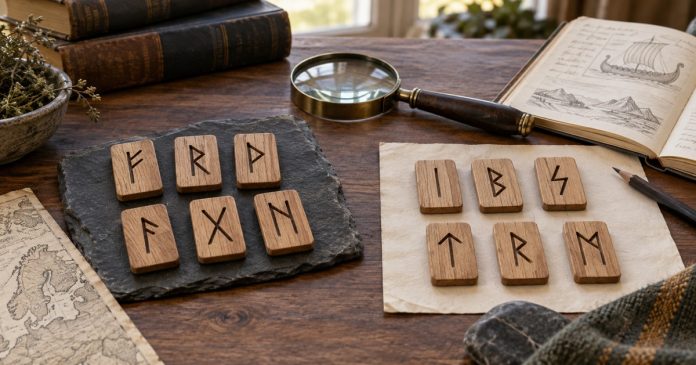
Illustrative wooden rune practice tiles arranged in two groups beside a notebook and magnifying glass.

Quick guide

Choose the alphabet for your purpose. Elder Futhark is the 24-character system commonly used in modern rune-reflection guides. Younger Futhark is the 16-character system to study for Viking-Age Scandinavian inscriptions. Neither is a more powerful or more accurate way to predict events.

The useful question in an Elder Futhark vs Younger Futhark comparison is not which set is better in every situation. It is what you want to learn: an earlier writing system, Viking-Age inscriptions, or a clearly described modern reflective practice. Buying a bag labeled “Viking runes” does not answer that question.

Start by separating an alphabet from a method. An alphabet supplies characters used for writing. A modern reading method supplies rules for drawing pieces and interpreting them. Choosing one does not automatically establish the history or reliability of the other.

The main difference: 24 characters or 16

The Swedish History Museum describes an earlier runic alphabet with 24 characters and a later Viking-Age alphabet with 16. These are the central counts behind the names Elder and Younger Futhark. They represent historical change, not beginner and advanced levels of spiritual ability. See the museum’s account of the first runes.

On a small screen, swipe the comparison table sideways.

Compare Elder Futhark Younger Futhark
Character inventory 24 16
Historical learning focus Earlier runic writing Viking-Age Scandinavian writing
Practical starting point A checked 24-character reference An inscription-based reference appropriate to the object being studied
Common mistake Assuming any modern 24-piece reading method is ancient Assuming fewer characters make translation easier

Why fewer runes do not mean fewer meanings

A writing system does not need a separate sign for every sound. In Younger Futhark, a character could represent multiple sounds. The Swedish History Museum’s runes in everyday life exhibit gives the examples of the t-rune representing t and d, and the k-rune representing k and g.

That matters when you try to read an inscription. A chart showing a Latin letter beside each rune is a learning aid, not a translation engine. You also need context, the language, the condition of the object and a reliable reading of the marks. A damaged stroke can introduce another uncertainty.

For example, copying the visible marks on a museum photograph is one task. Identifying those characters is another. Working out the words and translating the inscription are further tasks. Keep those steps separate in your notes instead of treating the first plausible word as a confirmed translation.

Choose a learning path, not a supposedly stronger set

Your purpose → your starting point

  1. Study earlier inscriptions: begin with Elder Futhark and a source that identifies the actual object, date and reading.
  2. Understand Viking-Age Scandinavian inscriptions: begin with Younger Futhark and museum examples rather than a generic gift-shop chart.
  3. Use runes for personal reflection: choose a clearly explained method, name its alphabet, and label its interpretations as modern practice.
  4. Make a permanent inscription: check the intended language and wording with a suitably qualified specialist before carving or tattooing.

This decision aid is a learning recommendation, not a rule about who may use a particular alphabet. You can study both. Keeping separate reference pages and labeled sets makes comparison easier than mixing pieces at the start.

If your interest is modern rune readings

Many contemporary rune-reading resources organize reflection around Elder Futhark. That can be a convenient starting point when the guide you are following clearly uses its 24 characters. Our guide to runes and their meanings separates historical background from modern reflective prompts.

Read the method before buying anything. Check what the writer means by a rune’s “meaning,” how a draw is recorded, whether reversed pieces are used, and whether interpretations are presented as personal associations or historical claims. A confident tone is not a substitute for a source.

If a modern practitioner uses Younger Futhark for reflection, ask for the same transparency. A smaller inventory does not establish greater simplicity or stronger insight. Do not transfer every entry from a 24-character guide into a 16-character set and assume the systems are interchangeable.

For either alphabet, a useful journal distinguishes the drawn character, your interpretation, and facts known independently. If a prompt leads you to think about a conversation, decide what to say using what actually happened—not a claim that the rune reveals another person’s private thoughts.

What “Viking runes” does—and does not—tell you

“Viking” is too broad a product description to identify a set. Ask for the alphabet’s name and a complete character list. If your purpose is Viking-Age history, a seller’s imagery should not override the historical distinction between the earlier and later rune rows.

The Swedish History Museum’s overview of runes explains that the name futhark comes from the first six characters in the sequence. It also emphasizes that recognizing signs and understanding the old language are different challenges. These are writing systems with historical contexts, not simply collections of interchangeable symbols.

For a physical set, inspect completeness, legibility and comfort separately from alphabet choice. The beginner’s rune-set buying guide covers those practical checks. There is no need to pay for rare material or claimed activation to begin learning.

A simple first study session

  1. Write down your purpose in one sentence: history, reading an inscription, or modern reflection.
  2. Select one reference that names the alphabet and distinguishes evidence from interpretation.
  3. Label a notebook page with the alphabet rather than the broad word “runes.”
  4. Study a small group of characters and check them against the same reference.
  5. For an inscription, record its museum or database identifier and any uncertainty in the published reading.
  6. For reflection, record your own associations without treating them as external facts.

The National Museum of Denmark’s rune resource points readers toward its inscription database and runological expertise. Working from documented objects is a better historical exercise than trying to reconstruct a tradition from product descriptions.

If your bag includes an unmarked tile, our blank-rune history and practice guide explains why it is not a historical alphabetic character and how to decide whether to keep it as a spare.

Keep the limits clear

Neither alphabet can establish a medical diagnosis, consent, a legal outcome or a safe financial choice. Choosing between Elder and Younger Futhark is a learning or practice decision; it is not evidence that a reading can predict events. Use direct information and qualified help for consequential decisions.

The most useful set is the one that matches a clearly stated purpose and a trustworthy reference. Start with one system, keep your sources visible, and let curiosity—not claims of supernatural superiority—guide the next step.

Community Meditation and Collective Stress: What We Know

Inclusive community meditation in a bright public library

Meditating with other people can feel different from practicing alone. A regular time, a welcoming room, and the quiet presence of others may make it easier to show up. That experience is meaningful without claiming that a meditation circle remotely changes crime, conflict, weather, or a community’s invisible energy. Research supports a more modest conclusion: teacher-led group mindfulness programs can reduce psychological distress for some volunteer participants, while social and prosocial effects remain variable.

Quick Guide

PromiseA shared practice and supportive routine
Do not promiseRemote healing or community-wide causal effects
IncludeChairs, eyes-open options, silence, and opt-outs
MeasureAttendance, comfort, distress, and participant feedback

What makes a group helpful

Groups provide time, place, and accountability. Participants may learn from an instructor, feel less alone in stress, and borrow practical ideas from peers. These ordinary social mechanisms are enough to explain why a session can feel supportive.

Calling that feeling “collective calm” is fine as poetic language. Presenting it as a measurable field that transforms nonparticipants is not supported by current evidence.

What research can and cannot say

A large individual-participant meta-analysis found that group-based, teacher-led mindfulness programs generally reduced psychological distress among community adults who volunteered. Effects varied, and the finding does not prove that every style works for every person.

Research on meditation and prosocial behavior also has limitations and possible bias. Claims about compassion, connectedness, or community change should therefore be cautious and specific.

Design a genuinely inclusive session

Offer chairs as well as floor seating, an eyes-open option, permission to move, and a clear statement that anyone may step out. Avoid touch unless explicit consent is given. Explain the practice in plain language without assuming one religion or worldview.

For trauma-sensitive facilitation, use invitations rather than commands. “If it feels comfortable, notice the breath” leaves more agency than “close your eyes and surrender.” Provide a quiet alternative for people who do not want inward focus.

A 25-minute community format

Begin with a two-minute welcome and boundaries. Continue with five minutes of orientation to sounds and contact points, ten minutes of breath or body awareness, five minutes of optional silent reflection, and three minutes for practical closing information.

Keep sharing voluntary and do not pressure people to disclose trauma. A meditation group is not automatically group therapy.

Evaluate without exaggerating

Use a short anonymous form: Did you feel welcome? Was the instruction clear? Did anything increase distress? Would you return? Track attendance and accessibility requests. These measures help improve the program without pretending to prove a change in the entire community.

If the group is connected to a school, workplace, or health service, protect privacy and make participation truly optional.

When meditation is not the right tool

Some people experience anxiety, intrusive thoughts, or worsening mood during meditation. A person in crisis may need direct support, safety planning, medical care, housing, legal help, or conflict intervention—not another breathing exercise.

Communities become safer through material resources and accountable action. Meditation can support people doing that work; it is not a substitute for it.

Continue Exploring

Frequently Asked Questions

1. Does group meditation work better than solo meditation?

Not necessarily. Groups may add instruction and accountability, while some people prefer private practice.

2. Can a meditation group lower community crime?

There is no strong basis for attributing community crime changes to a meditation circle alone.

3. Is collective energy scientifically measured?

Not in the spiritual sense used here. “Collective calm” is best treated as metaphor or shared experience.

4. Should everyone close their eyes?

No. Eyes-open practice can be safer or more comfortable for many people.

5. Is sharing after meditation required?

It should be optional. Participants do not owe the group personal disclosure.

6. Can meditation worsen anxiety?

Yes, some people report anxiety, intrusive thoughts, or other negative effects. They should stop or modify the practice and seek support if needed.

7. How long should a community session be?

Twenty to thirty minutes is approachable, but shorter sessions may be more accessible.

8. Is a community meditation group therapy?

No, unless it is explicitly delivered as therapy by qualified professionals within appropriate standards.

Sources and Method

This article distinguishes reflective or spiritual interpretation from established evidence and uses the following sources for factual health or research claims:

Psychic Traditions Across Cultures: From Shamans to Modern Mediums

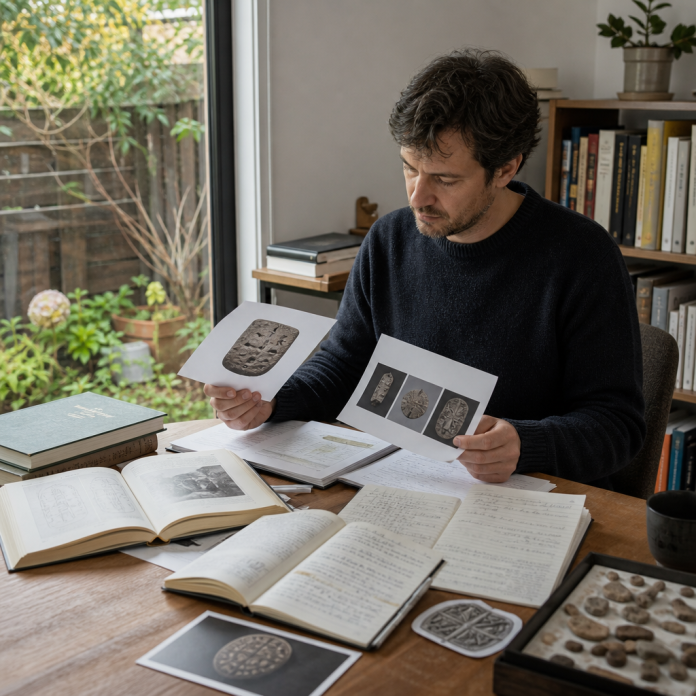
Researcher comparing museum records and historical sources at a modest home desk
An evidence-aware comparison starts with specific sources, communities and historical context.

Quick answer

“Psychic traditions” is a modern English umbrella, not a single timeless practice. A Yoruba Ifá diviner, a Shang court divination record, a nineteenth-century Spiritualist séance and a present-day online reading belong to different languages, institutions and histories. Comparing them can be useful, but treating them as interchangeable erases the people who created and maintain them.

This guide uses a careful historical method: identify the community’s own name for a practice, separate objects and documents from interpretations, and distinguish a belief claim from evidence that outsiders can independently verify. It does not attempt to prove or disprove a community’s spiritual worldview.

How to compare traditions without flattening them

Words such as oracle, medium, diviner and shaman are not universal job titles. They come from particular histories or from later translations. “Shaman,” for example, should not be applied to every Indigenous healer, ritual specialist or knowledge keeper. Use it only when a community uses the term for itself or when a source explains why it is appropriate.

A responsible comparison asks four different questions:

  • What survives? An object, inscription, oral corpus, photograph, newspaper report or living practice.
  • Who explains it? A community practitioner, museum curator, archaeologist, translator, journalist or critic.
  • What can the source establish? A date, material, documented use or recorded testimony.
  • What remains uncertain? Private experience, supernatural causation, lost meanings or whether a reported prediction was accurate.

This framework leaves room for spiritual meaning while preventing a moving story from becoming a historical or medical claim.

Four cases with different kinds of evidence

Swipe horizontally if any columns are off-screen.

Case Source type What it establishes What it does not establish
Casita de Piedra stone cache, Panama Archaeological context and material analysis A cluster of unusual stones was deposited at a small rock shelter thousands of years ago The owner’s identity, exact ritual or a supernatural result
Yoruba Ifá Living heritage, trained practitioners, objects and a large oral/literary corpus A specific knowledge system transmitted in Yoruba communities and the diaspora A model for every African divination practice
Shang oracle bones, China Inscribed animal bones and turtle shells Royal divination questions and some of the earliest surviving Chinese writing That an ancestor or deity caused an outcome
Modern Spiritualism Newspapers, books, photographs, demonstrations and criticism A large social and religious movement grew in the nineteenth century That every séance claim was genuine

An archaeological find is evidence of activity, not proof of powers

At the Casita de Piedra rock shelter near Boquete, Panama, archaeologists found a compact cache of twelve stones. Associated charcoal dated the context to roughly 4,800–4,000 years ago. Researchers proposed that the stones may have belonged to a ritual specialist because of their unusual materials and arrangement. The Smithsonian account of the discovery is careful about that interpretation.

The find shows why vocabulary matters. A news headline may say “shaman’s stones,” but the person’s name, role and language are unknown. The stones survive; the practitioner’s explanation does not. It is reasonable to discuss a scholarly interpretation and equally important to label its uncertainty.

Ifá is a living knowledge system, not shorthand for “African fortune telling”

Ifá is practiced among Yoruba communities in West Africa and across parts of the African diaspora. UNESCO describes an elaborate system of signs interpreted through a corpus of verses, with knowledge transmitted by trained practitioners. The UNESCO safeguarding project emphasizes training, language, history, philosophy and intergenerational transmission.

That specificity prevents two common errors. First, Africa is not one culture: Ifá should not be presented as a template for every African or diasporic tradition. Second, a brief internet reading does not confer the authority of community recognition, language knowledge or initiation. Public descriptions can explain a tradition’s history without exposing restricted material or imitating ceremony.

Oracle bones record royal divination in Shang China

Beginning around 1200 BCE, questions used in royal divination were scratched onto animal bones and turtle shells. These inscriptions are important evidence for Shang history and early Chinese writing. A Metropolitan Museum of Art collection record identifies them as records of royal divination ceremonies.

The bones can establish that questions were posed, cracks were interpreted and records were made. They cannot independently demonstrate that a supernatural being answered. This distinction respects both the artifact and the limits of historical evidence.

Modern Spiritualism developed in a documented media world

In the United States, the Fox sisters’ reported rappings in 1848 became a widely repeated origin story for modern Spiritualism. Séances, table-turning, spirit photography and public demonstrations later circulated through newspapers and lecture halls. The movement mattered socially and religiously, especially in a period marked by high mortality and war.

It also attracted investigators, skeptics and allegations of fraud. The Library of Congress uses period material about “psychic force” to teach source evaluation and notes the movement’s many supporters from the 1840s into the twentieth century. That Library of Congress source exercise is a useful reminder: a historical document proves that a claim was made and circulated, not automatically that the claim was true.

Grief can make a mediumship message feel deeply personal. Emotional meaning is real as an experience, but a specific detail does not by itself verify contact with someone who died. A responsible reader never tells a grieving person to stop professional care, isolate from family or keep paying until a message “comes through.”

What changed when readings moved online

Phone lines, livestreams, apps and generative systems changed access and presentation. They did not automatically inherit the cultural authority of older traditions, and speed is not the same as accuracy. An app can randomize cards, calculate a chart or retrieve text; it cannot prove spiritual contact, initiation or community standing.

Digital formats also create new risks: edited clips, cold-reading techniques, hidden research, repeated upsells and claims that an algorithm is spiritually authoritative. Treat a reading as reflection or entertainment unless a tradition’s practitioner and community describe it differently—and even then, keep health, legal, financial and safety decisions with qualified professionals.

A respectful checklist for readers and writers

  1. Name the specific community and practice. Avoid “African,” “Asian” or “Indigenous” as if each described one tradition.
  2. Prefer community-led and authoritative sources. Museums and archives help with objects; living communities are essential for present-day meaning.
  3. State whose interpretation you are repeating. Archaeologists, practitioners and colonial officials may describe the same material differently.
  4. Do not turn sacred clothing or ceremony into décor. Avoid invented composite imagery and do not copy restricted rites.
  5. Separate history from outcome claims. A documented practice is not proof that its predictions work.
  6. Set a high-stakes boundary. Spiritual reflection cannot diagnose illness, replace therapy, settle a lawsuit or guarantee money.

If you want a practical example of inclusive, evidence-aware spiritual activity, read the guide to community meditation and collective stress. For other reflective articles, browse the Psychic Help and Tips archive while applying the source checks above.

What these histories have—and do not have—in common

People in many times and places have used structured practices to address uncertainty, memory, authority, grief and decision-making. That broad observation can support comparison. It does not mean every practice has the same origin, method, theology or social role.

The most useful question is not “Which culture had psychics first?” It is “What did this practice mean in this community, according to which evidence?” That question makes the history more accurate and the encounter more respectful.

Frequently asked questions

1. Are all psychic traditions versions of the same practice?

No. Similar themes can appear across societies, but the names, training, objects, beliefs and institutions differ. Compare specific traditions without claiming a universal system.

2. Is “shaman” the correct term for every Indigenous healer or diviner?

No. Use the community’s own term whenever possible. “Shaman” should not be treated as a generic label for unrelated Indigenous roles.

3. Does archaeological evidence prove supernatural claims?

No. Archaeology can establish materials, dates, locations and plausible uses. It cannot independently verify a supernatural cause or the accuracy of a prediction.

4. How can I explore a tradition respectfully?

Use its specific name, consult community-led and authoritative sources, avoid imitating restricted practices, and never substitute spiritual claims for medical, legal, mental-health or financial advice.

Sources

Creating a Psychic Affiliate Marketing Strategy: From Planning to Execution

Affiliate marketer reviewing anonymous campaign analytics at a modest home office desk
A sound affiliate plan relies on disclosure, current terms and measured results—not guaranteed outcomes.

Quick answer

A psychic affiliate marketing strategy should be built around informed choice, not urgency, fear or promises of certainty. The useful work is ordinary marketing work: define an audience, evaluate a program, publish accurate content, disclose the commercial relationship, measure qualified actions and stop tactics that attract clicks by exploiting distress.

This guide moves from planning to execution without assuming a particular commission, conversion rate or income outcome. Affiliate terms change, results vary and a referral never proves that a reading is accurate.

1. Set a measurable and ethical objective

Choose one primary objective for a 30- to 90-day test. Examples include publishing four decision-support articles, earning qualified clicks from a comparison page, or improving the percentage of visitors who read a disclosure before following an offer. Revenue can be measured, but it should not be presented as guaranteed or typical without reliable evidence.

Write the objective with a boundary:

  • Goal: help adults compare reading formats, prices and policies.
  • Audience: people exploring a discretionary entertainment or reflection service.
  • Boundary: do not target people because they are grieving, frightened, in crisis or seeking medical, legal or financial certainty.
  • Success signal: informed clicks, low complaint rates and useful engagement—not clicks at any cost.

2. Research the program before recommending it

Read the current program agreement rather than copying an old commission claim. Record the date checked and verify:

  • the qualifying action and commission basis;
  • cookie or attribution window;
  • permitted countries, channels, keywords and ad formats;
  • payment threshold, schedule, reversals and refund rules;
  • brand-bidding, coupon, email and paid-social restrictions;
  • the service’s pricing, cancellation, privacy and customer-support information;
  • whether claims, testimonials and creative assets are supplied with substantiation.

If a term cannot be confirmed, omit it or label it as needing verification. Do not describe readers as “trusted,” “accurate” or “screened” unless the program publishes a specific process you can cite. Never invent a personal experience or convert a provider’s promotional statement into an independent endorsement.

3. Map content to real decision questions

Search intent is more useful than a list of emotional vulnerabilities. Build content around questions a reader can verify:

Swipe horizontally if any columns are off-screen.

Reader question Useful content Avoid
How much will a session cost? Current rate, billing unit, sample calculation and date checked “Cheap,” “free” or “risk-free” without complete terms
Which format fits me? Phone, chat and email differences, privacy and response time Claims that one format is more spiritually powerful
What happens if I am dissatisfied? Support path, refund wording and documentation steps Guarantees beyond the written policy
Can a reading decide for me? Reflection framing and clear high-stakes boundaries Medical, legal, financial or safety directives

Evidence-aware articles build durable trust. The approach used in Psychic Traditions Across Cultures shows how to separate a documented practice from a supernatural outcome claim. The guide to community meditation and collective stress offers a second model for stating evidence limits and practical stop conditions.

4. Put the affiliate disclosure where people will see it

A disclosure should explain the commercial relationship in plain language near the recommendation or link. The U.S. Federal Trade Commission says the relationship should be disclosed clearly and conspicuously so readers can decide how much weight to give an endorsement. “Affiliate link” by itself may not explain that payment is involved.

A practical disclosure is: “If you use a link in this article and make a purchase, we may receive a commission. This does not increase your price.” Adapt it to the actual arrangement. Show it before or beside the first affiliate link, repeat it when links are separated from the original disclosure, and verify that it remains readable on a phone. A disclosure hidden in a footer, terms page or collapsed menu is easy to miss.

Google also recommends qualifying advertisements and paid placements with rel="sponsored". This technical attribute complements the visible disclosure; it does not replace it.

5. Design a page for comparison, not pressure

A useful affiliate page can follow this order:

  1. Plain-language disclosure.
  2. Who the service may and may not suit.
  3. Current price and billing example with a “checked on” date.
  4. How the service works.
  5. Benefits supported by published features, followed by limitations.
  6. Support, cancellation and privacy information.
  7. A neutral call to action such as “Review current terms.”

Avoid countdown timers, fake scarcity, “your soulmate is waiting,” “a curse must be removed,” or any message implying that delay creates danger. Do not place repeated calls to action inside grief, breakup or crisis advice. Readers should be able to leave without being told they are refusing spiritual guidance.

6. Build a small content system

Start with a focused cluster rather than publishing many thin pages:

  • Decision guide: how to compare prices, formats and policies.
  • Process guide: what happens before, during and after a reading.
  • Safety guide: spending limits, privacy and high-stakes boundaries.
  • Transparent review: dated observations, testing method and unresolved questions.

Update prices and terms on a documented schedule. If several pages repeat the same intent, consolidate them rather than competing with yourself. Use descriptive anchor text, original examples and screenshots only when you have permission to publish them.

7. Track a funnel without overstating attribution

Create a simple measurement plan before launch:

  • Reach: qualified impressions and landing-page sessions.
  • Usefulness: engaged time, scroll depth and visits to price or policy sections.
  • Intent: outbound clicks after the disclosure was visible.
  • Outcome: accepted conversions, reversals and net commission.
  • Quality: complaints, refund signals and content corrections.

Use consistent campaign parameters and keep a change log for headlines, offers and calls to action. Attribution tools assign credit according to a model; they do not prove that one article caused a purchase. Compare periods cautiously, avoid declaring a winner from tiny samples and separate gross commission from refunds, platform costs and content expenses.

8. Run an ethical pre-publication check

  • Are every price, commission and program condition current and dated?
  • Is the financial relationship visible before the first paid link?
  • Are paid links marked with an appropriate relationship attribute?
  • Are testimonials genuine, authorized and presented without implying typical results?
  • Does the page avoid guaranteed accuracy, healing, reunion, wealth or future outcomes?
  • Can a distressed reader see a clear boundary against high-stakes reliance?
  • Does the mobile version preserve the disclosure and comparison details?

If the answer to any item is no, fix the page before sending traffic. Compliance requirements vary by jurisdiction and platform, so confirm the rules that apply to your business rather than treating this article as legal advice.

Frequently asked questions

1. Do I need to disclose every affiliate relationship?

Disclose a material connection clearly and conspicuously wherever it could affect how readers evaluate a recommendation. Place plain-language disclosure close to the relevant link or endorsement and confirm local requirements.

2. Can I promise income from a psychic affiliate program?

No. Commission terms and individual results vary. Report dated, supportable figures with their conditions and never present a target, example or exceptional result as guaranteed or typical.

3. Should affiliate links use rel=”sponsored”?

Google recommends marking advertisements and paid placements with the sponsored relationship value. Use it in addition to a visible disclosure that readers can understand.

4. Which audience should a psychic affiliate avoid targeting?

Do not target people because they are grieving, frightened, in crisis or seeking medical, legal, financial or safety certainty. Content should support informed, voluntary decisions without pressure.

Sources

Do Feng Shui Bracelets Make You Healthy?

Adult examining a simple black bead bracelet and materials card at a backyard table
A bracelet may have personal or symbolic meaning, but health claims require reliable evidence.

Quick answer

No reliable evidence shows that wearing a bracelet marketed as “feng shui” prevents illness, treats a health condition or makes the body healthier. A bracelet may still have personal, cultural, aesthetic or reminder value. Those meanings are different from a measurable medical effect.

Product labels often combine black obsidian, metal charms, beads, magnets and symbols from different traditions. The name alone does not establish the item’s origin, authenticity, material quality or health benefit. Check the specific product rather than assuming every “feng shui bracelet” represents one shared tradition.

What feng shui does—and does not—mean here

Feng shui is a Chinese tradition concerned with relationships between people and their environments. Modern commercial jewelry may borrow terms or symbols associated with luck, prosperity or protection, but a seller’s label does not turn a bracelet into a medical device. Nor should distinct Chinese, Buddhist and generic crystal-jewelry symbols be treated as interchangeable.

When describing a bracelet, separate three questions:

  • What is it made from? Stone, glass, wood, metal, elastic, magnets or another material.
  • What meaning does the wearer give it? A cultural symbol, personal reminder, fashion choice or spiritual object.
  • What health outcome is claimed? Pain relief, better circulation, protection from disease or another testable effect.

The first two can be described without promising the third.

What the evidence says about health claims

There is no established clinical evidence that obsidian beads, prosperity symbols or a particular wrist improve health. Obsidian is volcanic glass. Wearing it does not demonstrate that it removes “negative energy,” blocks psychic attack, attracts wealth or protects a person from disasters.

Some bracelets contain static magnets and are sold for pain. The U.S. National Center for Complementary and Integrative Health says research on static magnets is extremely limited and has found no conclusive evidence that they relieve any form of pain. This is different from particular clinician-operated electromagnetic treatments used for specific conditions.

The Federal Trade Commission’s health-products guidance also explains that objective health and safety claims need competent and reliable scientific support. A story, traditional-use statement or customer testimonial is not enough to establish that a bracelet treats a condition.

Meaning can be real without becoming a medical claim

A bracelet can function as a cue. Someone might touch it and remember to pause, breathe, check a spending limit or return attention to a chosen value. That cue can support a habit, but the action and context—not an unproven force in the jewelry—are the parts a person can observe.

For a documented, low-cost practice, the guide to community meditation and collective stress explains what research does and does not show. For cultural comparisons, Psychic Traditions Across Cultures offers a method for distinguishing living traditions, historical records and supernatural claims.

How to assess a bracelet listing

Swipe horizontally if any columns are off-screen.

Listing language What to ask Safer interpretation
“Healing stone” Which condition, and what human clinical evidence supports the exact product? Decorative or symbolic jewelry unless credible evidence says otherwise
“Balances energy” How is “energy” defined and measured? A belief or metaphor, not a medical finding
“Guaranteed prosperity” Is there a refund policy, full price and evidence for the outcome? No bracelet can guarantee wealth
“Ancient” or “authentic” Which community, maker, source and documented practice? Marketing language until provenance is shown

Also check the seller’s identity, material disclosure, return policy, total cost and whether reviews appear genuine. A high price, dramatic story or celebrity-style testimonial does not prove effectiveness.

Practical jewelry safety

Most concerns are ordinary jewelry concerns rather than “energy” problems:

  • Skin irritation: metal components may contain nickel, a common cause of allergic contact dermatitis. Stop wearing the bracelet if itching, redness, blistering or swelling develops.
  • Fit: remove jewelry that is too tight, causes numbness or leaves persistent marks.
  • Magnets: magnetic jewelry can interfere with some medical devices and should be removed before MRI. Ask a clinician or device manufacturer if you use a pacemaker, insulin pump or other implanted or wearable medical device.
  • Small parts: beads and magnets can be dangerous if swallowed. Keep them away from young children and pets.
  • Cleaning: follow material-specific care instructions. Do not use a harsh cleaner based on a spiritual “cleansing” claim.

Do not delay medical care for pain, mood changes, skin symptoms or any other health concern because a seller says the bracelet is working slowly or that discomfort proves “detoxification.”

A grounded way to wear one

If the bracelet matters to you, choose a purpose you can state honestly: “This reminds me to take a break,” “This connects me with a personal story,” or “I like how it looks.” No special wrist direction, doorway position or bedtime rule has been shown to produce a health outcome.

You can pair the reminder with a practical action: take prescribed medicine as directed, drink water, write a budget note, call a supportive person or use a brief breathing exercise. The bracelet is then a cue, not a cure.

Frequently asked questions

1. Can a feng shui bracelet treat pain or illness?

No reliable evidence shows that a bracelet marketed as feng shui treats pain or illness. Do not use jewelry to replace diagnosis, treatment or advice from a qualified health professional.

2. Do black obsidian bracelets remove negative energy?

That is a spiritual or symbolic belief, not an established medical effect. A wearer may value the symbolism without treating it as measurable protection or health care.

3. Are magnetic bracelets proven to relieve pain?

No conclusive evidence shows that static magnetic bracelets relieve pain. They are different from specific electromagnetic treatments delivered for particular conditions under professional guidance.

4. Can I safely wear a symbolic bracelet?

Many adults can wear ordinary jewelry, but check the fit and materials. Stop if it irritates your skin, keep small parts away from children, and ask a clinician about magnets if you use a medical device.

Sources

Understanding Runes and The Meanings

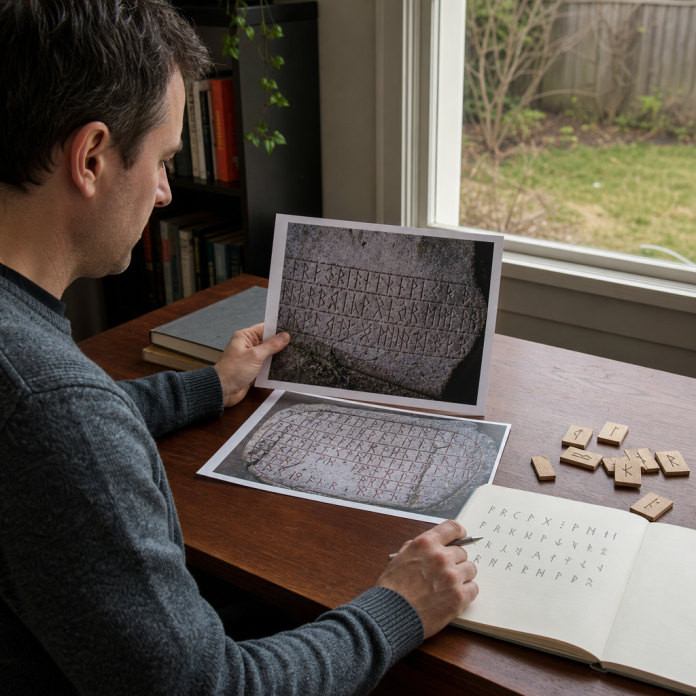
Researcher comparing illustrative inscription photographs and a rune reference at a home desk

Quick answer

Runes were first writing systems, not a standardized fortune-telling code. Modern readers often give each rune an interpretive keyword, but those keywords should not be confused with a single ancient divination manual. A careful guide keeps historical letters, later rune-poem associations and contemporary reflective practice in separate layers.

Which runic alphabet are you using?

“The runic alphabet” is not one unchanged row. The National Museum of Denmark describes runes as a Germanic method of writing developed in the centuries after the beginning of the Common Era. Forms and sound values changed across regions and periods.

  • Elder Futhark: a 24-character row used in early Germanic contexts, generally from the second century into the early medieval period.
  • Younger Futhark: a 16-character row associated with the Viking Age.
  • Anglo-Saxon futhorc: an expanded row used in England and Frisia.
  • Medieval runes: later adaptations used alongside Latin writing.

This article focuses on the 24 Elder Futhark characters because that is the row most modern rune sets use. Calling it “the Norse alphabet” is imprecise: Elder Futhark predates the Viking Age, when Younger Futhark was widely used.

Where “meanings” come from

Runologists study inscriptions, language, archaeological context and later texts. The rune names and glosses familiar to modern readers are reconstructed or compared across sources such as the Old English, Norwegian and Icelandic rune poems. Those poems come from different periods and do not create one universal dictionary.

Modern divination adds another layer: readers turn a name or image—cattle, ice, gift, journey—into a prompt about contemporary life. That can be a reflective exercise. It is not evidence that the symbol predicts an event, diagnoses illness or carries a fixed spiritual force.

Elder Futhark reference: names, sounds and common prompts

The table uses conventional modern transliterations and widely cited name associations. Spellings and reconstructions vary. The final column is a modern reflective prompt, not an ancient guaranteed meaning.

Swipe horizontally if any columns are off-screen.

Rune Conventional name Sound / historical association Modern reflection prompt
ᚠ Fehu f; cattle or movable wealth What resources require responsible care?
ᚢ Uruz u; aurochs Where can patient strength help?
ᚦ Thurisaz th; giant or thorn associations Which boundary needs attention?
ᚨ Ansuz a; god or speech associations What message needs careful checking?
ᚱ Raidho r; riding or journey What is the next practical step?
ᚲ Kenaz k; glosses vary by tradition What becomes clearer with evidence?
ᚷ Gebo g; gift Is an exchange fair and freely chosen?
ᚹ Wunjo w; joy What supports durable wellbeing?
ᚺ Hagalaz h; hail What disruption can be prepared for?
ᚾ Nauthiz n; need or constraint Which need is urgent, and which can wait?
ᛁ Isa i; ice Would a pause prevent a rushed choice?
ᛃ Jera j/y; year or harvest What process needs time?
ᛇ Eihwaz ï/ei; yew association What helps you endure change?
ᛈ Perthro p; historical gloss uncertain What uncertainty should stay open?
ᛉ Algiz z; name and gloss debated What reasonable safeguard is available?
ᛊ Sowilo s; sun Which goal can be stated clearly?
ᛏ Tiwaz t; the god Týr What does fairness require?
ᛒ Berkano b; birch What needs patient care to begin?
ᛖ Ehwaz e; horse Which partnership needs coordination?
ᛗ Mannaz m; person or humanity Whose perspective is missing?
ᛚ Laguz l; water or lake Which feelings are facts, and which are signals?
ᛜ Ingwaz ng; the god Ing What is developing before it is visible?
ᛞ Dagaz d; day What new information changes the view?
ᛟ Othala o; inherited estate What was inherited, and what may be changed?

Three modern additions to label clearly

The blank rune

A blank “Odin rune” is a modern addition, not the twenty-fifth letter of Elder Futhark. If a set includes one, treat it as that maker’s optional symbol rather than historical evidence.

Reversed meanings

Upright-versus-reversed keyword systems vary among modern readers. Historical inscriptions can rotate or mirror characters for reasons unrelated to a negative forecast. A reversed tile does not establish illness, infertility, betrayal or another event.

Fixed spreads and yes-or-no rules

Past–present–future layouts, “all upright means yes” and named wheel spreads are contemporary methods unless a source demonstrates otherwise. They can organize reflection, but they cannot verify the future.

A source-aware way to use a modern rune set

  1. Name the system. Confirm whether the set uses Elder Futhark, Younger Futhark or another row.
  2. Ask an open question. Try “What factor have I overlooked?” rather than “Will this definitely happen?”
  3. Draw one to three tiles. Record the symbols before reading a guide so memory does not change the result.
  4. Use the prompt, not a promise. Write two plausible interpretations, including one that challenges your first reaction.
  5. Check reality. Verify dates, costs, consent, safety and professional advice independently.
  6. Stop when distressed. Repeated draws can amplify anxiety rather than improve a decision.

A rune reflection should never diagnose illness, promise pregnancy, tell someone to remain in abuse, predict death, replace legal advice or direct an irreversible financial choice. For broader context on comparing traditions without collapsing them, read Psychic Traditions Across Cultures. You can also browse the Rune Divination Articles archive while applying the historical distinctions above.

Why historical context improves a reading

Uppsala University’s Rune Cast describes runes as a central writing system used for purposes ranging from names on objects to memorials and notes. The Swedish National Heritage Board’s Runor platform makes thousands of inscriptions available with images, find locations and readings. These records show real variety rather than one mystical script frozen in time.

The National Museum of Denmark also notes that sagas and later songs describe runic magic, while most surviving inscriptions contain practical, down-to-earth messages. This does not make modern rune practice invalid as personal reflection. It does mean historical claims should be narrower than spiritual interpretations.

Frequently asked questions

1. Were runes originally a fortune-telling system?

Runes were primarily writing systems used across different regions and periods. Some literary and inscriptional sources connect runes with magic, but most surviving inscriptions are not divination manuals.

2. Does every Elder Futhark rune have one fixed meaning?

No. Names, glosses and interpretations vary by source, language and period. Modern divination keywords are reflective conventions, not universally attested ancient definitions.

3. Is the blank Odin rune historically part of Elder Futhark?

No. Elder Futhark has 24 characters. A blank tile is a modern optional addition and should be labeled as such.

4. Can rune readings predict health, pregnancy or safety?

No rune draw can reliably predict or diagnose those outcomes. Use runes, if desired, for reflection while relying on qualified professionals and verifiable information for high-stakes decisions.

Sources

Understanding Rune Readings

Adult recording a three-rune reflection in a notebook at a modest home desk
A modern three-rune layout can structure reflection; it does not verify or predict an outcome.

Quick answer

A modern rune reading is an interpretive exercise, not a verified way to see the future. The useful question is not whether a tile contains a magical answer, but how a symbol can help you name assumptions, compare options and decide what information to check next.

Historical runes were writing systems used across different regions and periods. Contemporary readers often place rune-marked tiles in spreads and use reconstructed names, rune-poem associations or modern keywords as prompts. Labeling those layers makes a session clearer and more respectful.

Before a reading: define the system and the boundary

Start by identifying the rune row. Many commercial sets use the 24-character Elder Futhark, while Viking-Age inscriptions often use the 16-character Younger Futhark. Do not mix rows without noting it. The companion guide to Understanding Runes and The Meanings provides a 24-character reference and explains which “meanings” are modern reflection prompts.

Then write one sentence describing the boundary of the session:

This reading is for reflection. It cannot predict, diagnose or replace medical, legal, financial or safety advice.

If the question involves immediate danger, self-harm, abuse, a medical symptom, legal deadline or irreversible financial action, pause the reading and use the appropriate qualified or emergency support instead.

Ask a question that leaves room for evidence

Questions work best when they invite observation rather than demand certainty.

Swipe horizontally if any columns are off-screen.

Instead of Try Why
Will I get this job? What factor should I prepare for in this application? Keeps the hiring outcome with the employer
Is my partner cheating? What conversation or boundary needs clarity? Avoids treating a symbol as evidence about another person
Am I sick? What facts should I record before contacting a clinician? Does not turn a reading into diagnosis
Which investment will make me rich? Which risks and assumptions have I not checked? Keeps financial decisions tied to verifiable information

A transparent three-rune process

This layout is a modern journaling structure. It is not presented as a recovered ancient method.

Position 1: What is known?

List the facts before drawing. After drawing, use the rune’s prompt to notice which fact receives your attention. Do not add an event that has no evidence.

Position 2: What may be overlooked?

Write at least two interpretations: one that fits your first reaction and one plausible alternative. This reduces the temptation to turn the first association into certainty.

Position 3: What can be checked or tried next?

Choose a small, reversible action: ask a question, compare a price, review a document, set a boundary or wait for more information. The tile does not guarantee an outcome.

Record the symbols exactly as drawn before consulting a book. Note the date, question, layout, reference source and your interpretation. This creates an honest record and makes it harder to rewrite the reading after events unfold.

What about reversed or sideways runes?

Modern readers disagree about reversals. Some use an inverted tile as a contrasting prompt; others ignore orientation because many runes are symmetrical or because historical inscription direction is a separate issue. Choose one method before the draw and document it. Do not treat a reversed rune as proof of illness, infertility, betrayal, death or danger.

A blank “Odin rune” is also a modern addition rather than a twenty-fifth Elder Futhark character. You may remove it or define it as an optional pause prompt, but label that choice clearly.

How to read without forcing a match

  1. Describe first. Write the rune name and the reference gloss without applying it.
  2. Generate alternatives. List two or three ways the prompt could relate—or not relate—to the question.
  3. Look for disconfirming facts. What would show your favored interpretation is wrong?
  4. Separate feeling from evidence. A strong emotional reaction is information about your response, not proof about the outside world.
  5. Choose one grounded next step. Prefer an action that is lawful, consensual, affordable and reversible.

Do not keep redrawing until you receive the answer you want. Set a limit—one layout for one question—and revisit only after new facts appear. Repetition can amplify anxiety and selective interpretation.

Preparing the physical space

No special pouch, cloth, candle, crystal or direction is required. Use materials that are safe and practical:

  • a complete, clearly marked set from one rune row;
  • a neutral reference with its sources identified;
  • paper or a private digital note;
  • enough light to identify each character accurately;
  • a quiet time limit so the session does not become repetitive.

If candles help concentration, follow ordinary fire safety. Objects may carry personal meaning, but they do not become evidence of prediction or protection.

If another person gives the reading

Before paying, confirm the rate, time limit, format, privacy practice, cancellation or refund terms and whether the reader records the session. A responsible reader should be willing to say:

  • the method is interpretive rather than guaranteed;
  • which rune row and reference system they use;
  • that they will not diagnose, threaten or direct high-stakes decisions;
  • that you may stop without buying cleansing, protection or extra minutes.

Leave if someone claims a curse, predicts catastrophe, demands secrecy, pressures repeated payment, asks you to abandon care or says only they can keep you safe. For other source-aware material, browse the Rune Divination Articles archive and keep the same evidence boundaries in place.

Historical context in brief

The National Museum of Denmark describes runes as Germanic writing derived from Mediterranean alphabetic traditions. Its discussion of runic magic notes that sagas and later songs contain magical material, while most surviving inscriptions carry practical messages. Uppsala University’s Rune Cast likewise presents runes as writing used for names, memorials and everyday communication across centuries.

That history does not forbid contemporary symbolic practice. It does require accuracy: a modern three-tile spread should be called modern, and a reflective keyword should not be advertised as a fixed ancient prediction.

Frequently asked questions

1. Can a rune reading predict my future?

No reliable method shows that rune tiles predict future events. A reading can be used as a structured reflection exercise while decisions remain grounded in evidence.

2. What is a good question for a rune reading?

Use an open question such as “What assumption should I check?” or “What small next step is available?” Avoid questions that ask a symbol to diagnose, accuse another person or guarantee an outcome.

3. Do I have to read reversed runes?

No. Reversal systems vary among modern readers. Choose and document a method before drawing, and never treat an inverted tile as proof of danger or illness.

4. When should I stop a rune reading?

Stop if you feel distressed, repeat the same question, face a high-stakes decision or encounter pressure to pay for protection. Move to verifiable information or qualified support.

Sources