

Home Blog Page 6

Signs You are In a Soul Contract

Two men speaking with personal space beside an open garden gate on a backyard patio
A meaningful conversation does not establish romance, destiny, or obligation; present-day consent and choice still apply.

A “soul contract” is a spiritual or metaphorical way some people describe a relationship that feels unusually important, familiar, or challenging. It is not a scientifically verified agreement between souls, proof of a past life, or an obligation to keep someone in your life. The meaning varies across teachers and personal belief systems, so no checklist can establish that a contract exists.

The safest use of the idea is reflective: What does this relationship bring up? What patterns are visible now? Are both people free to choose contact, set limits, and leave? A spiritual interpretation may add meaning, but present-day consent, behavior, compatibility, and safety remain more reliable guides for decisions.

What people may mean by a soul contract

Popular discussions use “soul contract” for many kinds of connection: partners, friends, relatives, mentors, brief encounters, and sometimes relationships with animals. Some people imagine an agreement made before birth; others use the phrase poetically for a bond that prompted growth. These are beliefs and interpretations, not established facts about how souls or relationships work.

A connection can be meaningful without being permanent. It can influence you without being destined. It can end without either person failing a spiritual test. If two people understand the term differently, neither interpretation gives one person authority over the other.

Seven commonly described signs—and other explanations

Experiences often called soul-contract signs are real experiences, but the label is only one possible interpretation. Consider ordinary explanations alongside the spiritual one.

Experience Possible explanations Grounded question
Instant familiarity Shared mannerisms, values, environment, attraction, suggestion, or a familiar relationship pattern What do I actually know about this person so far?
Strong emotion Chemistry, anxiety, uncertainty, unmet needs, novelty, conflict, or old memories Does intensity come with respect and steadiness?
Recurring dreams Memory processing, worry, hope, recent attention, or ordinary dream recombination What does the dream reveal about my feelings—not their private thoughts?
Breakup and reunion cycles Incompatibility, intermittent reinforcement, loneliness, unresolved conflict, or practical barriers What changed in observable behavior before reconnecting?
A sense of “knowing” them Fast pattern matching, projection, assumptions, shared background, or selective memory Have I checked my impression with respectful conversation?
Conflict that feels like a lesson Different needs, poor communication, stress, boundary violations, or power and control Is accountability mutual, specific, and sustained?
Difficulty letting go Grief, attachment, fear, habit, rumination, isolation, or practical dependence Does the belief support choice, or keep me stuck?

None of these experiences proves a previous lifetime or secret agreement. Familiarity is not knowledge of another person’s history. Dreams are not messages of consent. Emotional pain is not evidence that a lesson must continue. Repeated contact is not proof that the universe keeps reuniting two people.

A soul contract never overrides consent

Consent applies to contact, affection, sex, money, spiritual practices, shared housing, and access to personal information. It must be voluntary and can change. A former promise, intense bond, psychic reading, dream, or belief that two souls chose each other does not create permanent access.

If someone ends the relationship, asks for space, blocks contact, or says no, treat that as complete information about what is welcome now. Do not use alternate accounts, friends, gifts, surprise visits, location tracking, or repeated readings to get around a boundary. A relationship can matter deeply and still be over.

For a broader look at separating spiritual interpretation from memory and present-day choice, see signs you met a past-life love. That framework also keeps past-life belief distinct from evidence about compatibility today.

Abuse is not a shared spiritual lesson

Do not treat insults, intimidation, monitoring, sexual pressure, threats, financial control, property damage, or physical harm as signs that two people agreed to teach each other. The National Domestic Violence Hotline describes relationship abuse as a pattern used by one partner to gain or maintain power and control. The Hotline also explains that spiritual beliefs can be used to shame, manipulate, or justify abuse.

The phrase “we abuse each other” can hide an unequal pattern. A survivor may resist, argue, or defend themselves; that does not automatically make the situation equal. Look at who is repeatedly restricting the other person’s choices, creating fear, controlling resources, retaliating, or preventing them from leaving.

No one must stay until the “karmic lesson” is complete. Leaving can be dangerous in an abusive relationship, so generic advice to confront the person or announce a departure may increase risk. A confidential local advocate can help create a personalized safety plan. Use emergency services for immediate danger.

Growth does not prove destiny

Many relationships teach us something because people learn from experience. Growth after conflict or loss does not prove the relationship was prearranged, necessary, or good for you. It also does not make the harm acceptable. You can recognize what you learned while holding another person accountable and declining further contact.

Forgiveness is optional. It does not require reconciliation, restored trust, silence about harm, or access to you. Healing is not a guaranteed result of ending a relationship, and it rarely follows a fixed spiritual timeline. Grief, relief, anger, doubt, and renewed clarity may coexist.

A present-day relationship check

When the soul-contract story feels compelling, pause prediction and examine a recent period of observable behavior. Write down specific examples rather than conclusions such as “meant to be” or “toxic.” Consider:

  1. Choice: Can both people say no, change plans, spend time apart, and leave without punishment?
  2. Respect: Are boundaries accepted the first time, including digital and sexual boundaries?
  3. Reliability: Do words and actions match over weeks and months?
  4. Repair: After harm, is there a clear apology, changed behavior, and room for the injured person’s needs?
  5. Reciprocity: Are care, attention, practical effort, and decision-making reasonably shared?
  6. Safety: Is there freedom from fear, coercion, surveillance, threats, and violence?
  7. Compatibility: Do values, goals, communication, and everyday life fit well enough for the relationship being considered?

Our guide to finding a soulmate offers a compatible evidence-based check on consent, reliability, shared values, and safety. These qualities matter whether you call a bond a soulmate connection, soul contract, friendship, or simply a relationship.

Dreams, obsession, and intrusive thoughts

Dreaming about someone or thinking about them repeatedly usually tells you that your own mind is occupied with the relationship. It does not reveal their thoughts, location, consent, or future actions. Avoid turning every coincidence, song, number, or social-media post into proof that contact is required.

“Obsessed” is not a romantic milestone or a soul-contract sign. If thoughts or checking behaviors are unwanted, time-consuming, or disrupting sleep, work, eating, finances, or relationships, consider support from a qualified mental-health professional. The National Institute of Mental Health notes that recurring unwanted thoughts and repetitive behaviors can cause significant distress and that effective treatment is available. This does not diagnose anyone; it is a reason to seek an appropriate assessment when daily life is affected.

Animals and spiritual obligation

Some people use soul-family language for pets or animals they care for. That may express love, but it does not prove that an animal carries karmic debt or needs to be taught a spiritual lesson. Care decisions should follow the animal’s welfare, species-appropriate needs, veterinary guidance, legal responsibilities, and the caregiver’s realistic capacity.

A spiritual story should never justify keeping a wild animal, delaying veterinary treatment, forcing contact, or remaining in an unsafe home. Compassion includes practical care and honest limits.

Use readings without giving away agency

A reader cannot verify a pre-birth contract, another person’s private thoughts, or a guaranteed reunion. Treat a reading as reflection or entertainment, not permission to contact someone, remain in danger, spend beyond your budget, or make a high-stakes legal, medical, financial, housing, or parenting decision.

Be cautious if someone announces a binding contract, curse, karmic blockage, or urgent deadline and then sells repeated sessions to release it. Other red flags include guarantees, secrecy, fear, escalating fees, demands for gift cards or cryptocurrency, and instructions to isolate from supportive people. Prices and scope should be clear in advance, and you should be free to stop without pressure.

A useful spiritual interpretation expands reflection while preserving uncertainty and choice. If the soul-contract idea helps you name a chapter of life, you may keep it as a metaphor. You may also revise or release it. Your safety and another person’s consent do not depend on proving what happened before birth.

Frequently asked questions

How do I know if I have a soul contract with someone?

There is no objective test that can prove a soul contract. Familiarity, intensity, dreams, conflict, or repeated reunions can have many explanations. Use the idea as optional reflection and evaluate the relationship through consent, respect, reliability, compatibility, and safety.

Does a soul contract mean I must stay in a painful relationship?

No. Spiritual beliefs never require you to accept abuse, coercion, repeated boundary violations, or unwanted contact. You may end a relationship without completing a supposed lesson. Seek confidential local safety support if leaving could increase danger.

Do recurring dreams or thoughts prove a past-life bond?

No. Dreams and repeated thoughts reflect your own mental activity and do not prove a past life, reveal another person’s mind, or provide consent. If unwanted thoughts or checking interfere with daily life, a qualified mental-health professional can help.

Can a psychic release or cancel a soul contract?

No reader can verify or cancel a supernatural contract as an established fact. A personal ritual may symbolize closure, but it should not involve fear, guarantees, escalating payments, or replacing legal, medical, financial, or mental-health help.


How to Cultivate Your Psychic Abilities

Adult with a prosthetic forearm comparing a recorded shape sketch with four opaque test boxes at a home workshop bench
A structured observation exercise can improve recording and comparison; it does not prove psychic ability, and the person’s prosthesis is unrelated to any claimed ability.

“Psychic abilities” is an umbrella term used in many spiritual communities for experiences such as vivid mental images, inner speech, body sensations, sudden impressions, unusual smells or tastes, and a feeling of knowing. These experiences can feel important, but they do not by themselves prove telepathy, spirit contact, prediction, or access to hidden facts.

You can still explore them responsibly. A grounded practice develops attention, description, uncertainty, fair testing, and good judgment. It does not require you to declare a supernatural gift, ignore ordinary explanations, or use an impression for a high-stakes decision.

Know what you are trying to cultivate

Spiritual writers often group experiences under “clair” labels. The labels may be meaningful as personal vocabulary, but they are not medical diagnoses or scientifically established channels of information. The spelling commonly used for psychic smell is clairalience; “clairalliance” is a frequent variation or error.

Spiritual label Experience being described Ordinary sources worth checking
Clairvoyance Mental pictures, colors, scenes, or symbols Visual imagery, memory, dreams, expectation, migraine, or eyesight changes
Clairaudience Words, music, tones, or an “inner voice” Inner speech, memory, auditory imagery, tinnitus, nearby sound, or hearing changes
Clairsentience Body sensations or a felt emotional atmosphere Emotion, empathy, posture, pain, temperature, stress, hunger, or learned social cues
Claircognizance A sudden conclusion or sense of knowing Fast pattern recognition, prior knowledge, inference, bias, or coincidence
Clairalience A smell without an obvious source Real environmental odors, memory, sinus issues, migraine, medication, or neurological causes
Clairgustance A taste without eating or drinking Food residue, reflux, dry mouth, dental issues, medication, infection, or altered taste

Start with a plain observation: “I pictured a red bicycle,” “I noticed pressure in my chest,” or “the phrase ‘call home’ appeared in inner speech.” Then record your interpretation separately. “A spirit warned me” is a much larger claim than the experience itself, and it requires evidence the experience alone cannot provide.

Use the CLEAR practice

A short structure makes practice more useful and less suggestible:

  1. Choose a boundary. Practice for five to ten minutes in a safe place. Do not practice while driving, supervising children, using machinery, or making an urgent decision.
  2. Log first. Write the time, prompt, exact image, word, sensation, smell, taste, or conclusion before looking for a match.
  3. Explore alternatives. List at least three ordinary sources, including recent experiences, cues, mood, sleep, health, and chance.
  4. Assess once. Compare the record with a predetermined target or later outcome. Do not keep redrawing or rewriting until something fits.
  5. Review every result. Count clear matches, partial matches, misses, blank trials, cue leakage, and changed wording. Keep the conclusion modest.

This process cultivates careful attention rather than certainty. It can reveal that you are good at noticing tone, remembering visual detail, sensing your own stress, or making rapid inferences. Those are useful findings even when the record does not support a paranormal explanation.

Try a fair low-stakes exercise

Ask another person to place one of four very different ordinary objects—such as a mug, key, pinecone, or toy car—inside identical opaque boxes. They should randomize the selection while you are out of the room and avoid giving verbal or visual cues.

  1. Before opening the chosen box, record specific features: shape, material, color, weight, temperature, texture, movement, sound, or function.
  2. Choose in advance what counts as a match. “Metallic and used to open something” is more testable than “strong energy.”
  3. Open the box once and score the complete record. Do not add details after seeing the object.
  4. Repeat with fresh randomization and keep every trial. A memorable hit is less informative when misses disappear from the story.
  5. Do not use the exercise to identify a person, diagnose illness, locate someone, investigate fidelity, predict danger, or reveal private information.

Chance, broad wording, unnoticed cues, and selective memory can create impressive-looking results. A run of matches is a reason to improve controls and repeat the exercise, not proof of a psychic source. Our guide to testing visual impressions and clairvoyant language gives a more detailed method for image-based trials.

Practice each sense without forcing a message

Images: Study an ordinary object for thirty seconds, hide it, sketch its details, then compare the sketch with the object. This exercises observation and memory. A vivid mental picture does not establish where it came from.

Sounds and words: Sit in a quiet but safe place and list actual external sounds, then voluntary inner speech, then spontaneous thoughts. Keep those categories separate. Inner speech may feel surprising without coming from an outside being.

Body sensations: Note location, intensity, duration, posture, temperature, food, caffeine, medication, sleep, and emotion. Ask what changed after movement, rest, hydration, or a shift in attention. Do not assign another person’s feelings or a diagnosis from your body response.

Sudden knowing: Write the conclusion, confidence, available clues, and two alternative explanations. Then identify what observable evidence would support or contradict it. The broader article on intuition, expertise conditions, bias, and fair testing explains why a fast impression may be useful in familiar settings but unreliable where feedback is poor.

Smell and taste: First check the room, food, smoke, gas, cleaning products, dental health, reflux, illness, medication, and environmental exposure. Do not deliberately inhale smoke, essential oils, powders, or unknown substances, and never taste something to test a psychic impression.

Meditation is optional and has limits

Quiet attention may make thoughts, imagery, and body sensations easier to notice because fewer external events compete for attention. That does not prove a hidden channel has opened. Meditation is not required; eyes-open observation, walking, drawing, or brief journaling may be more comfortable.

The National Center for Complementary and Integrative Health notes that meditation covers varied practices, research may be interpreted too optimistically, and negative experiences have been reported. Keep sessions short, maintain sleep and daily routines, and stop if practice increases panic, intrusive thoughts, dissociation, agitation, depression, or loss of sleep. A qualified clinician can help if symptoms persist or impair daily life.

Know when an experience needs health care

New sensory changes deserve ordinary assessment before a spiritual label. Seek medical or dental advice for a persistent unexplained smell or taste, hearing change, ringing, pain, weakness, confusion, severe headache, fainting, medication reaction, or a symptom that disrupts eating, sleep, work, or safety.

The National Eye Institute advises urgent eye care for many new floaters, flashes of light, or a curtain-like shadow because these can be signs of a retinal tear or detachment. Do not reinterpret urgent visual symptoms as clairvoyance or third-eye activation.

Hearing commands, seeing figures as if they are externally present, believing ordinary media contains personal instructions, losing the ability to check what is real, or becoming unable to sleep or function deserves prompt professional support. The National Institute of Mental Health explains that hallucinations and fixed false beliefs can occur with psychosis. This does not mean every unusual experience is psychosis; distress, functioning, safety, and reality testing matter. Use local emergency or crisis services for immediate danger or commands to harm yourself or someone else.

Protect consent, privacy, and high-stakes decisions

An impression does not grant access to another person’s thoughts, health, pregnancy, trauma, sexuality, fidelity, location, or future. Ask rather than announce, and accept a refusal. Do not contact, confront, investigate, track, accuse, publish, or make a report about someone because of a private sensation.

Do not use a psychic exercise to choose medical treatment, identify a suspect, decide whether a relationship is safe, gamble, invest, send money, leave a job, move, or replace legal or financial advice. Use verifiable information and the appropriate qualified professional.

Be cautious with practitioners who guarantee activation, say skepticism blocks a gift, diagnose a curse, demand secrecy, encourage stopping treatment, or sell repeated clearings after creating fear. Get the total price and scope before paying. The Federal Trade Commission warns that demands for cryptocurrency, wire transfers, or gift cards are scam indicators. No urgent supernatural claim makes those payment methods safe.

A four-week grounded plan

  • Week 1 — describe: Keep five-minute records of images, inner words, sensations, and conclusions. Separate observation from interpretation.
  • Week 2 — check context: Add sleep, mood, recent media, physical state, environmental cues, and alternative explanations.
  • Week 3 — test: Complete at least ten randomized, low-stakes object trials with predefined scoring and every miss retained.
  • Week 4 — review: Look for specificity, cue leakage, vague matches, changed wording, discarded trials, distress, sleep effects, and whether any practical skill improved.

Continue only if the practice remains optional, affordable, low-stakes, and compatible with daily functioning. The most useful outcome may be better observation, emotional awareness, imagination, or tolerance for uncertainty—not proof of a supernatural ability.

Frequently asked questions

Can everyone develop psychic abilities?

There is no established evidence that everyone has a latent paranormal ability. People can develop observation, imagery, memory, emotional awareness, and decision habits, but improvement in those skills should not be presented as proof of telepathy, prediction, or spirit contact.

Which psychic ability is strongest for me?

A vivid image, inner phrase, body sensation, smell, taste, or fast conclusion may show which kinds of experiences you notice most. It does not establish a dominant supernatural channel. Record context, ordinary sources, misses, and health factors before choosing a label.

How can I practice psychic abilities safely?

Use short, low-stakes sessions; write impressions before checking; prevent cues; define scoring; retain every result; and stop if practice increases distress, sleep loss, compulsive checking, or difficulty testing reality. Never use it for emergencies, diagnosis, surveillance, or major decisions.

When should I stop and seek professional help?

Seek appropriate care for new or persistent sensory changes, severe headache, confusion, reduced vision, many new floaters or flashes, hearing commands, externally perceived figures, loss of sleep, impaired functioning, difficulty checking reality, or any risk of harm.

Opening Your Third Eye

Older woman sketching in a notebook at a sunny kitchen table with a blue bowl and houseplant nearby
Visual journaling can support reflection and observation; it does not prove supernatural sight, prediction, or a literal third eye.

“Opening your third eye” is spiritual and symbolic language. People may use it for becoming more reflective, noticing mental imagery, examining dreams, or paying closer attention to values and patterns. It is not a medically recognized event, a second form of eyesight, or proof that someone can see the past, future, spirits, or another person’s private life.

This guide focuses on one narrow and practical use of the phrase: keeping a visual-symbol journal. The aim is to describe images and associations without automatically treating them as predictions or instructions. For the broader overview of anatomy claims, cultural respect, basic grounding, meditation safety, and sun-gazing risks, see Opening the Third Eye.

Mental imagery is not hidden eyesight

The APA Dictionary of Psychology describes visual imagery as the experience of pictures in the mind. Mental pictures can draw on previous visual experience or imagination. People differ widely: some picture scenes vividly, some notice faint forms or concepts, and some have little voluntary imagery. None of those differences establishes psychic ability or spiritual failure.

Use precise language before choosing a meaning:

Experience Possible sources Grounded response
You intentionally picture a blue bowl Voluntary imagery, memory, creative rehearsal Change its color or angle and notice what you can direct
An unexpected image appears Recent media, worry, memory, expectation, dream residue, imagination Record the image and context before assigning a source
A symbol repeats in dreams Emotion, memory consolidation, recurring concerns, coincidence Explore what it means to you without claiming a prediction
You see flashes, shapes, or shadows with open eyes Eyesight changes, migraine, medication, fatigue, sleep transition, or other health causes Check symptoms and seek appropriate care when new or concerning
A scene seems externally present or personally commanded Sleep loss, substances, illness, severe stress, or a mental-health condition Prioritize safety, reality checks, and qualified support

“I pictured a bright doorway” is an observation. “The universe promised I will move next month” is an interpretation. The second statement adds a source, meaning, and prediction that the image alone cannot verify.

A ten-minute visual-symbol journal

You need only a notebook, pencil, timer, and an ordinary object. Skip the exercise if you are driving, supervising someone, using machinery, very sleep-deprived, intoxicated, or already distressed.

  1. Orient for one minute. Write the date, time, place, sleep quality, mood, and any recent media or conversation that may influence imagery.
  2. Observe for one minute. Look at an ordinary object such as a bowl, leaf, key, or cup. Notice shape, color, texture, position, light, and shadow.
  3. Picture for one minute. Put the object aside and use a soft gaze or close your eyes only if comfortable. Notice what remains in memory.
  4. Sketch for two minutes. Draw or describe the image without making it prettier, more mystical, or more complete than it was.
  5. Compare for two minutes. Look again at the object. Mark accurate details, missing details, substitutions, and additions.
  6. Associate for two minutes. Note memories, emotions, words, or personal symbols that arose. Label these as associations, not facts about the world.
  7. Close for one minute. Look around the room, stretch, and write one modest conclusion such as “blue objects remind me of my grandmother’s kitchen.”

This can develop observation, recall, drawing, and awareness of personal associations. It cannot by itself demonstrate clairvoyance or spirit contact. If you want to test a claim about hidden visual information rather than journal symbolism, use the separate guide to fairly testing clairvoyant impressions, with blinded low-stakes targets and every miss retained.

Interpret symbols without turning them into orders

A symbol does not have one universal meaning. A river might suggest grief, travel, danger, childhood, ecology, or nothing important, depending on the person and context. Online symbol dictionaries often present broad statements that can fit many situations. Start with your own specific associations.

For each image, use four questions:

  1. What appeared? Describe only observable features of the mental image.
  2. What may have prompted it? Consider recent sights, stories, worries, dreams, memories, and expectations.
  3. What does it mean to me? Name personal associations and emotions without claiming they apply to everyone.
  4. What outside evidence is needed? Identify facts, conversation, or professional advice required before acting.

Keep interpretations revisable. “This locked door may reflect how hesitant I feel” can be a useful journal prompt. “The locked door proves my partner is hiding something” is an unsupported accusation. A symbol never supplies another person’s consent or private thoughts.

Dreams, coincidences, and memory need context

Record a dream before checking messages, news, weather, or social media. Later information can change how the memory is told. Use exact details rather than broad categories: “a yellow bus beside a flooded road” is more informative than “travel and water.”

Count mismatches as carefully as similarities. A dream can resemble a later event by chance, because common themes repeat, or because memory emphasizes the match. Do not discard dreams that did not “come true” or stretch a vague image until it fits.

A coincidence may feel meaningful without proving that it was arranged for you. You can appreciate the feeling and still ask what evidence supports any practical conclusion. Do not contact someone, spend money, or change a treatment plan because a dream, number, song, or repeated image seemed to give an order.

Meditation is optional, not an activation switch

Quiet may make imagery easier to notice because there are fewer outside demands on attention. It does not open an anatomical eye or guarantee messages. Eyes-open drawing, walking, or brief journaling are reasonable alternatives if inward focus feels uncomfortable.

The National Center for Complementary and Integrative Health explains that meditation includes varied practices, findings are sometimes interpreted too optimistically, and negative experiences have been reported. Stop if practice increases panic, intrusive thoughts, dissociation, agitation, depression, confusion, or loss of sleep. More intensity is not evidence of spiritual progress.

Avoid sleep deprivation, fasting, hyperventilation, breath holding, substances, prolonged isolation, pain, and staring at bright lights. Do not ingest oils or herbs, or place substances in the eyes, to “activate” perception.

Separate imagery from eye and neurological symptoms

Mental imagery occurs in the mind; it is not the same as a change in eyesight. The National Eye Institute advises urgent eye care for many new floaters, flashes of light, or a curtain-like shadow or blurry area because these can indicate a retinal tear or detachment. Do not treat those symptoms as a third-eye sign.

Seek qualified medical advice for new, persistent, or disruptive visual experiences, especially with severe headache, weakness, confusion, fever, injury, medication changes, substance use, seizure, fainting, or reduced vision. Do not stop prescribed care because a reader calls a symptom an awakening.

Know when reality testing and support matter

Seeing a scene in the mind is different from seeing a figure as if it is in the room. Hearing your own inner narration is different from hearing an external command. If images or voices feel externally present, issue commands, create fear, prevent sleep, interfere with functioning, or make it difficult to tell what is real, seek prompt professional support.

The National Institute of Mental Health notes that hallucinations, fixed false beliefs, and difficulty recognizing reality can occur with psychosis. This does not diagnose every unusual image. It means distress, safety, functioning, and reality testing matter more than a spiritual label. Use local emergency or crisis services for immediate danger or commands to harm yourself or someone else.

Protect consent and high-stakes decisions

A mental image does not reveal another person’s health, pregnancy, fidelity, trauma, location, sexuality, intentions, or future. Ask rather than announce, accept no, and keep private material private. Do not accuse, investigate, track, contact, or publish claims about someone based on an image.

Do not use third-eye practice to select medical treatment, identify a suspect, find a missing person, gamble, invest, send money, leave a job, decide whether a relationship is safe, or replace legal or financial advice. Use verifiable evidence and the relevant qualified professional.

Leave a teacher or reader who guarantees awakening, says doubt blocks the process, declares an urgent curse or blockage, discourages health care, demands secrecy, or sells repeated clearings after creating fear. A responsible facilitator allows questions, eyes-open options, shorter sessions, ordinary explanations, and stopping without penalty.

A useful journal stays modest

Review your entries after several weeks. Look for recurring personal themes, recent sources, sleep effects, copied symbols, changed memories, vague wording, and interpretations that became more certain over time. Ask whether journaling improved observation, creativity, emotional vocabulary, or decision pauses.

You do not need to force images or manufacture a dramatic opening. A quiet practice that increases curiosity while preserving uncertainty can be worthwhile. If it increases fear, certainty, compulsion, sleeplessness, or withdrawal from ordinary life, stopping is a sign of judgment—not failure.

Frequently asked questions

Does seeing vivid mental images mean my third eye is open?

No. Vivid mental imagery can reflect imagination, memory, dreams, expectation, or other ordinary processes. You may use third-eye language symbolically, but the image alone does not prove hidden sight, spirit contact, or prediction.

How should I interpret a symbol in my journal?

Describe the image first, note recent possible sources, list personal associations, and identify outside evidence needed before acting. Keep the meaning revisable and do not treat a symbol as an order or fact about another person.

Can meditation force the third eye to open?

No reliable method has been shown to activate supernatural sight. Meditation may make thoughts and imagery easier to notice, but it can also be uncomfortable for some people. Keep sessions brief and stop if distress, confusion, or sleep loss increases.

When does a visual experience need professional care?

Seek appropriate care for new or persistent visual changes, many new floaters or flashes, a curtain-like shadow, reduced vision, severe headache, confusion, externally perceived figures, commands, loss of sleep, difficulty testing reality, impaired functioning, or any risk of harm.

When Your Twin Flame Dies

Older man arranging garden flowers beside a closed photo album and notebook on a sunny backyard patio
A quiet act of remembrance can support grief; it does not prove supernatural presence, destiny, or continued communication.

“Twin flame” is a spiritual or personal label, not a scientifically established type of relationship. When someone you describe this way dies, the grief can still be profound. The intensity may come from love, shared history, unfinished plans, identity, trauma, or the meaning you gave the bond—not proof that two souls were literally one.

There is no required timeline, message, ritual, or spiritual interpretation. Some people find comfort in twin-flame language; others later prefer partner, friend, former partner, chosen family, or loved one. You may keep, revise, or set aside the label without betraying the person who died.

Grief does not follow a fixed spiritual script

Grief can include sadness, numbness, anger, relief, guilt, disbelief, longing, poor concentration, sleep changes, physical tension, or moments of ordinary enjoyment. Feelings often come in waves rather than orderly stages. A calm day does not mean you did not care, and a hard anniversary does not erase progress.

The American Psychological Association describes grief as a natural response to loss and notes that people adapt in different ways. Culture, faith, family expectations, the circumstances of death, prior losses, finances, health, and available support can all shape the experience.

Experience Possible meaning Grounded response
You dream about the person Memory, longing, emotion, sleep processes, or spiritual meaning you personally hold Record it without treating it as an order or prediction
You briefly expect them to enter a room Habit and attachment adjusting to a changed reality Pause, orient to the present, and be gentle with yourself
A song or number feels significant Association, coincidence, attention, or personal symbolism Accept the comfort without claiming proof
You feel guilty for laughing or meeting someone new Grief loyalty, social pressure, or fear of forgetting Remember that continued living is not replacement
You cannot function or feel unsafe Grief may be combining with depression, trauma, or another health concern Seek timely professional or crisis support

You are not responsible for the deceased person’s emotions

A harmful grief message says that the person who died can feel your sadness, needs you to complete a mission, or will be trapped unless you think positively. These claims cannot be verified. Sadness is not a punishment, energetic attack, or failure to “ascend.” You do not have to suppress grief to protect the dead.

You may speak to the person in private, write letters, visit a meaningful place, pray, or meditate if these practices fit your beliefs. Treat any sensed presence, dream, or inner conversation as a personal experience rather than confirmed communication. Do not let an impression direct medical, legal, financial, or safety decisions.

For a broader discussion of spiritual beliefs, mediumship, grief experiences, and evidence boundaries, see Spirits and Spirituality, What Does It All Mean?.

A practical plan for difficult days

  1. Name today’s need. Choose one word such as food, sleep, company, privacy, paperwork, movement, or medical care.
  2. Shrink the task. Replace “fix my life” with one meal, one shower, one phone call, or ten minutes of sorting documents.
  3. Use a support ladder. List one trusted person, one professional resource, and one urgent or crisis option before you need them.
  4. Protect basics. Keep medications, hydration, food, sleep, movement, and appointments as steady as possible.
  5. Delay irreversible choices. When practical, pause major spending, relocation, asset transfers, or new spiritual contracts during acute distress.
  6. Close the day gently. Note what was hard, what helped, and one manageable next step.

Grief can reduce attention and memory. Written reminders, shared calendars, automatic bill payments, and help with meals or transport are practical accommodations, not signs of weakness.

Memorial practices can be ordinary and flexible

A memorial does not need to prove continued contact. You might cook a familiar meal, care for a garden, donate to a cause, create a playlist, organize photographs, tell a true story, or keep a small object. Ask before sharing private messages, images, medical details, or intimate relationship history.

Include complicated truths. The relationship may have contained affection and harm, closeness and distance, or love and unresolved conflict. Death does not require idealizing the person or forgiving abuse. You can grieve someone while maintaining boundaries around their family, community, or legacy.

If the relationship was secret, unrecognized, queer, online, intermittent, or ended before the death, other people may minimize your grief. The absence of public recognition does not make your feelings unreal. Seek support that respects the relationship without turning its spiritual label into unquestionable fact.

Dreams and sensed presence need room and limits

Dreaming about someone who died, hearing a familiar phrase in your own inner speech, or momentarily sensing their presence can happen in grief. Experiences vary across individuals and cultures. A comforting experience does not prove an afterlife, and an absence of experiences does not mean the person rejected you.

Write down what happened before searching for meanings online. Note sleep, stress, medication changes, substances, recent reminders, and what you actually perceived. Keep the description separate from the interpretation. “I dreamed we spoke in the kitchen” is different from “they commanded me to sell the house.”

Seek qualified support if experiences are frightening, feel externally commanded, prevent sleep, impair daily functioning, make reality difficult to assess, or tell you to harm yourself or someone else. Do not use fasting, sleep deprivation, substances, hyperventilation, or isolation to force contact.

Relationships after loss are not betrayal

There is no spiritual rule that you must remain single, find a replacement twin flame, or reunite with someone from the past. Friendship, dating, sexuality, partnership, and solitude are personal choices. Consent, readiness, reliability, compatibility, and safety matter more than a destiny label.

New affection does not erase the deceased person. It is also acceptable not to date. Be cautious with people who use your loss to claim they are the deceased person’s reincarnation, a destined replacement, or the only one who can deliver messages.

If the twin-flame idea is being used to excuse pursuit, unwanted contact, or a promised reunion with a living person, the separate guide to the twin-flame runner idea explains consent, no-contact boundaries, stalking concerns, and breakup safety.

Choose grief support, readers, and groups carefully

A licensed mental-health professional, grief counselor, faith leader, peer group, or trusted community member may help. Fit matters. Ask how the person handles cultural differences, trauma, complicated relationships, confidentiality, fees, and emergencies.

Avoid any reader or group that guarantees contact, invents urgent curses, says the deceased is angry, blames your grief for blocking messages, requests secrecy, encourages dependence, or demands escalating payments. Do not provide passwords, bank access, identity documents, intimate images, or large transfers.

Leave a group that insists everyone must accept the twin-flame framework. Support should make room for uncertainty and changing beliefs. It should never discourage medical care, prescribed treatment, legal advice, or contact with safe family and friends.

Know when more help is warranted

Seek professional help when distress is persistent or worsening, daily functioning is severely impaired, sleep or eating is seriously disrupted, substances are becoming a coping requirement, panic or trauma symptoms dominate, or guilt and hopelessness feel unbearable. A clinician can assess grief alongside depression, trauma, anxiety, medication effects, and physical health.

Use emergency or crisis services immediately for thoughts or plans of suicide, inability to stay safe, commands to harm, severe confusion, or danger from another person. In the United States, call or text 988; elsewhere use the appropriate local crisis or emergency service.

Moving forward does not require “moving on” from every memory. A workable goal is to carry the relationship’s meaning while staying connected to present reality, your body, your responsibilities, and people who are still here.

Frequently asked questions

Does my grief prove the person was my twin flame?

No. Intense grief shows that the loss matters to you; it does not verify a supernatural relationship category. You may use the label as a personal belief while also considering attachment, history, trauma, identity, and ordinary human love.

Is a dream about the deceased a message?

A dream can feel meaningful, but it may reflect memory, emotion, expectation, or normal sleep processes. Record it as an experience rather than proof, and do not treat it as an instruction for high-stakes decisions.

Am I betraying them if I date again?

No universal timetable or spiritual rule applies. Dating, not dating, and changing your mind are personal choices. New affection does not erase the person who died, and grief does not create an obligation to remain single.

When should I seek grief support?

Seek support when distress is worsening, daily functioning is severely impaired, sleep or eating is seriously disrupted, substances are becoming necessary to cope, reality testing is difficult, or guilt and hopelessness feel unbearable. Use emergency or crisis help for immediate danger or suicidal thoughts.

Increasing Your Psychic Powers

Young woman writing in a journal beside color cards and a kitchen timer at a sunny apartment table
Some people find writing helpful for noticing thoughts and feelings; it does not prove psychic ability or replace professional support.

“Increasing your psychic powers” is spiritual language, not a medically or scientifically verified process. A practical place to begin is not trying to force messages. It is learning to notice thoughts, emotions, body signals, and context before turning an impression into a claim.

People sometimes call anger, fear, grief, conflict, fatigue, or tension “negative energy.” That phrase can be a useful metaphor, but it does not identify a substance trapped in the body, a blocked chakra, or the cause of an illness. Difficult emotions are information and experiences—not contamination or moral failure.

Start with regulation, not interpretation

Strong emotion can narrow attention and make urgent explanations feel convincing. Lack of sleep, hunger, pain, medication changes, substances, conflict, sensory overload, and recent media can also shape what you notice. Before calling an impression psychic, check the conditions in which it appeared.

What you notice Ordinary checks Safer next step
A room feels “heavy” Heat, ventilation, odor, noise, crowding, conflict, anxiety Get fresh air, reduce stimulation, and describe specific cues
Your body feels “blocked” Tension, posture, pain, fatigue, breathing, illness Stretch gently, rest, hydrate, and seek care for concerning symptoms
You sense someone is angry Tone, expression, memory, expectation, your own mood Ask respectfully instead of announcing what they feel
A thought repeats Worry, habit, trauma reminder, unfinished task, intrusive thought Write it down and assess evidence, impact, and support needs
An impression feels urgent Fear, excitement, sales pressure, sleep loss, substance effects Pause high-stakes action and consult reliable information

Regulation does not mean suppressing feelings or becoming positive all the time. It means creating enough steadiness to observe without immediately obeying an impression.

Use a short emotional check-in

Try this five-minute record before meditation, divination, or a reading:

  1. Orient. Write the date, time, place, and what you were doing.
  2. Name the feeling. Use specific words such as irritated, lonely, embarrassed, afraid, hopeful, or tired.
  3. Locate the body signal. Note tension, warmth, nausea, restlessness, calm, or no clear sensation. A sensation is not a diagnosis.
  4. List likely influences. Include sleep, meals, pain, medication, substances, recent conversations, news, and expectations.
  5. Describe the impression. Record it in neutral words without adding a source or prediction.
  6. Choose a low-risk response. Rest, ask a question, gather evidence, postpone, or do nothing.

For example, “My chest tightened and I pictured an argument after reading a difficult message” is a record. “My blocked heart chakra proves my partner will betray me” adds a diagnosis and prediction that the experience cannot establish.

Journaling should support choice, not forced disclosure

You do not have to excavate every childhood memory or write until overwhelmed. Set a short timer, keep eyes open if preferred, and stop when distress rises. Use prompts such as “What happened?”, “What did I feel?”, “What do I know?”, “What am I assuming?”, and “What would help now?”

Private writing may help organize experience, but it is not a substitute for trauma treatment, medical evaluation, or crisis care. If a prompt brings flashbacks, panic, dissociation, or loss of sleep, close the notebook, orient to the room, and seek appropriate support.

Store journals securely. Do not pressure another person to reveal trauma, share private pages, or participate in a spiritual exercise. A teacher or reader should not require confessions, passwords, intimate images, or identifying documents.

Release rituals are optional metaphors

Some people tear up a page, recycle it, place it in an envelope, wash ink from a reusable board, or mark the end of a session with tea or a walk. These acts can symbolize closure; they do not remove a literal toxic energy or guarantee emotional healing.

Burning paper creates avoidable fire, smoke, burn, and air-quality risks. Do not burn paper indoors, scatter hot ash, use accelerants, or conduct fire rituals during drought restrictions. A no-flame alternative is equally valid and often safer.

Forgiveness is also optional. You can reduce contact, grieve, pursue accountability, or protect yourself without forgiving an abuser. Anger does not automatically block intuition, cause illness, or attract punishment.

Keep meditation gentle and evidence-aware

Meditation may help some people notice thoughts and pause before reacting. It does not guarantee spirit contact, open chakras, or increase supernatural ability. The National Center for Complementary and Integrative Health notes that meditation research has limits and that negative experiences have been reported.

Try a brief, ordinary practice: feel both feet, notice five things you can see, allow breathing to stay natural, and listen to nearby sounds for one minute. Stop if panic, agitation, dissociation, intrusive thoughts, confusion, depression, or sleep loss increases.

Avoid hyperventilation, breath holding, sleep deprivation, fasting, substances, prolonged isolation, pain, or staring at bright lights to produce an altered state. Intensity is not evidence of progress.

Separate this goal from broad psychic training

This article focuses on emotional regulation and source-checking before intuitive interpretation. For a broader comparison of clair labels, structured logging, randomized low-stakes trials, health boundaries, and a four-week practice plan, use How to Cultivate Your Psychic Abilities.

Keep every test low stakes. Record misses as well as hits, decide the scoring rule in advance, and do not reinterpret vague notes after learning the answer. A pattern that disappears under blinded conditions should not guide important choices.

Practice cannot reveal another person’s private thoughts, consent, health, pregnancy, fidelity, location, or future. Ask questions directly and respect no-contact boundaries.

Use “energy” language without stigma

Calling a person toxic, dark, blocked, or low-vibration can hide specific behavior and encourage shame. Describe what happened: they interrupted repeatedly, broke an agreement, threatened you, or ignored a boundary. Specific language makes safer decisions possible.

Colors, moods, body sensations, and spiritual metaphors vary by person and culture. They are not diagnoses or moral rankings. The related guide to black-aura symbolism explains perception, photography, health boundaries, cultural context, and anti-stigma safeguards.

Do not tell someone that trauma, disability, depression, anxiety, chronic illness, anger, or grief has polluted their energy. Do not advise stopping medication or treatment to improve vibration or psychic ability.

Know when symptoms need care

Breathing difficulty, chest pain, fainting, severe headache, weakness, fever, sudden vision changes, or other urgent physical symptoms need appropriate medical evaluation—not an energy-clearing explanation.

Seek mental-health support when anxiety, depression, trauma symptoms, intrusive thoughts, compulsive rituals, substance use, or sleep loss are persistent or disruptive. If voices or images feel externally present, issue commands, create fear, impair functioning, or make reality difficult to assess, seek prompt qualified care.

Use emergency or crisis services for immediate danger, suicidal thoughts or plans, commands to harm, severe confusion, or inability to stay safe.

Choose teachers and readers carefully

A responsible facilitator allows uncertainty, questions, ordinary explanations, short sessions, eyes-open options, and stopping without penalty. They do not diagnose chakra blockages, promise powers, guarantee spirit contact, or claim exclusive access to your past lives.

Leave if someone creates fear and then sells repeated cleansings, says doubt caused failure, demands secrecy, discourages health care, or pressures you to pay urgently. Get prices, refund terms, data handling, and session limits in writing before purchasing.

Measure useful outcomes

After several weeks, ask whether the practice helped you name emotions, pause before reacting, communicate more clearly, sleep adequately, test assumptions, and make safer choices. Those are observable outcomes.

You do not need dramatic visions or permanent positivity. A useful practice increases curiosity while preserving consent, reality testing, health care, and the freedom to stop.

Frequently asked questions

Does negative emotion block psychic ability?

No reliable evidence shows that anger, grief, fear, or resentment blocks a supernatural power. Strong feelings can affect attention and judgment, so regulation and source-checking may improve reflection without treating emotion as contamination.

Do I need to burn my journal page to release energy?

No. Burning is symbolic and introduces fire and smoke risks. Tearing, recycling, sealing, erasing, or simply closing the notebook can mark an ending just as well.

Can meditation increase psychic powers?

Meditation may help some people notice thoughts and pause, but it does not reliably produce supernatural abilities. Keep practice brief, avoid extreme methods, and stop if distress, confusion, or sleep loss increases.

When should I seek professional help instead of doing energy work?

Seek appropriate care for urgent physical symptoms, persistent anxiety or depression, trauma symptoms, disruptive intrusive thoughts, substance problems, severe sleep loss, externally perceived commands, difficulty testing reality, impaired functioning, or any risk of harm.

Rune Stones

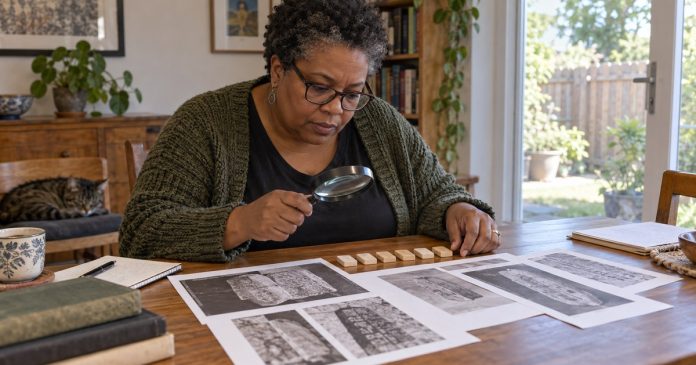
Researcher using a magnifying glass to examine wooden study pieces and printed inscription photographs at a home table
A reader examines modern study materials and reproductions; this illustrative image is not a historical artifact or proof of rune meanings.

Rune stones used for modern divination usually place runic characters on wood, stone, ceramic, or glass tokens. The characters come from historical writing systems, but a bag of 24 stones with fixed fortune-telling meanings is a modern practice—not an archaeological set that can predict the future.

This guide is a character-reference article. It explains what the 24-character Elder Futhark is, how modern readers build reflective keywords, and where common commercial claims go beyond the evidence. For practical advice on choosing safe materials, making a set, storing it, and drawing or casting transparently, see What to Know About Using Runes for Divination.

Runes were letters before they were reading tools

Runic alphabets were used to write Germanic languages. Elder Futhark is the scholarly name commonly used for the earliest widely attested runic alphabet; its modern name comes from the sounds of its first six characters. Surviving inscriptions occur on objects such as jewelry, weapons, tools, memorial stones, and small artifacts.

Historical inscriptions and later rune poems matter, but they do not provide a single ancient manual for a standardized 24-stone divination system. Modern keyword lists often combine reconstructed rune names, rune-poem imagery, modern occult writing, personal symbolism, and commercial conventions.

The separate article Origins and Ideas Behind Rune Casting looks more closely at the evidence for historical rune use and the limits of claims about ancient casting.

A careful Elder Futhark reference

The table below gives conventional names and broad literal associations often used in modern references. Spellings and reconstructed forms vary. The reflection prompts are contemporary prompts, not translations, prophecies, diagnoses, or universal ancient meanings.

Rune Conventional name Broad association and modern reflection prompt
ᚠ Fehu Livestock or movable wealth; what resource needs responsible care?
ᚢ Uruz Aurochs; where do strength and limits both matter?
ᚦ Thurisaz Thorn or giant; what boundary or disruption needs attention?
ᚨ Ansuz Deity or speech associations; what message needs evidence or clarification?
ᚱ Raidho Ride or journey; what process, route, or sequence is involved?
ᚲ Kenaz Torch or ulcer traditions vary by source; what is becoming visible?
ᚷ Gebo Gift; are exchange, consent, and reciprocity balanced?
ᚹ Wunjo Joy; what supports belonging or ordinary satisfaction?
ᚺ Hagalaz Hail; what disruption can be prepared for without predicting disaster?
ᚾ Nauthiz Need or constraint; what is necessary, and what can wait?
ᛁ Isa Ice; where would a pause help?
ᛃ Jera Year or harvest; what depends on time, season, and repeated work?
ᛇ Eihwaz Yew; what requires endurance and careful source checking?
ᛈ Perthro Meaning is uncertain; what remains unknown rather than secretly guaranteed?
ᛉ Algiz Name and interpretation are debated; what practical protection is available?
ᛊ Sowilo Sun; what brings clarity, energy, or visibility?
ᛏ Tiwaz Associated with the god Týr; what principle or duty is being weighed?
ᛒ Berkano Birch; what needs patient care or a fresh start?
ᛖ Ehwaz Horse; how are trust, movement, and cooperation working?
ᛗ Mannaz Person or humanity; whose perspective and dignity need consideration?
ᛚ Laguz Water; what emotion or changing condition should be observed?
ᛜ Ingwaz Associated with Ing; what is developing but not yet ready?
ᛞ Dagaz Day; what shift in perspective is possible?
ᛟ Othala Inherited estate or homeland; what inheritance, belonging, or responsibility is relevant?

These prompts do not turn a rune into advice by itself. A drawn character can help select a question, much like a writing prompt. The useful work is in examining facts, alternatives, values, and consequences.

The blank rune is a modern addition

Elder Futhark has 24 characters. A blank tile is not a 25th historical letter. Some modern sets include one as a spare or assign it ideas such as fate, the unknown, or unlimited possibility. Label that as a modern house rule rather than an ancient teaching.

If a set includes a blank, decide before drawing whether it will be excluded, kept as a spare, or used with a clearly stated modern prompt. Changing the rule after seeing the result makes interpretation less transparent.

Rune names are not fixed fortunes

“Fehu means you will receive money” turns a broad association into a prediction. “Fehu prompts me to review resources, work, debt, or stewardship” keeps the exercise reflective. Likewise, Ingwaz does not diagnose pregnancy, Thurisaz does not prove psychic sight, and Othala does not guarantee an inheritance.

Reversed meanings are also a modern convention, not a universal ancient rule. Some characters are symmetrical, and historical inscriptions were not a tarot-style system of upright and reversed cards. A reader may use reversals as a disclosed personal method, but should not present them as compulsory historical fact.

Use a transparent one-rune reflection

  1. Frame a low-stakes question. Ask “What should I consider about this conversation?” rather than “Will my partner betray me?”
  2. Choose the source list. Use one documented reference and note whether prompts are historical, reconstructed, or modern.
  3. Draw one token. Random selection chooses a prompt; it does not reveal hidden facts.
  4. Write three interpretations. Include at least one ordinary explanation and one interpretation that does not flatter your hopes.
  5. Check outside evidence. Verify schedules, prices, health facts, consent, and other people’s statements directly.
  6. Choose a reversible action. Ask, research, pause, or make a small plan rather than an irreversible decision.

Keep misses and awkward fits. Do not redraw until a preferred rune appears or stretch a vague association to match later events. If you are testing predictive claims, decide the target and scoring rule in advance.

Respect living culture and historical uncertainty

Runes are connected to Germanic-language history and to contemporary religious, cultural, artistic, linguistic, and spiritual communities. Avoid collapsing “Norse,” “Viking,” “Germanic,” “Celtic,” “Wiccan,” “shamanic,” and “Indigenous” into one tradition. They are not interchangeable labels.

Do not market a modern spread as an ancient Viking ceremony without evidence. “Runic cross,” “Wiccan star,” chakra layouts, zodiac correspondences, and tarot-like meanings may be meaningful modern combinations, but they should be identified as modern.

Some rune forms have also been appropriated by Nazi and neo-Nazi movements. Context matters: a character in a linguistic chart is not automatically extremist, while a symbol paired with racist slogans or movement-specific styling can signal harm. Do not reproduce extremist adaptations for decoration, and learn the context before displaying a rune publicly.

Materials and handling

Modern tokens can be made from smooth wood, stone, clay, ceramic, card, or another safe material. Avoid toxic finishes, sharp edges, unknown plant materials, protected archaeological objects, and stones collected where removal is prohibited. Keep small pieces away from young children and anyone at choking risk.

You do not need to face east, follow the sun, use a special cloth, charge stones, or perform smoke cleansing for a reflective draw. If you choose a ritual, treat it as optional and consider allergies, asthma, pets, fire rules, ventilation, and household consent.

Decision and reading boundaries

Rune prompts cannot diagnose illness, pregnancy, mental-health conditions, curses, crimes, fidelity, fertility, legal outcomes, investment returns, or another person’s private thoughts. Do not use them to identify suspects, locate missing people, replace emergency care, or decide whether an unsafe relationship is safe.

When reading for someone else, get consent, explain the method, state the price and time limit, protect notes, and allow the person to decline a topic. Do not create fear with claims of doom, blocked ancestry, spirit attack, or required cleansing.

Frequently asked questions

Are rune stones ancient fortune-telling tools?

Runic characters are historical writing-system characters, but the standardized modern bag of 24 stones with fixed fortune-telling meanings is not an archaeologically documented ancient kit. Modern practice mixes historical material with later and contemporary interpretation.

Is the blank rune part of Elder Futhark?

No. Elder Futhark has 24 characters. A blank tile is a modern addition or spare and should be labeled that way.

Does each rune have one correct meaning?

No. Names, translations, rune-poem imagery, scholarly interpretations, and modern divinatory keywords differ. State your source and keep reflective meanings separate from historical claims.

Can rune stones predict the future?

There is no reliable evidence that a random rune draw predicts future events. It can be used as a prompt for reflection, provided outside facts, consent, health care, and qualified advice guide important decisions.

A Beginner’s Guide to Choosing a Set of Runes

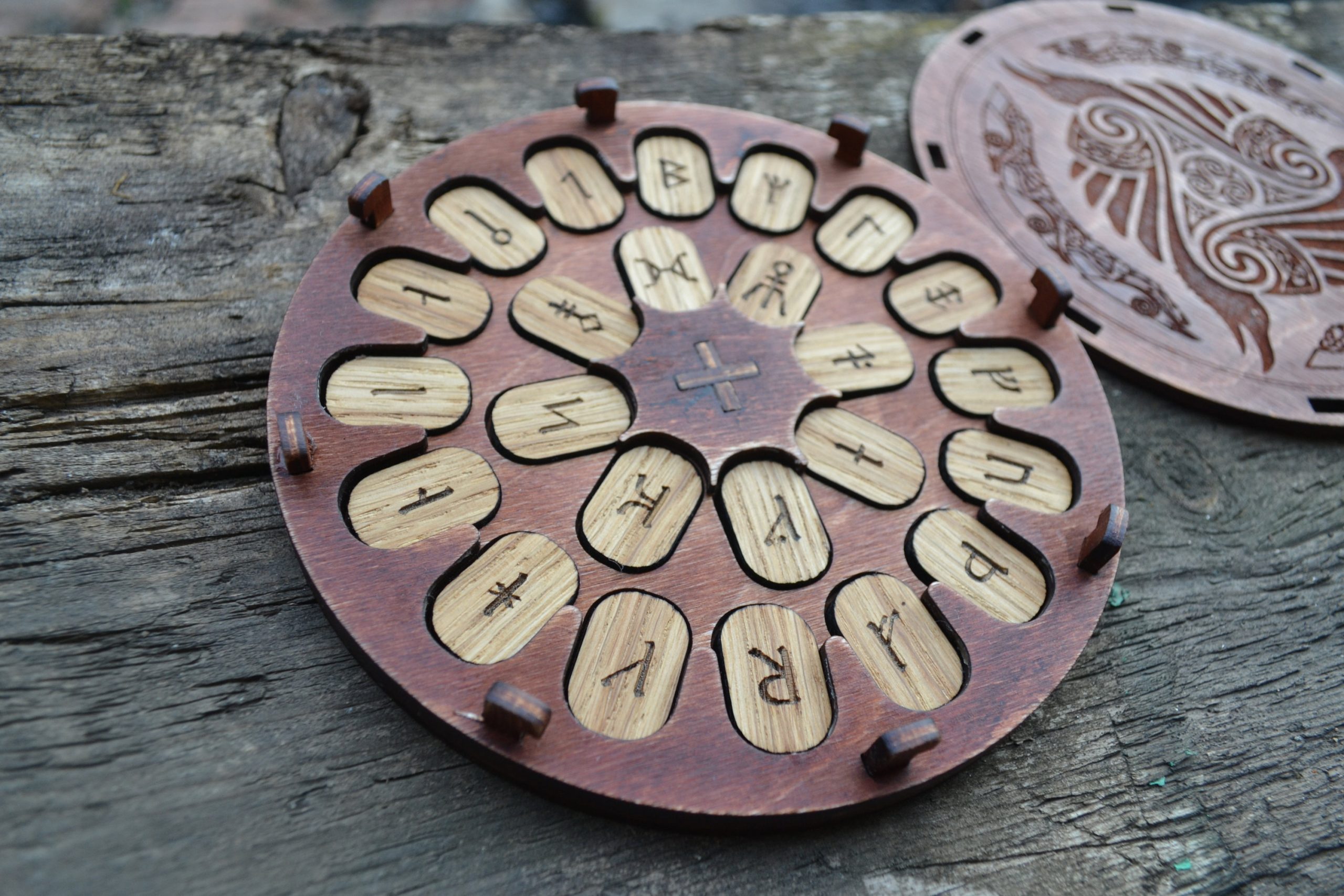
Wooden rune tiles arranged in a circular storage case on a weathered table
A modern wooden rune set; material, price, or decorative presentation does not establish historical authenticity or predictive power.

Choosing a first rune set is mainly a practical decision. The characters come from historical writing systems, while the small matching tokens sold for modern reflection or divination are contemporary tools. A higher price, rare material, dramatic origin story, or claim that a set “calls” to you does not make it more accurate or powerful.

This guide focuses on evaluating a set before buying or making it: which alphabet it contains, whether every character is legible, how the pieces feel and handle, what the materials disclose, and whether the seller’s claims are clear. For a careful 24-character overview, use the Elder Futhark rune reference.

Start with the alphabet, not the material

A set is useful only if you know which runic alphabet it represents. Elder Futhark has 24 characters and is common in modern sets. Younger Futhark and Anglo-Saxon Futhorc are different systems with different character inventories. “Witch’s runes” and similar symbol sets are modern practices rather than historical runic alphabets.

Before paying, look for a complete character list and compare it with a reputable reference. Product photos should show all pieces clearly enough to check for duplicates, omissions, invented symbols, or mixed alphabets. A blank tile may be included as a spare or modern house rule, but it is not a 25th Elder Futhark character.

A beginner’s buying checklist

Check What to look for Reason
Alphabet A named system and complete character list Prevents mixed, missing, or invented characters
Legibility High contrast, durable marks, and no decorative lines that resemble strokes Reduces misreading and eye strain
Consistency Pieces similar enough that one cannot be identified by touch from the bag Keeps a blind draw genuinely blind
Size Large enough to grip and read without crowding Supports comfort, dexterity, and accessibility
Edges and finish Smooth edges and a finish disclosed as safe for normal handling Avoids splinters, cuts, residue, and unknown coatings
Material source Seller identifies material and sourcing without vague sacred or ancient claims Helps assess safety, legality, animal welfare, and environmental impact
Instructions Historical facts separated from the maker’s modern meanings and methods Prevents marketing from being mistaken for evidence
Returns Clear photos, dimensions, contents, shipping terms, and return policy Reduces avoidable cost and disappointment

Choose for your hands, eyes, and method

There is no universally correct size. Small tokens travel easily but may be hard to grip, distinguish, or read. Large stones may be comfortable on a table yet heavy in a bag. Check the listed dimensions against a ruler and, if possible, handle a sample before buying.

For low vision, choose strong contrast, simple marks, a matte surface that does not glare, and characters large enough to examine closely. Raised or engraved strokes can support tactile use, but decorative textures should not reveal the identity of individual pieces during a blind draw. A sighted helper or accessible digital list can verify the set without implying that disability changes intuitive ability.

Flat pieces stay where they are placed and make orientation easier to record. Rounded stones roll and may hide the marked face. Shape does not create spiritual power. If you use reversed orientation as a disclosed modern convention, choose pieces whose top and bottom are unambiguous; reversals are not required historical meanings.

Compare common materials realistically

Wood is light, quiet, and easy to mark. Look for smooth edges, stable pieces, and a disclosed finish. Avoid unknown wood dust, splintering pieces, or claims that a particular tree automatically transmits an ancient power.

Stone and glass can be durable and easy to clean, but they are heavier, can chip, and may damage tables when cast. Gem names do not establish healing, courage, protection, or psychic accuracy. If mineral identity matters to you, ask how it was verified rather than relying on color alone.

Ceramic and clay allow clear handmade marks but can crack or form sharp edges. Craft clay and glazes should be used according to manufacturer safety instructions. Do not fire unknown stones, painted objects, or found materials in a home oven.

Metal is durable but may be noisy, heavy, cold to handle, or unsuitable for someone with a metal allergy. Ask what alloy and coating were used. “Pewter” is not a complete safety description when composition is unknown.

Bone, antler, horn, and shell require extra questions about species, sourcing, import rules, animal welfare, cleaning, and cultural context. Do not assume a seller’s claim that an item came harmlessly from a farm or naturally shed antler is verified. Avoid protected wildlife products and archaeological or culturally significant objects. A person does not need animal material to practice respectfully.

Plastic, card, or inexpensive craft materials are not spiritually inferior. An affordable, readable set can be more useful than a costly display object. Consider durability, recyclability, choking risk, sharp edges, and whether paint or coating transfers to hands.

Buying versus making

A purchased set is convenient and may include a bag and reference booklet. A handmade set lets you control size, contrast, finish, and accessibility. Neither route creates a stronger reading. The better option is the one that gives you a complete, readable, safe, and consistently made set within budget.

If making a set, practice the characters on paper first and use a checked source list. Work with suitable eye protection, ventilation, tools, and adult supervision where relevant. Sand wood safely, follow paint and sealant labels, and keep small pieces and sharp tools away from children and pets. Do not burn, cut, drill, or heat an unfamiliar material.

Question sales claims

Marketing may say that a set is ancient, Viking, shamanic, Wiccan, Celtic, Indigenous, temple-made, charged, blessed, or recovered from a sacred site. Those labels describe different histories and communities and should not be blended into one story. Ask for specific provenance and treat unverifiable claims as advertising, not evidence.

A seller should not promise that a material cures illness, attracts money, identifies a curse, guarantees protection, reveals another person’s thoughts, or predicts an outcome. Avoid pressure to buy an expensive upgrade, cleansing, activation, or replacement set because yours is supposedly blocked or dangerous.

Some rune forms have been appropriated by Nazi and neo-Nazi movements. A historical character in an alphabet chart is not automatically extremist, but movement-specific styling, racist slogans, or hate-group combinations require context. Inspect decorative packaging and seller affiliations rather than buying solely from a dramatic symbol photograph.

Inspect a set when it arrives

  1. Count the pieces and compare every character with the advertised alphabet.
  2. Photograph the set and note any duplicates, omissions, cracks, sharp edges, residue, or strong odor.
  3. Check whether one piece is noticeably larger, heavier, rougher, or easier to identify by touch.
  4. Read the booklet critically and mark which statements are historical, reconstructed, modern, or personal to the maker.
  5. Practice identifying each character in good light before using a bag or layout.
  6. Store the pieces dry, secure, and away from children or pets who could swallow them.

If you decide to use the set for reflection, establish the method before drawing and record outside facts separately. The broader guide to using runes for divination covers storage, question framing, drawing, casting, evidence checks, and decision boundaries.

Keep the first set simple

A beginner does not need rare gemstones, an elaborate box, or a claim of supernatural activation. A complete, affordable set with clear characters and honest material information is enough to learn the alphabet and test whether the practice is useful as reflection.

Rune draws should not decide medical care, pregnancy, mental-health treatment, legal strategy, financial risk, personal safety, consent, or another person’s private motives. For high-stakes questions, use direct evidence and qualified help.

Frequently asked questions

What is the best rune set for a beginner?

The best first set is complete, legible, comfortable to handle, safely made, affordable, and clear about which alphabet it contains. Material price or rarity does not make a set more accurate.

Does a rune set need to be made from wood or bone?

No. Modern sets can use wood, stone, ceramic, glass, metal, card, or other safe materials. Bone and antler are optional and raise sourcing, legal, animal-welfare, and cultural questions.

Should an Elder Futhark set include a blank rune?

Elder Futhark has 24 characters. A blank tile is a modern addition or spare, not a historical 25th rune. Decide how to treat it before any draw.

Can an expensive rune set give a more accurate reading?

No reliable evidence shows that price, gemstone type, blessing, or claimed energy improves predictive accuracy. Pay for workmanship, disclosure, accessibility, and materials you genuinely value—not a guaranteed outcome.

Psychic Readings: Divination Tool Free

Wheelchair user listening and taking notes while an older adult speaks at a sunny home table
A consent-based reflective conversation without divination tools; listening and notes do not prove telepathy, hidden knowledge, or prediction.

A tool-free psychic reading relies on conversation, observation, memory, imagination, and intuitive impressions rather than tarot cards, runes, pendulums, or other objects. Some people use spiritual language for the experience. That language may be personally meaningful, but an impression is not proof of telepathy, spirit contact, hidden facts, or future events.

Removing tools does not remove bias. It can actually make the source of an interpretation harder to see. A responsible session therefore labels observations, guesses, metaphors, and information supplied by the client. For a broader explanation of fast impressions and evidence checks, see the article on intuition.

What changes when there is no divination tool?

A card or rune gives a session a visible prompt. Without one, prompts may come from the client’s words, tone, clothing, age, setting, public information, the reader’s expectations, or a mental image that appears during conversation. None of these sources is automatically deceptive, but they should not be confused with independent knowledge.

Experience Possible ordinary source Responsible wording
A sudden image Memory, imagination, recent media, or association “I pictured a train; does that prompt anything useful?”
A bodily feeling Posture, stress, hunger, anxiety, pain, or empathy “I notice tension in myself; I cannot diagnose what it means for you.”
A strong hunch Pattern recognition, expectation, base rates, or wishful thinking “This is an impression, not a verified fact.”
A detail that fits Client cues, broad wording, coincidence, or prior information “Please correct me rather than making it fit.”
A detail that misses An incorrect guess Record it as a miss; do not reinterpret it after the fact.

Begin with consent and a clear frame

Before a session, explain that the reading is reflective or entertainment-based and may be wrong. Agree on the time, price, refund or cancellation terms, note-taking, privacy, and topics that are off limits. Ask whether the person wants an open conversation, a low-information exercise, or simply help exploring a question.

Do not perform an unsolicited “pre-read” of someone’s name, photograph, social profile, home, or family. Looking up a client without permission and presenting discovered facts as psychic knowledge is misleading. Do not read absent partners, children, employees, patients, or other third parties as though their private thoughts and health are available.

A transparent tool-free session

  1. Ask for the goal. Use an open, low-stakes question such as “What would make this conversation useful?”
  2. Separate inputs. Mark what the client stated, what you directly observed, and what arose as an impression.
  3. Offer, do not declare. Present an image or hunch as a possible prompt and invite a clear yes, no, or uncertain response.
  4. Record misses. Do not turn “no” into “not yet,” “someone around you,” or a hidden block.
  5. Generate alternatives. For every interpretation, name at least one ordinary explanation and one different possibility.
  6. Return agency. End with options the client can verify or choose, not commands based on invisible authority.

Silence can help someone think, but it should not be used to pressure them into revealing details. Likewise, mirroring a person’s words may support listening, but it is not independent confirmation of a psychic message.

Watch for common accuracy illusions

Cold reading uses observation, feedback, broad statements, and rapid adjustment. It can occur deliberately or unconsciously. Warm reading uses generally common themes, such as relationship uncertainty, money stress, or grief. Hot reading uses information found in advance or supplied by another person. These effects can make a session feel more specific than it began.

The Barnum effect is the tendency to recognize ourselves in vague, broadly applicable descriptions. Confirmation bias favors hits over misses, while hindsight can reshape an old statement after an event. A respectful reader does not use these effects to claim certainty or blame the client for a failed prediction.

Practice without making claims about a client

Private exercises can improve observation and source awareness without treating strangers as targets. Try describing a neutral photograph, then list which details were visible and which were inferred. Predict a low-stakes, clearly defined outcome before it occurs, seal the wording, and score it using rules decided in advance. Compare performance with chance and keep every trial.

For partner practice, use consent and a blind protocol. One person selects a target from a prepared set while the reader records impressions before receiving feedback. Avoid health, trauma, pregnancy, death, crime, infidelity, or missing-person targets. The purpose is to test claims and notice bias, not to prove special status.

Meditation may help attention or calm some people, but it does not guarantee accuracy or unblock supernatural channels. Stop if practice increases panic, dissociation, sleeplessness, agitation, or difficulty distinguishing inner experience from outside events. Meditation is optional, and chakra or vibration language should not be used to diagnose a problem.

Use careful language during a reading

Prefer “I have an image,” “this may be a metaphor,” or “I could be wrong” over “spirit says,” “your energy proves,” or “I know what your partner is hiding.” Ask the client not to supply extra details merely to rescue a claim. Permission to disagree should be real and should not end the session in shame or pressure.

Do not frame ordinary skepticism, disability, medication, trauma, religion, culture, or lack of interest as blocked intuition or low vibration. Children are not reliable evidence of supernatural openness, and adults should not question a child repeatedly about spirits or secret messages. Distress or unusual perceptions deserve calm support rather than escalation into a frightening story.

Health, safety, and high-stakes boundaries

A tool-free reading cannot diagnose illness, pregnancy, mental-health conditions, addiction, abuse, curses, crimes, fertility, or cause of death. It cannot confirm that a person is safe, faithful, dangerous, missing, alive, or communicating after death. Urgent symptoms, threats, violence, self-harm risk, or loss of reality testing require appropriate emergency or professional help.

Do not advise a client to stop medication, avoid a clinician, confront a suspected offender, invest money, move, divorce, remain in an unsafe relationship, or ignore legal advice because of an impression. The article on using a psychic reading for relationship reflection explains consent, evidence, safety, price, and decision limits in that common setting.

Reader ethics and payment safeguards

State the fee before beginning, keep the session within the agreed time, and do not manufacture urgency. Warning signs include guaranteed accuracy, secret curses, repeated paid cleansing, claims that only one reader can help, pressure to borrow money, threats of harm, or requests for passwords and financial access.

Keep notes only with permission, store them securely, and delete them according to a stated policy. Do not publish identifiable stories as testimonials without informed consent. A reader should disclose relevant limitations and referral relationships and should never impersonate a licensed health, legal, or financial professional.

Review the session afterward

Write down the original wording before discussing possible matches. Count clear hits, misses, and statements too vague to score. Note information the client supplied, questions the reader asked, and interpretations added later. Useful reflection can occur even when a paranormal claim is unsupported; the value may come from attentive conversation, metaphor, or considering alternatives.

A responsible conclusion is proportionate: “This prompted a question worth checking” rather than “This proves my psychic ability.” Accuracy should never be inferred from confidence, emotion, surprise, or a few memorable matches.

Frequently asked questions

Can a psychic reading work without tarot, runes, or a pendulum?

A person can hold a reflective conversation and report impressions without objects, but removing tools does not establish telepathy or prediction. Observation, memory, cues, bias, and coincidence still need to be considered.

Is a tool-free reading more accurate?

There is no reliable evidence that avoiding divination tools makes a reading more accurate. Accuracy claims need predefined, testable statements, complete records, and results compared with chance—not confidence or remembered hits.

Should a reader research a client before the session?

Not secretly. Public or private information found in advance can create a false appearance of psychic knowledge. Any research, photograph use, or third-party information should be disclosed and consented to.

What should I do if a reading becomes frightening?

Stop the session, avoid paying for urgent cleansing or protection, and check the claim with direct evidence and trusted qualified support. Seek emergency help for immediate danger, severe symptoms, or risk of self-harm.

Divination Using Rune Stones

Older woman with a hearing aid comparing three wooden study tiles with a notebook at a backyard table
A modern three-prompt reflection at home; the layout does not demonstrate prediction, historical ritual, or supernatural knowledge.

Modern rune-stone divination places characters from historical runic writing systems on small tokens and uses a random draw or layout as a prompt for reflection. The characters are historical; a standardized bag of stones, fixed fortune-telling meanings, and promised timelines are modern practices rather than a single documented ancient system.

This article offers a compact worksheet for comparing a one-rune prompt with a three-rune prompt. It does not treat either layout as a way to discover hidden facts or guarantee future events. For the evidence behind ancient-casting claims and the limits of modern reconstructions, read Origins and Ideas Behind Rune Casting.

Set the method before drawing

Choose one documented character set and one reference list. Elder Futhark has 24 characters and is common in modern practice, but it should not be mixed casually with Younger Futhark, Anglo-Saxon Futhorc, or modern symbol systems. A blank tile is a modern addition or spare, not a historical 25th Elder Futhark letter.

Write down the question, layout positions, source, treatment of reversals or face-down pieces, and stopping rule before touching the bag. Changing the rules after seeing a result makes the exercise easier to fit to a preferred story.

Choice One-rune prompt Three-rune prompt
Best use One focused question or journaling theme Compare three defined aspects of one situation
Positions One prompt For example: facts, options, next check
Complexity Lower; easier to record without stretching meanings Higher; more opportunities for vague connections
Main risk Turning one broad keyword into a command Creating a dramatic story from unrelated prompts
Useful record Original question, rune, source, three possible readings Position definitions, three runes, alternatives, outside evidence
Stopping rule One draw; no redraw for a preferred answer Three draws; no extra clarifier unless declared in advance

Frame a reflective question

Use questions that preserve choice: “What should I consider before this conversation?” or “What information is missing from my plan?” Avoid questions that demand unverifiable access to another person, such as “Is my partner cheating?” or “What does my coworker secretly think?”

Do not ask rune stones to diagnose illness, pregnancy, mental-health conditions, curses, crimes, addiction, abuse, fertility, or cause of death. They cannot determine whether someone is safe, faithful, dangerous, missing, alive, or communicating after death. High-stakes decisions require direct evidence and qualified help.

One-rune reflection worksheet

  1. Write the question. Keep it specific, low stakes, and within your control.
  2. Draw once. Random selection chooses a prompt; it does not select a verified answer.
  3. Check the source. Separate the character’s historical name or associations from modern divinatory keywords.
  4. Generate three readings. Include one ordinary explanation, one interpretation that challenges your preference, and one “not enough information” option.
  5. Check facts. Verify dates, prices, consent, health information, and other people’s statements directly.
  6. Choose a reversible next step. Ask, research, pause, or test a small action.

A rune associated in modern references with “journey,” for example, does not predict travel. It might prompt questions about sequence, preparation, movement, delay, or whether the metaphor fits at all.

Three-rune reflection worksheet

Define each position before drawing. “Past, present, future” is popular in modern practice but can encourage prediction and hindsight. A more testable set is known facts, available options, and next evidence check. Another is what supports the plan, what challenges it, and one reversible action.

  1. Write the three position labels at the top of a page.
  2. Draw one token for each position without replacing or redrawing it.
  3. Record the character and the exact source wording.
  4. Write at least two interpretations for each position, including a mundane alternative.
  5. List what evidence would support or contradict each interpretation.
  6. End with an action that remains sensible even if the symbolic reading is wrong.

The article Understanding Rune Readings develops the three-position method in more detail, including open questions, documented interpretations, evidence checks, consent, and session boundaries.

You do not need a prescribed direction or cloth

There is no need to toss stones east to west, toward the sun, or onto a white cloth to obtain an accurate result. A cloth may protect a table, reduce noise, or stop pieces from rolling. Direction can be part of a disclosed modern ritual, but it should not be presented as a universal historical requirement.

Drawing from a bag is often easier to record than throwing pieces. If casting, use a clear surface with enough space and do not throw hard objects near people, pets, glass, screens, food, or breakable items. Small tokens are a choking hazard.

Face-down pieces and reversals are house rules

Face-down stones do not reliably reveal the future, hidden enemies, storms, or events at six- or twelve-month intervals. Reversed interpretations are also not a universal ancient system, and several rune forms are symmetrical.

You may decide in advance to ignore orientation, turn every piece upright, or use an explicitly modern contrast prompt. Apply the same rule consistently. Do not add a negative meaning after seeing an inconvenient result.

Meaning should not become certainty

Historical inscriptions, reconstructed rune names, later rune poems, modern occult books, commercial booklets, and personal associations are different sources. A responsible note identifies which source is being used. Broad ideas such as “gift,” “need,” “ice,” or “harvest” are not automatic predictions about money, deprivation, delay, or reward.

Keep misses, awkward fits, and vague statements in the record. Do not redraw until a preferred rune appears, add unlimited clarifiers, or reinterpret a failed prediction after the event. If testing a prediction, define the outcome and time window first and compare results with chance.

Cultural and historical care

Runes are connected to Germanic-language history and to living religious, cultural, linguistic, artistic, and spiritual communities. “Norse,” “Viking,” “Germanic,” “Celtic,” “Wiccan,” “shamanic,” and “Indigenous” are not interchangeable labels. A modern spread can be meaningful without being marketed as an ancient ceremony.

Some rune forms have been appropriated by Nazi and neo-Nazi movements. A character in a linguistic or historical context is not automatically extremist, while racist slogans, movement-specific styling, and hate-group combinations matter. Learn the context and do not use extremist adaptations as decoration.

Consent and reading boundaries

When reading for another person, explain that the method is reflective and may be wrong. Agree on price, time, privacy, note-taking, and off-limit topics. Do not claim access to absent people’s thoughts or use a frightening interpretation to sell cleansing, protection, activation, or repeat sessions.

Stop if the activity increases panic, compulsive checking, sleeplessness, or difficulty distinguishing thoughts from outside messages. A person can pause, put the set away, and seek appropriate support without being spiritually blocked.

Frequently asked questions

Can rune stones predict the future?

There is no reliable evidence that a random rune draw predicts future events. A draw can select a reflection prompt, while facts and qualified advice should guide important decisions.

What is a safe three-rune layout for beginners?

Try “known facts, available options, next evidence check.” Define the positions before drawing, record alternatives, and choose an action that remains sensible if the interpretation is wrong.

Do face-down or reversed runes have special meanings?

Reversals and face-down meanings are modern conventions, not universal ancient rules. Choose and disclose a consistent house rule before the draw rather than changing it afterward.

Must I cast runes toward the sun on a white cloth?

No. Direction and cloth color are optional modern ritual choices. A cloth may protect the surface or reduce noise, but it does not establish accuracy or historical authenticity.

The Creative Casting of Rune

Young Black man with albinism arranging three blank wooden study tiles and colored position cards beside a notebook on a balcony
A modern layout-planning exercise at home; blank study tiles and position cards organize reflection without proving spiritual power or prediction.

Creative rune casting means designing a modern reflection layout around a specific question instead of borrowing a spread and pretending it is an ancient universal rule. The runic characters come from historical writing systems; the position labels, prompts, colors, diagrams, and journaling method you create are contemporary choices.

A creative layout can help organize attention, but it does not make random tokens reveal objective truth, divine commands, or future events. If you want fixed one- and three-rune worksheets before designing your own, begin with Divination Using Rune Stones.

Design positions before drawing

Start with the purpose of the exercise. Are you comparing options, reviewing a project, preparing for a conversation, or noticing what information is missing? Create a small number of positions that address different parts of that purpose. Three or four positions are usually easier to interpret honestly than a large dramatic pattern.

Write the position labels before selecting any token. Labels such as “hidden destiny” or “what they secretly think” invite unsupported claims. Prefer positions that can be checked or acted on.

Goal Useful position set Position set to avoid
Prepare for a conversation Known facts · my concern · question to ask Their secret · their lie · destined outcome
Compare choices Option A tradeoff · Option B tradeoff · missing evidence Guaranteed success · guaranteed failure · fate
Review a project What works · current obstacle · next small test Cosmic approval · hidden enemy · final prophecy
Check a worry Observable evidence · alternative explanation · support available Curse source · spiritual attack · required cleansing
Reflect on values Value involved · competing need · responsible action Higher-self command · moral purity · punishment

Use a simple creative-layout template

  1. Name the layout. Use a plain descriptive name such as “conversation preparation” or “project review.”
  2. State the question. Keep it low stakes, within your influence, and open to more than one answer.
  3. Define each position. Write one sentence explaining what the position does and does not represent.
  4. Choose the character reference. Identify the alphabet and source; separate historical associations from modern keywords.
  5. Set orientation rules. Decide whether you will ignore reversals, turn every token upright, or use a disclosed modern contrast prompt.
  6. Set a stopping rule. Choose the number of tokens and whether clarifiers are prohibited before drawing.
  7. Plan the evidence check. Add one field for facts that support or contradict each interpretation.

Colors, shapes, index cards, or a hand-drawn diagram can make the positions easier to remember. They are visual organizers, not energy channels. Avoid copying sacred designs, community-specific ceremonial objects, or cultural symbols merely for atmosphere.

Cast or draw safely

Drawing from a bag is quiet and predictable. Casting can show spatial relationships, but those relationships are meaningful only under rules you defined beforehand. Use a stable surface with enough room, and do not throw hard pieces near people, pets, windows, electronics, food, or fragile objects.

A cloth can reduce noise or protect a table. Candles, smoke, crystals, a prescribed direction, and special music are optional modern ritual elements, not requirements for accuracy. If using flame or smoke, consider ventilation, asthma, pets, household consent, local fire rules, and safer no-flame alternatives.

Interpret with more than one possibility

For each position, write the exact character, the source wording, and at least two interpretations. Include one ordinary explanation and one interpretation that challenges your preferred story. “No useful fit” is a valid result.

A rune associated in a modern book with “gift” does not mean money is arriving. In a project-review layout, it could prompt questions about reciprocity, unpaid help, resources, or whether the association is irrelevant. The position and question narrow the reflection; they do not verify a prediction.

Do not redraw because a token feels wrong, warm, sticky, heavy, magnetic, or emotionally uncomfortable. Temperature, moisture, wear, size, expectation, and hand position can make one piece feel different. If blind selection matters, inspect whether the pieces can be identified by touch.

Test whether the layout is useful

After the exercise, rate the layout rather than the mystical power of the draw. Were the positions distinct? Did they produce new questions rather than repeat one theme? Could you identify outside facts to check? Did the process preserve choice and lead to a proportionate next step?

Keep the original wording and all awkward results. Do not rewrite a position after an event, add unlimited clarifiers, or count a vague association as a specific hit. If testing prediction, define the target, scoring rule, and time window before drawing and compare results with chance.

Creative does not mean historically ancient

Modern readers may combine runes with tarot-style spreads, zodiac signs, chakras, colors, or other systems. Label the combination as contemporary rather than “Viking,” “Celtic,” “shamanic,” “Indigenous,” or an ancient secret. Those words refer to different histories and living communities and are not interchangeable decorative themes.

Runic writing has historical and contemporary cultural contexts, and some rune forms have also been appropriated by Nazi and neo-Nazi movements. A character in a linguistic chart is not automatically extremist, while racist slogans and movement-specific designs matter. Avoid extremist adaptations and learn a symbol’s context before displaying it publicly.

Respect consent and decision limits

Do not design layouts to diagnose illness, pregnancy, mental-health conditions, curses, crimes, abuse, addiction, fertility, or cause of death. Do not claim a layout reveals an absent person’s private thoughts, fidelity, safety, location, or intentions.

When reading for another person, explain that the layout is your modern design and may be wrong. Agree on price, time, privacy, notes, and off-limit topics. Never use a frightening position to sell cleansing, protection, activation, or repeat sessions.

Stop if the activity increases panic, compulsive checking, sleeplessness, or difficulty distinguishing thoughts from outside messages. Important medical, legal, financial, relationship, and safety decisions require direct evidence and qualified help.

Keep a layout card

Save a short record containing the layout name, purpose, position definitions, alphabet, reference, orientation rule, stopping rule, date created, and one example. This makes the method repeatable and prevents rules from shifting around a desired answer.

Once you have tested several designs, compare them with the wider range of modern layouts in Reading Runes. Complexity is optional; a small layout with clear positions is usually easier to audit and explain.

Frequently asked questions

Can I invent my own rune-casting layout?

Yes. Label it as a modern personal method, define every position before drawing, document the reference and rules, and avoid claiming that the layout is an ancient ceremony or predicts facts.

How many runes should a creative layout use?

Use the fewest needed to answer distinct reflective prompts. Three or four positions are often easier to record and less likely to encourage vague storytelling than a large spread.

Do colors or shapes add spiritual power to a layout?

There is no reliable evidence that colors, shapes, or diagrams make a layout more accurate. They can serve as visual organizers if their meanings are stated in advance.

What makes a creative rune layout responsible?

Clear consent, predefined positions, disclosed modern rules, multiple interpretations, outside evidence checks, complete records, a stopping rule, and firm limits on high-stakes claims.